Tarique Rahman Returns to Bangladesh, Poised to Reshape Nation's Political Future After 17-Year Exile
Dhaka, Bangladesh – After nearly two decades in self-imposed exile, Tarique Rahman, the acting chairman of the opposition Bangladesh Nationalist Party (BNP) and scion of a prominent political dynasty, returned to Bangladesh on Thursday, December 25, 2025, marking a pivotal moment in the nation's volatile political landscape. His homecoming, met by massive throngs of jubilant supporters, signals a dramatic shift ahead of national elections scheduled for February 12, 2026, where Rahman emerges as a leading contender for the prime ministership.
Rahman's arrival at Hazrat Shahjalal International Airport in Dhaka concluded a 17-year absence that began in 2008 under a military-backed caretaker government. His return comes at a time of profound political transition, following the ouster of former Prime Minister Sheikh Hasina and her Awami League government in August 2024. The highly anticipated comeback of the 60-year-old leader is expected to significantly energize the BNP's base and redefine the country's democratic trajectory as it navigates deep instability and prepares for a crucial election.
A Grand Homecoming and Emotional Return
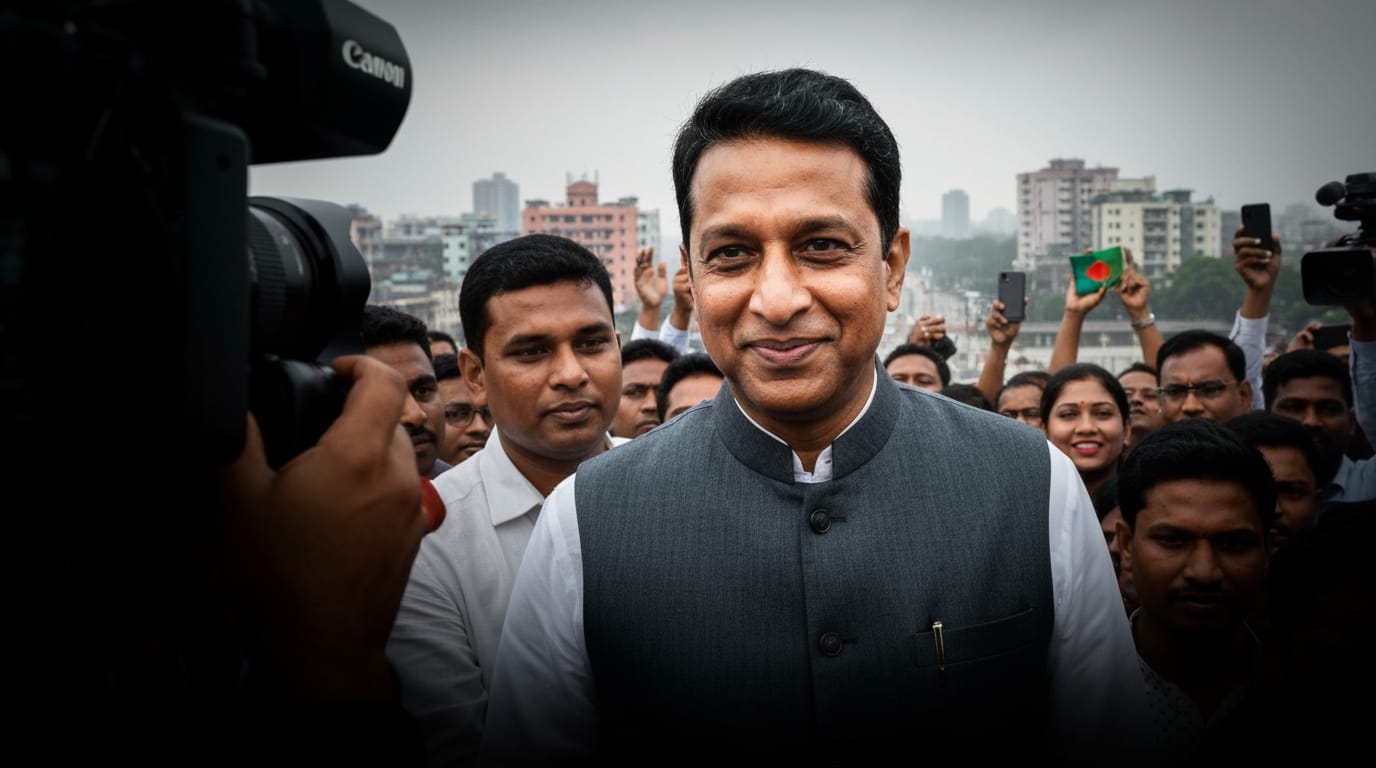
The atmosphere surrounding Tarique Rahman's arrival in Dhaka was charged with emotion and anticipation. Flights carrying Rahman, his wife Zubaida, and daughter Zaima touched down at Hazrat Shahjalal International Airport late Thursday morning, where they were met with tight security and an overwhelming display of public support. Massive crowds of supporters, many of whom had gathered overnight, lined the two-kilometer stretch between the airport and the designated reception venue, transforming the capital into a sea of blue and white, the colors of the BNP. Upon exiting the aircraft, Rahman engaged in a symbolic gesture, stepping barefoot onto Bangladeshi soil and picking up a handful of earth, a powerful image that resonated deeply with his followers.
Party officials had earlier estimated that millions would turn out to greet their returning leader, a testament to his enduring influence despite years abroad. From the airport, Rahman was seen standing beside the driver's seat of a bus, smiling and waving to the surging crowds as he made his way to the reception. Following the public reception, party officials indicated Rahman's immediate plans included visiting his critically ill mother, former Prime Minister Khaleda Zia, who has been hospitalized and in intensive care for months. This personal urgency added another layer of significance to his long-awaited return.
The Long Shadow of Exile: 17 Years Abroad
Tarique Rahman's 17-year exile began in 2008 when he departed for London, ostensibly for medical treatment, after being released on bail. His departure followed a period of intense political turmoil in Bangladesh, during which a military-backed caretaker government, led by Chief Adviser Fakhruddin Ahmed, assumed power from 2006 to 2008. This interim administration launched a widespread anti-corruption drive, which saw the arrest of numerous high-profile figures, including both Tarique Rahman and his mother, Khaleda Zia, as well as their political rival, Sheikh Hasina.
Rahman had endured a period of detention where he reportedly faced torture while in custody, leading to his need for advanced medical care abroad. During his exile, he continued to face a multitude of criminal cases in Bangladesh, including charges of money laundering and involvement in an alleged plot to assassinate Sheikh Hasina. These convictions, handed down in absentia, had previously served as significant legal barriers to his return. Despite these challenges, Rahman remained a central figure in the BNP, serving as its acting chairman since 2018 and consistently leading the party's affairs from London, often joining meetings and rallies virtually. His leadership from afar maintained party unity and underscored his continued relevance in Bangladeshi politics.
A Nation at a Crossroads: The Shifting Political Sands
Rahman's return is intrinsically linked to the recent, dramatic shifts in Bangladesh's political landscape. The 15-year rule of Prime Minister Sheikh Hasina and her Awami League government came to an abrupt end in August 2024 following widespread mass uprisings. Hasina subsequently fled to India and was convicted in absentia in November on charges of crimes against humanity related to the crackdown on these protests, receiving a death sentence. Her fall from power effectively removed the primary political antagonist to the BNP and its leadership.
The subsequent interim government, now led by Nobel laureate Muhammad Yunus, is tasked with overseeing the transition and ensuring free and fair elections. Crucially, this interim period saw the overturning of several of the criminal convictions against Tarique Rahman, including the life sentence handed down for a 2004 grenade attack on a Hasina rally. These legal reversals paved the way for his ability to return home without immediate arrest, contrasting sharply with the "minus two" formula pursued by the 2007 caretaker government, which aimed to remove both Khaleda Zia and Sheikh Hasina from political participation. The current political environment, devoid of Hasina's direct influence and with the Awami League barred from contesting the upcoming polls, presents a unique opportunity for the BNP.
Implications for the February 2026 Election
With the general election slated for February 12, 2026, Tarique Rahman's return positions him as a clear frontrunner to become Bangladesh's next Prime Minister. His presence on home soil is expected to significantly galvanize the BNP's supporters, offering a tangible leader to rally behind after years of remote guidance. The party now appears well-positioned, particularly with the Awami League's current exclusion from the electoral race.
Rahman's political platform, which includes a "Bangladesh First" foreign policy, suggests a potential reorientation of the nation's international relations, diverging from the path taken by recent interim administrations. While the interim government has pledged to conduct a free and peaceful election, concerns persist due to recent attacks on media outlets and sporadic violence, underscoring the fragility of the current political transition. His return is not merely a personal homecoming but a high-stakes political maneuver that could reshape the country's democratic path. Observers believe that the BNP's chances of victory are substantial unless a major political upset occurs.
A New Chapter for Bangladesh
Tarique Rahman's return to Bangladesh after 17 years of exile marks a profound moment, symbolizing both the resilience of the nation's political figures and the cyclical nature of its political power struggles. His re-entry into active politics has electrified the BNP and its supporters, injecting a new dynamic into the forthcoming national elections. As Bangladesh prepares for what promises to be a defining election in February 2026, all eyes will be on Rahman and the BNP, as they seek to capitalize on this momentous return to forge a new political direction for the country. The path ahead remains fraught with challenges, but Rahman's presence irrevocably alters the calculus, ushering in a new chapter for Bangladesh's often tumultuous democracy.