Tech Titans Clash: Musk vs. OpenAI Trial Begins Amidst AI's Defining Moment
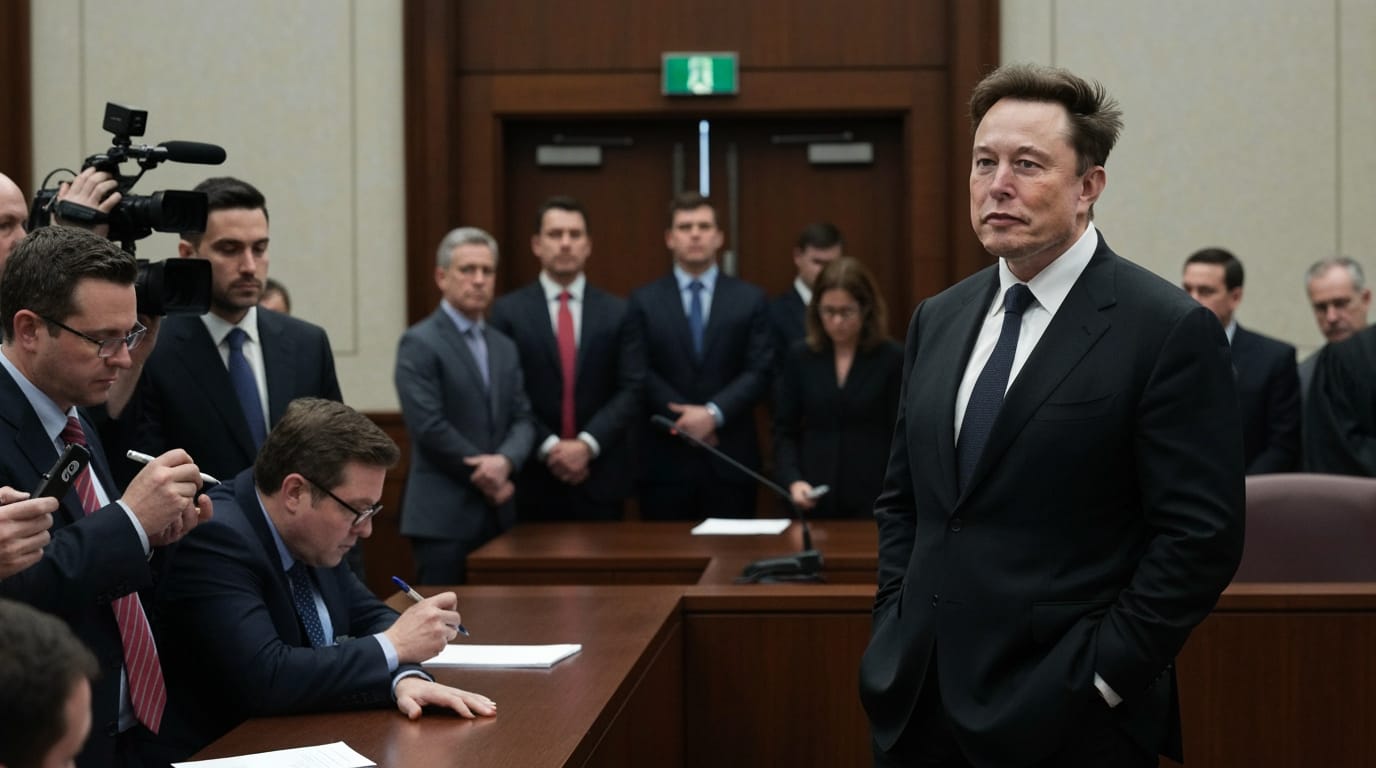
Oakland, CA – A legal and ideological battle poised to shape the future of artificial intelligence commenced today in Oakland, California, as jury selection began in the high-profile lawsuit brought by Elon Musk against OpenAI, its CEO Sam Altman, President Greg Brockman, and co-defendant Microsoft. The highly anticipated trial, overseen by U.S. District Judge Yvonne Gonzalez Rogers, is expected to run through mid-May and represents more than just a corporate dispute; it is a profound cultural debate over whether the revolutionary potential of AI should serve all of humanity or be driven by commercial interests.
The conflict pits two powerful figures at the forefront of the AI revolution against each other: Elon Musk, an original co-founder and early financial backer of OpenAI, and Sam Altman, the current CEO credited with the company's meteoric rise. At the heart of Musk's allegations is the claim that OpenAI has fundamentally betrayed its founding mission as a non-profit organization dedicated to developing artificial general intelligence (AGI) for the benefit of humanity. OpenAI vehemently denies these accusations, characterizing the lawsuit as a vindictive campaign fueled by Musk's personal animosity and competitive ambition, particularly given his own rival AI venture, xAI.
The Genesis of a Vision: OpenAI's Founding Ideals
OpenAI was established in December 2015 as a non-profit research laboratory with an ambitious and altruistic goal: to ensure that artificial general intelligence "benefits all of humanity." Elon Musk, alongside Sam Altman, Greg Brockman, and others, co-founded the organization, driven by concerns about the potential dangers of powerful AI developed by profit-driven entities. The founding charter explicitly stated its intention to collaborate openly and make research and patents publicly available, unconstrained by the need for financial returns. Musk himself contributed approximately $38 million in seed funding, reportedly under the assurance that the organization would never pursue commercial profit.
The initial vision was clear: AI "should be an extension of individual human wills and, in the spirit of liberty, as broadly and evenly distributed as possible," a foundational principle laid out in OpenAI's initial public statements. Researchers were attracted by this mission, with many foregoing more lucrative opportunities at established tech giants to join the nascent organization.
The Shift to a Hybrid Model and Musk's Departure
The path to developing AGI proved to be extraordinarily expensive, requiring billions of dollars for high-end computing resources and top-tier talent. This financial reality led OpenAI to explore alternative funding mechanisms. In 2019, the organization established a for-profit subsidiary with a capped-profit structure, a move intended to attract the significant investment necessary to pursue its ambitious research goals while still being overseen by the non-profit foundation.
This strategic pivot, however, coincided with Elon Musk's departure from OpenAI's board in 2018, citing disagreements over the company's strategic direction and his desire for greater control. According to OpenAI, Musk had sought absolute control over a potential for-profit entity, justifying it by stating he needed the money for his Mars colonization project. When the other founders refused to allow OpenAI to become a subsidiary of his other ventures, Musk allegedly walked away. OpenAI also contends that Musk expressed profound skepticism about the organization's prospects, writing in emails from 2018 that its chances of success were "zero percent." Musk's financial contributions reportedly ceased after his departure, despite earlier pledges.
Following Musk's exit, Microsoft became a pivotal investor and cloud partner, pouring billions into OpenAI and integrating its advanced AI models, such as GPT-4, into its products. The launch of ChatGPT in late 2022 propelled OpenAI into global prominence, fundamentally transforming public perception and driving significant interest in generative AI. In October 2025, the company officially converted into a Public Benefit Corporation, with Microsoft holding a 27% stake and the OpenAI Foundation retaining significant ownership.
The Core of the Legal Battle
Elon Musk's lawsuit, initially filed in November 2024, alleges a "stark betrayal" of OpenAI's original mission. He claims that Sam Altman and Greg Brockman "intentionally courted and deceived Musk," manipulating him out of donations by promising to develop AI for the public good, free from commercial pressures. The lawsuit specifically targets the conversion to a for-profit model and OpenAI's partnership with Microsoft, arguing these actions deviate from the founding agreement. Musk also points to the proprietary nature of advanced models like GPT-4, which he argues is kept secret from the public, contradicting the initial commitment to open-source development.
The remaining claims to be decided by the jury are "breach of charitable trust" and "unjust enrichment." While Musk initially sought up to $134 billion in damages, he has since reformulated his demands, stating that any awarded funds should be directed to the OpenAI Foundation, not to him personally. He is also seeking the removal of Sam Altman and Greg Brockman from their leadership positions and a reversal of OpenAI's for-profit restructuring, aiming for the company to return to its purely charitable roots.
OpenAI, in its defense, has dismissed Musk's lawsuit as a "harassment campaign driven by ego, jealousy, and a desire to slow down a competitor." They contend that Musk's criticisms emerged only after OpenAI achieved significant success with ChatGPT, particularly after he launched his own AI company, xAI, in 2023. OpenAI asserts that Musk was well aware of the discussions surrounding a for-profit entity as early as 2018 and that his contributions were tax-deductible donations rather than investments that would confer ownership rights. Internal communications, including a 2023 text from Altman expressing hurt over Musk's public attacks on OpenAI, have been unsealed, providing a glimpse into the strained relationship between the former allies. OpenAI has also filed counterclaims, accusing Musk of unlawfully disrupting its business relationships through actions such as orchestrating a "sham bid" to acquire the company.
Broader Implications for the AI Landscape
The "Musk vs. OpenAI" trial is more than a personal feud; it is a referendum on the ethical and commercial development of artificial intelligence. The outcome could significantly impact OpenAI, which is currently valued at an estimated $852 billion and reportedly has plans for a trillion-dollar initial public offering (IPO) in the fourth quarter of 2026. A ruling in Musk's favor could potentially delay or complicate these plans, while also setting precedents for how non-profit organizations transition into commercial ventures, particularly in rapidly evolving technological fields.
The courtroom is expected to host testimony from key figures, including Musk, Altman, Brockman, and Microsoft CEO Satya Nadella, offering a rare public window into the inner workings and philosophical debates within the high-stakes AI industry. The legal proceedings will undoubtedly intensify the ongoing discussions about who controls AI, how its immense power should be governed, and whether the pursuit of profit can genuinely align with the promise of technology developed for the universal good. As the trial unfolds, its verdict could indeed sway the balance of power in AI, a technology increasingly seen as both a profound opportunity and a potential existential risk for humanity.


