Tens of Thousands Flood Belgrade in Anti-Government Protest
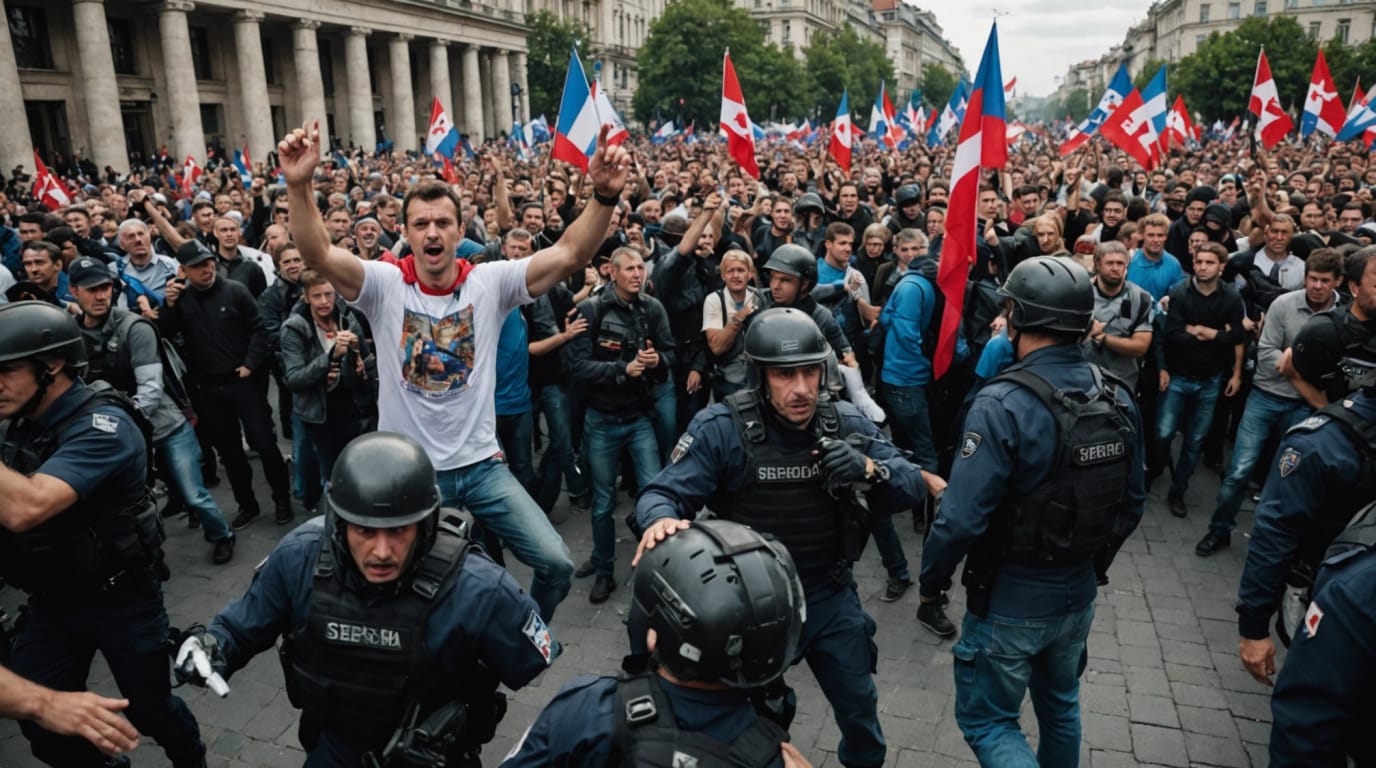
Belgrade, Serbia – Tens of thousands of protesters converged on Belgrade Saturday in what is being described as the largest anti-government rally in years, marking a significant escalation in months-long demonstrations against President Aleksandar Vucic and his administration. The protests, fueled by widespread discontent over corruption and government accountability, have presented the biggest challenge to Vucic's decade-long rule.
Months of Mounting Tensions Culminate in Mass Rally
The demonstration is the culmination of near-daily student-led protests that began in December 2024. The catalyst for the initial wave of unrest was the collapse of a railway station roof in Novi Sad on November 1, which resulted in the deaths of 15 people. Critics have attributed the disaster to government corruption, negligence, and disregard for construction safety regulations.
The tragedy ignited public anger and spurred university students to organize a nationwide anti-graft movement. For months, these students have marched and cycled from across Serbia towards Belgrade, gaining momentum and support along the way. On Friday evening, tens of thousands of people welcomed the students as they arrived in the capital, setting the stage for Saturday's massive rally.
A City on High Alert
In anticipation of the protest, Belgrade was placed on high alert. Authorities canceled all public transportation, and hundreds of riot police were deployed throughout the city, particularly around Pionirski Park and the National Assembly building. President Vucic repeatedly warned of alleged plans for unrest and threatened arrests and harsh sentences for any incidents. Government-backed media amplified these warnings, accusing the protesters of plotting a coup.
Despite the heightened security and warnings, the atmosphere among the protesters was largely jubilant. Demonstrators waved Serbian flags, blew whistles and vuvuzelas, and carried banners with slogans such as "He's Finished!" and "Pump it Up," the latter a rallying cry adopted during the months of student-led protests.
Sporadic Violence and Arrests Mar the Edges of Protest
While the main demonstration remained largely peaceful, sporadic incidents of violence occurred on the fringes. In the Zarkovo suburb of Belgrade, a car rammed into a group of protesters, injuring three people. Police apprehended the driver. In central Belgrade, a student and a university lecturer were injured in an attack by a group of men early Saturday. Police also detained three people after an overnight attack on tractors stationed around Pionirski Park, where supporters of President Vucic had been camped out.
Interior Minister Ivica Dacic reported that police detained 13 people overnight, including six opposition activists accused of plotting to stage a coup and stir unrest. Despite these incidents, student organizers urged those attending the rally to act "in a calm and responsible manner." To further de-escalate tensions, students moved a stage at the center of the planned protest from the front of the National Assembly building to Slavija Square, about 1 kilometer (0.6 miles) away.
Government Response and Political Fallout
The government's response to the protests has been multifaceted. Initially, authorities avoided overt crackdowns or harsh criticism. However, as the protests gained momentum, government-backed media began broadcasting increasingly harsh accusations against the demonstrators. President Vucic himself accused the protesters of organizing "large-scale violence" and warned of a "final" showdown.
In an attempt to address the underlying concerns fueling the protests, Serbian prosecutors have charged at least 13 people in connection with the Novi Sad railway station roof collapse. The government also announced an anti-corruption campaign, and Prime Minister Milos Vucevic and two ministers resigned. However, these measures have failed to quell the public's discontent.
Implications for Serbia's Future
Saturday's mass rally represents a critical juncture in Serbia's political landscape. The sheer size of the demonstration underscores the depth of public dissatisfaction with President Vucic's rule and the pervasive issues of corruption and lack of accountability.
The protests have also exposed deep divisions within Serbian society. Vucic has accused Western intelligence services of backing the protests in an attempt to oust him from power, a claim he has not substantiated with evidence. These accusations reflect a broader narrative of external interference and internal subversion that has become increasingly prevalent in Serbian politics.
The events in Belgrade will likely have far-reaching implications for Serbia's future. The protests have galvanized a new generation of activists and demonstrated the power of collective action. Whether this momentum can be sustained and translated into meaningful political change remains to be seen.
A Nation Divided
The anti-government protests in Serbia reflect a broader trend of political polarization and social unrest in many parts of the world. As citizens become increasingly disillusioned with established political systems and institutions, they are taking to the streets to demand change. The challenge for governments is to respond to these demands in a way that is both effective and respectful of democratic principles.
The situation in Serbia remains fluid and unpredictable. While Saturday's rally was largely peaceful, the potential for further violence and instability cannot be ruled out. The coming days and weeks will be crucial in determining the future direction of the country.


