Tens of Thousands Rally in Support of Czech President Amid Escalating Cabinet Dispute
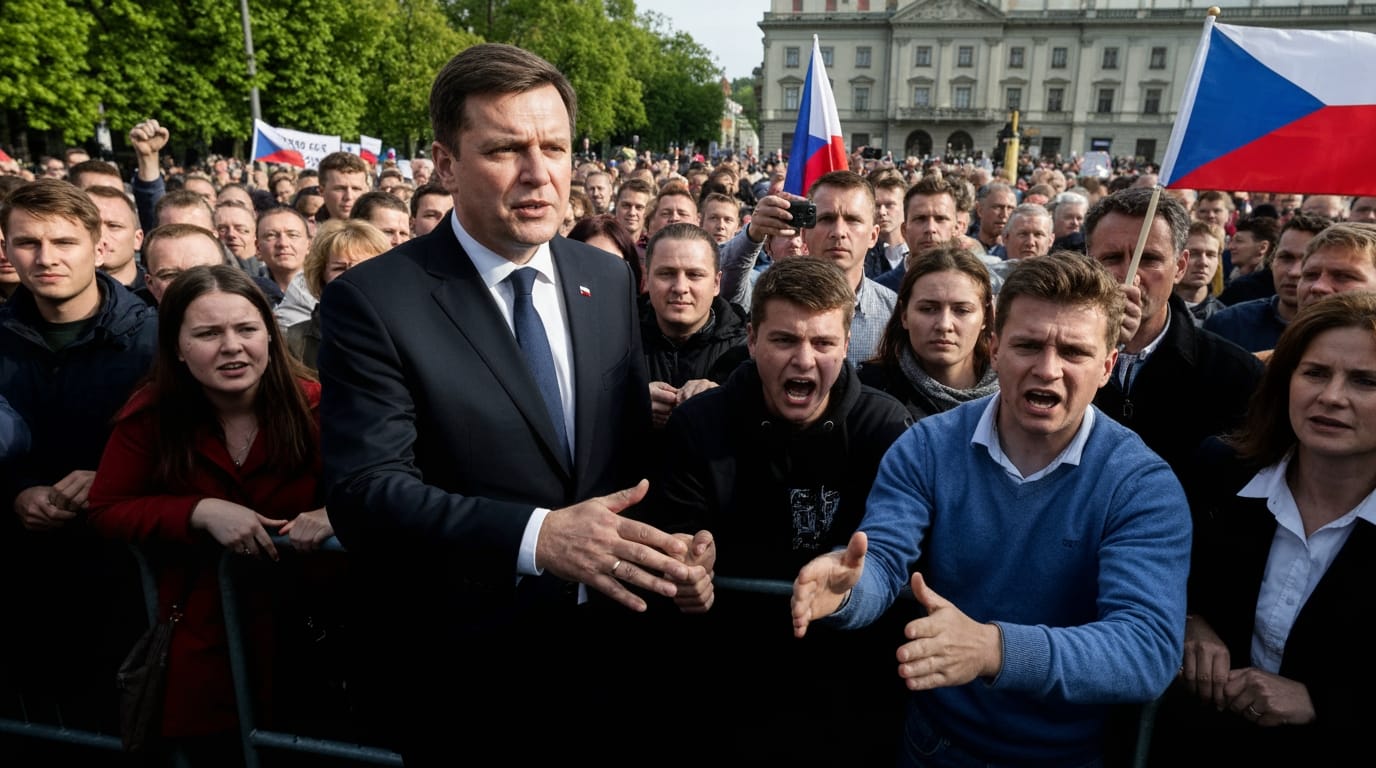
PRAGUE, Czech Republic – Tens of thousands of Czech citizens poured into the streets of Prague and other major cities on Sunday, February 1, 2026, to express overwhelming support for President Petr Pavel. The widespread demonstrations follow an intensifying cabinet dispute, where President Pavel has vehemently refused to approve a ministerial nominee with a controversial past, leading to accusations of political blackmail against the foreign minister. The public outpouring underscores a deepening political divide within the nation and a strong affirmation of the president's stance against extremism.
The Heart of the Rift: A Contentious Ministerial Nomination
The political maelstrom ignited over President Pavel's firm refusal to endorse Filip Turek as the next Environment Minister. Turek, a member of the eurosceptic Motorists party, nominated by Foreign Minister Petr Macinka, faces significant scrutiny over past actions and public statements. President Pavel, a pro-EU and pro-Ukraine former NATO general, cited Turek's history of performing a Nazi salute and posting Nazi memorabilia, alongside other "extremist and racist statements," as grounds for his unsuitability for a cabinet role. Pavel expressed "doubts about loyalty to the democratic order," highlighting concerns that such a controversial figure could undermine the integrity of the government.
The dispute escalated dramatically when President Pavel publicly accused Foreign Minister Macinka of attempting to blackmail him. According to Pavel, Macinka sent threatening text messages to the president's advisor, warning of "consequences" and stating he would "burn bridges" if Turek's nomination was not approved. Pavel described these communications as "extremely serious" and an "unacceptable and absolutely intolerable" attempt at blackmail in a democratic society. He has since submitted a report to security services and is considering filing a criminal complaint. Foreign Minister Macinka, for his part, has denied the blackmail allegations, characterizing his messages as legitimate political negotiation and accusing the president of overstepping his constitutional authority. Prime Minister Andrej Babiš acknowledged the messages were "unfortunate" but rejected claims of blackmail.
A Wave of Public Support: "We Stand With the President"
The public's response to the escalating crisis was immediate and substantial. Organized by the "Million Moments for Democracy" group, rallies swept across the country, with Prague serving as the epicenter. An estimated 80,000 to 90,000 people filled the historic Old Town Square and the adjacent Wenceslas Square, compelling police to close several streets in the capital. Beyond Prague, protests were reported in numerous other towns, including Hradec Králové, Pardubice, and Uherské Hradiště.
Protesters, many waving EU and Czech flags, carried signs emblazoned with messages such as "We stand with the president." Their collective voice resonated with support for President Pavel's pro-Western orientation, his strong stance on Ukraine, and a clear rejection of the perceived extremism embodied by the controversial nominee. The demonstrations also served as a broader expression of opposition to the current eurosceptic coalition government led by Prime Minister Andrej Babiš. The visible public engagement highlighted a societal concern for democratic values and the character of public leadership.
Constitutional Crisis and Political Ramifications
The standoff between President Pavel and Foreign Minister Macinka has quickly evolved into a significant constitutional crisis, revealing deep "cohabitation hell" between the presidency and the government. The president's authority to reject ministerial nominations, particularly on grounds of suitability and democratic loyalty, is being tested. Macinka's alleged threats extended to leveraging foreign policy, suggesting he would inform NATO Secretary General Mark Rutte that Prime Minister Babiš, not President Pavel, would lead the Czech delegation at the July NATO summit if Turek was not appointed. This move signals an attempt to internationalize an internal political dispute, raising concerns about the Czech Republic's standing on the global stage and its commitment to key alliances.
The crisis poses a severe challenge to the stability of the coalition government. Opposition parties have called for Macinka's resignation or dismissal, fearing that the dispute could damage Prague's foreign policy and its relationships with allies. The controversy has already led to the scheduling of a no-confidence vote in Prime Minister Babiš's government, indicating the far-reaching political consequences of this cabinet dispute. Analysts note that while constitutional avenues exist to resolve such impasses, the reluctance to pursue them through legal channels, such as the Constitutional Court, points to underlying coalition dynamics and ideological clashes.
A Test of Democratic Resolve
The mass rallies supporting President Petr Pavel represent a powerful public endorsement of his defense of democratic principles and the values of integrity in public office. The events have brought into sharp focus the tensions between presidential authority and governmental prerogative, particularly when confronted with nominees whose past actions clash with foundational democratic norms. As the dispute continues, with potential legal proceedings and a looming no-confidence vote, the Czech Republic navigates a critical period for its political landscape. The engagement of tens of thousands of citizens underscores the societal demand for accountability and a clear rejection of extremism, signaling a vigilant public determined to safeguard the country's democratic trajectory and its international standing. The coming weeks will be crucial in determining the resolution of this profound political challenge and its long-term implications for Czech governance.


