Tensions Flare on Israel-Lebanon Border After Rocket Fire
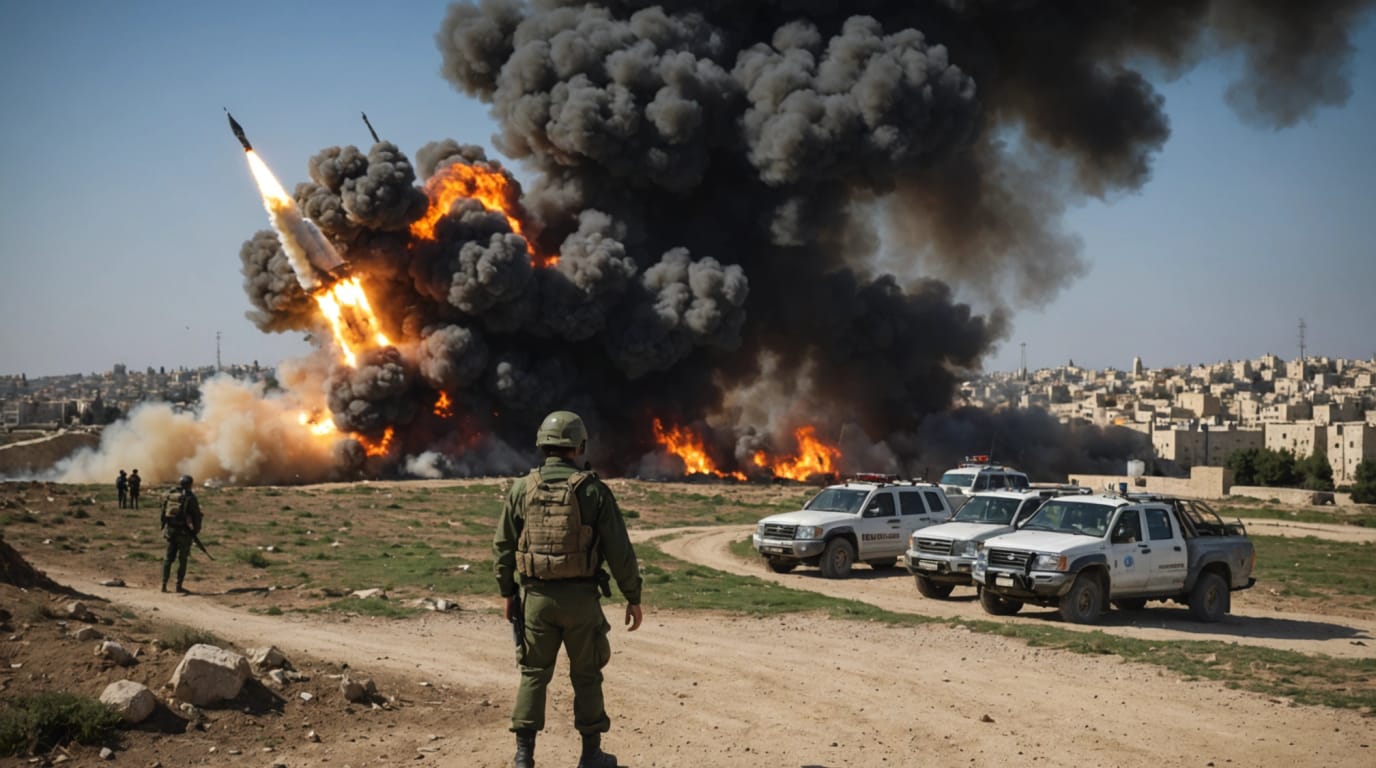
Tensions along the Israel-Lebanon border have escalated sharply after rockets were fired from Lebanese territory into northern Israel on Saturday, prompting immediate Israeli retaliation with artillery and airstrikes. The exchange of fire threatens to unravel a fragile ceasefire brokered in November 2024 between Israel and Hezbollah, raising concerns of a renewed conflict.
The incident began early Saturday morning when three rockets were launched from Lebanon toward the Israeli town of Metula. The Israeli military reported intercepting the rockets using its Iron Dome air defense system. According to Israeli media reports, a total of six rockets were launched, with three falling back into Lebanese territory. Sirens wailed in the region as the attack unfolded.
In response, the Israeli military launched artillery and airstrikes targeting several locations in southern Lebanon. Lebanon's state-run National News Agency reported that Israeli forces shelled the town of Yahmur al-Shiqayf in the Nabatieh Governorate, as well as the areas of Arnun and Kafr Tibnit, near the southern border. Additional shelling targeted the towns of Khiam and Houla, while heavy machine gun fire was directed at the border towns of Houla, Markaba, and Kfar Kila.
Ceasefire in Jeopardy
The cross-border exchange marks the first significant escalation since the U.S.-brokered ceasefire took effect on Nov. 27, 2024, ending over a year of intermittent conflict between Israel and Hezbollah. The agreement stipulated that Hezbollah remove its forces from southern Lebanon, with Israeli forces expected to withdraw from border positions and Lebanese army units deployed in their place.
However, tensions have persisted despite the ceasefire. Lebanese officials have accused Israel of repeatedly violating the agreement through ground incursions and aerial strikes. Israel, in turn, alleges that Hezbollah continues to maintain unauthorized military infrastructure in southern Lebanon. According to Lebanese sources, at least 94 people have been killed and 288 injured in Israeli attacks since the ceasefire was declared. Israel reportedly continues to occupy five positions along the frontier: Hamamis Hill, Aziyye Hill, Uveyda Hill, Mount Balat, and Lebbune Hill.
Israeli Response and Warnings
Israeli leaders have vowed a strong response to the rocket fire. Defense Minister Israel Katz asserted that Israel would not tolerate attacks on its northern communities, particularly in the Galilee region. "We cannot allow fire on Galilee communities," Katz said, adding that the Lebanese government bears full responsibility for any aggression from within its borders. He ordered the military to strike back. Israeli army chief Eyal Zamir also promised a harsh response, stating, "The IDF will respond severely."
The Israeli military has approved operational plans for a potential offensive in Lebanon amid rising border tensions. Israel has warned of a “severe” response to rocket fire from Lebanon into northern Israel, as tensions continue to rise along the border.
Lebanese Concerns
Lebanese Prime Minister Nawaf Salam has expressed serious concerns that the escalation could drag Lebanon into another war. "Salam warned of renewed military operations on the southern border, because of the risks they carry dragging the country into a new war, which will bring woes to Lebanon and the Lebanese people," read an official statement. Salam emphasized the need for Lebanon to assert its sovereignty, stating, "All security and military measures must be taken to show that Lebanon decides on matters of war and peace." He cautioned that any escalation risked bringing additional suffering to the Lebanese people.
Regional Implications
The renewed tensions on the Israel-Lebanon border come at a sensitive time, with the region already grappling with the ongoing conflict in Gaza. The latest exchange of fire raises concerns about the potential for a wider regional conflict. The strikes also come in the wake of rising tensions between Israel and Hezbollah, which began launching rockets, drones, and missiles into Israel after the Hamas attack on October 7, 2023. Since then, Israeli forces have launched several waves of airstrikes on Hezbollah targets in southern and eastern Lebanon, killing senior members of the outfit.
Hezbollah has not yet claimed responsibility for the latest rocket fire and has yet to issue a statement.
Fragile Stability at Risk
The recent escalation along the Israel-Lebanon border underscores the fragility of the ceasefire and the persistent tensions between Israel and Hezbollah. The exchange of fire, the first significant violation of the agreement in months, raises the specter of a return to full-scale conflict. With both sides trading accusations of ceasefire violations and vowing to protect their interests, the situation remains highly volatile. The international community is closely watching the developments, hoping to prevent a further deterioration of the security situation and a descent into renewed hostilities.


