Tesla's Trillion-Dollar Bet: Musk's Pay Deal Hinges on Robotaxis and AI Bots
A colossal compensation package for Tesla CEO Elon Musk, potentially valued at up to $1 trillion, has received shareholder approval, cementing an unprecedented gamble on the company's ambitious ventures into robotaxis and artificial intelligence-powered humanoid robots. This extraordinary deal ties Musk's future earnings directly to the realization of a futuristic vision, repositioning Tesla far beyond its origins as an electric vehicle manufacturer and into the realm of AI and robotics dominance.
The approval, which occurred at Tesla's annual meeting in Austin, Texas, reflects a decisive vote of confidence from a majority of shareholders, despite significant criticism and ongoing legal challenges surrounding a prior compensation plan. This new framework places immense pressure on Tesla to deliver on its promises of autonomous mobility and advanced robotics, as Musk's staggering potential payout is entirely contingent on hitting aggressive technological and financial milestones.
The Anatomy of an Unprecedented Compensation Plan
The recently approved pay package for Elon Musk is structured as a 10-year performance award, potentially allowing him to unlock stock options that could reach an estimated $1 trillion in value. This makes it one of the most audacious executive compensation structures in corporate history. To fully vest in this award, Tesla must achieve a series of highly ambitious targets over the next decade. These include increasing the company's market capitalization to an astounding $8.5 trillion, delivering 20 million vehicles, and deploying 1 million robotaxis. Additionally, a critical milestone involves producing 1 million Optimus humanoid robots annually. The plan also demands a significant leap in Tesla's operating profit, from an estimated $17 billion in 2024 to $400 billion annually. Musk's compensation is entirely "at-risk," meaning he receives no salary or cash bonuses, aligning his financial incentives directly with Tesla's long-term growth and its ability to achieve these monumental goals.
This 2025 proposal builds upon a similar, albeit smaller, 2018 compensation package that was valued at up to $56 billion at its inception. That earlier plan, which saw Musk hit all 12 operational and market capitalization milestones by 2023, faced severe legal scrutiny. The new package, however, sets even higher bars for market capitalization growth and introduces product-specific targets for robotaxis and Optimus robots, explicitly linking Musk's future wealth to the success of these nascent technologies.
The Robotaxi Revolution: Tesla's Autonomous Bet
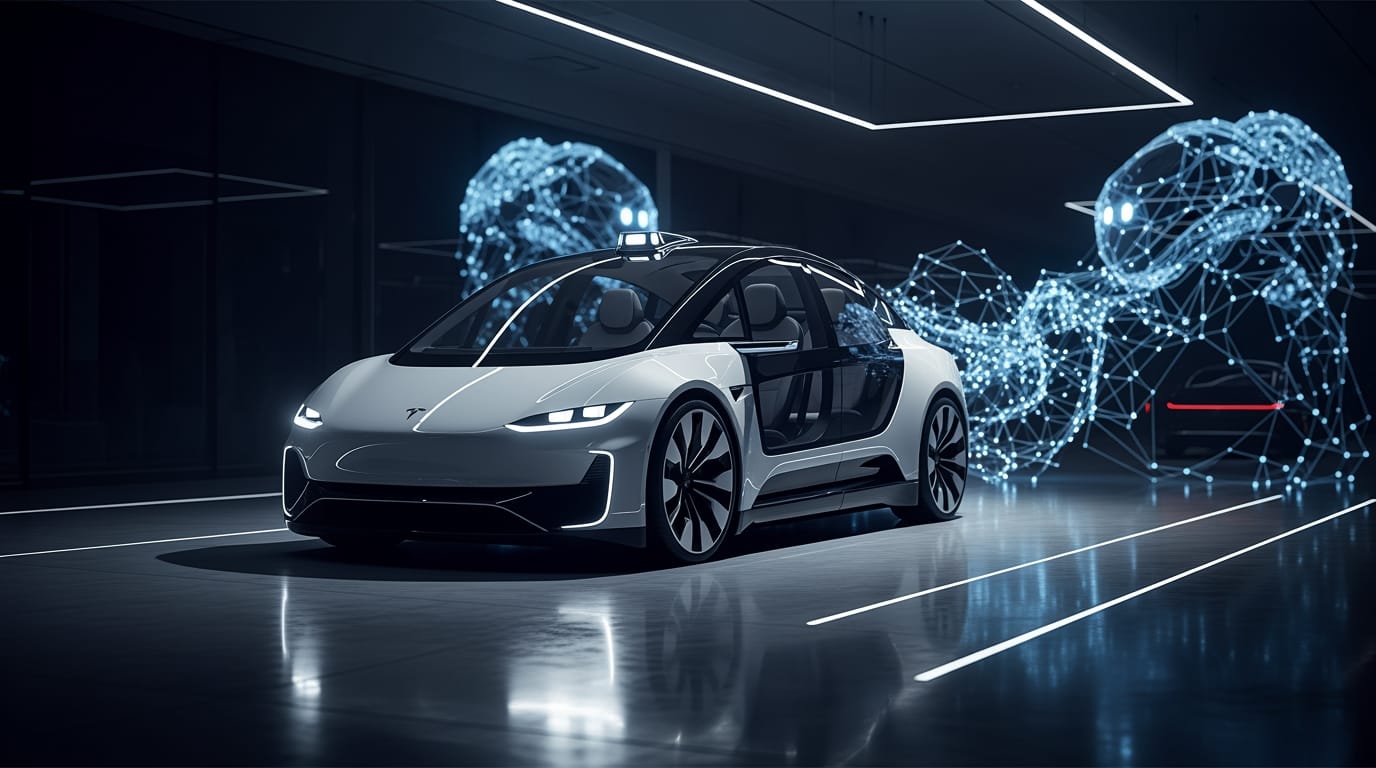
Central to Tesla's projected valuation and Musk's compensation is the success of its robotaxi initiative. The company's vision involves establishing a self-driving ride-hailing service that, if realized, could generate massive recurring revenue streams. Proponents argue that the robotaxi business could constitute a significant portion of Tesla's enterprise value, with some analysts estimating its contribution could be as high as $2.25 trillion by 2029. Tesla's strategy for robotaxis relies on a camera-only technology platform, differentiating it from competitors who often incorporate LiDAR and high-definition maps.
Musk has been vocal about his intent to launch a paid robotaxi service, beginning with pilot programs in cities like Austin, Texas, and planning expansion to other markets. The company aims to have 1 million robotaxis in operation as one of the key targets for the compensation package. However, this ambitious approach faces significant skepticism regarding its technological feasibility and the regulatory hurdles inherent in deploying fully autonomous vehicles without geographic limitations. Critics point to the challenges of achieving true Level 4 autonomy with a camera-only system and the substantial capital investment required for such a service. Despite these concerns, Tesla remains committed, positioning robotaxis as a pivotal strategic pivot from one-time hardware sales to high-margin service revenue.
Optimus and the AI Frontier: Beyond Electric Vehicles
Beyond autonomous driving, the humanoid robot project, Optimus, represents another cornerstone of Tesla's future valuation and Musk's compensation. Musk has made bold claims, asserting that Optimus could eventually account for as much as 80% of Tesla's long-term value, potentially contributing to revenues exceeding $10 trillion. This vision positions Tesla not merely as an automaker, but as a leading AI and robotics innovator, aiming to revolutionize manufacturing, household tasks, and various aspects of human labor.
Optimus is designed to perform human-like physical tasks, leveraging Tesla's AI, battery, motor, and autonomous driving technology. Tesla anticipates massive cost savings by integrating Optimus into its factories and envisions mass production by late 2026, with an ambitious goal of 1 million units annually. The ability of these robots to learn tasks from human video tutorials is highlighted as a key feature, enabling adaptability and "task extensibility." The targets for Musk's compensation underscore the critical importance of Optimus, requiring 1 million Tesla Bots as a milestone. This deep dive into AI and robotics, particularly with Optimus, signifies Tesla's strategic shift and its CEO's belief that these technologies will unlock unprecedented economic value.
Legal Quagmires and Shareholder Scrutiny
The path to Musk's unprecedented compensation has been fraught with legal challenges, specifically regarding his 2018 pay package. In January 2024, a Delaware Court of Chancery judge rescinded the original $56 billion compensation plan, concluding that Musk had engineered it through "sham negotiations" with a board that lacked independence. The court found that shareholders were not fully informed when they initially approved the package.
Following this ruling, Tesla shareholders voted again in June 2024, and then in November 2025, to ratify Musk's compensation package, with a significant majority in favor. While these subsequent votes demonstrate strong shareholder support, the legal battle continues. The Delaware judge reaffirmed her ruling in December 2024, denying Tesla's request to vacate the order to rescind the pay package, stating that the company's arguments for post-judgment shareholder ratification were "fatally flawed" and went against "settled law." This ongoing legal dispute creates uncertainty, as Tesla and Musk plan to appeal the decision, aiming to reinstate the compensation agreement. The outcome of these appeals could significantly impact the precedent for executive compensation and corporate governance, even as a new, even larger package has gained shareholder approval.
High Stakes, High Rewards: Implications for Tesla's Future
The approval of Elon Musk's potential trillion-dollar pay package marks a pivotal moment for Tesla, shifting its strategic narrative even further away from being solely an electric vehicle company. The company's future valuation and its CEO's wealth are now explicitly linked to the successful commercialization of highly speculative and complex technologies like robotaxis and humanoid robots. This strategic pivot comes amid challenges for Tesla's core EV business, including slowing demand, increased competition from traditional automakers, and rising competition from Chinese manufacturers.
The emphasis on AI and robotics is viewed by supporters as a necessary step to maintain Tesla's growth trajectory and justify its premium valuation. However, critics warn of potential risks, including stock dilution, governance concerns due to concentrated power, and the distraction of Musk's other ventures and political activities. The success of this high-stakes bet will depend on overcoming formidable technical, regulatory, and market challenges that have historically proven difficult for even the most advanced companies. The next decade will reveal whether Tesla can transform into the AI and robotics powerhouse its CEO envisions, thereby fulfilling the conditions for his unprecedented compensation.
Conclusion
Elon Musk's potential trillion-dollar Tesla pay package is more than just an executive compensation deal; it is a profound declaration of intent for the company's future. By tying Musk's unprecedented rewards to the realization of widespread robotaxi services and mass-produced AI humanoid robots, Tesla has embarked on an ambitious journey that aims to redefine its core business and revolutionize multiple industries. This high-stakes gamble, backed by a significant portion of its shareholders, places Tesla at the forefront of the AI and robotics frontier, promising immense rewards if successful, but also confronting considerable technical, market, and legal uncertainties. The coming years will serve as a critical test of whether this bold vision can translate into tangible reality and justify the extraordinary faith placed in its controversial, yet undeniably transformative, leader.