Thailand's Enduring Political Battle: Reformists Challenge Conservative Grip in Pivotal Elections
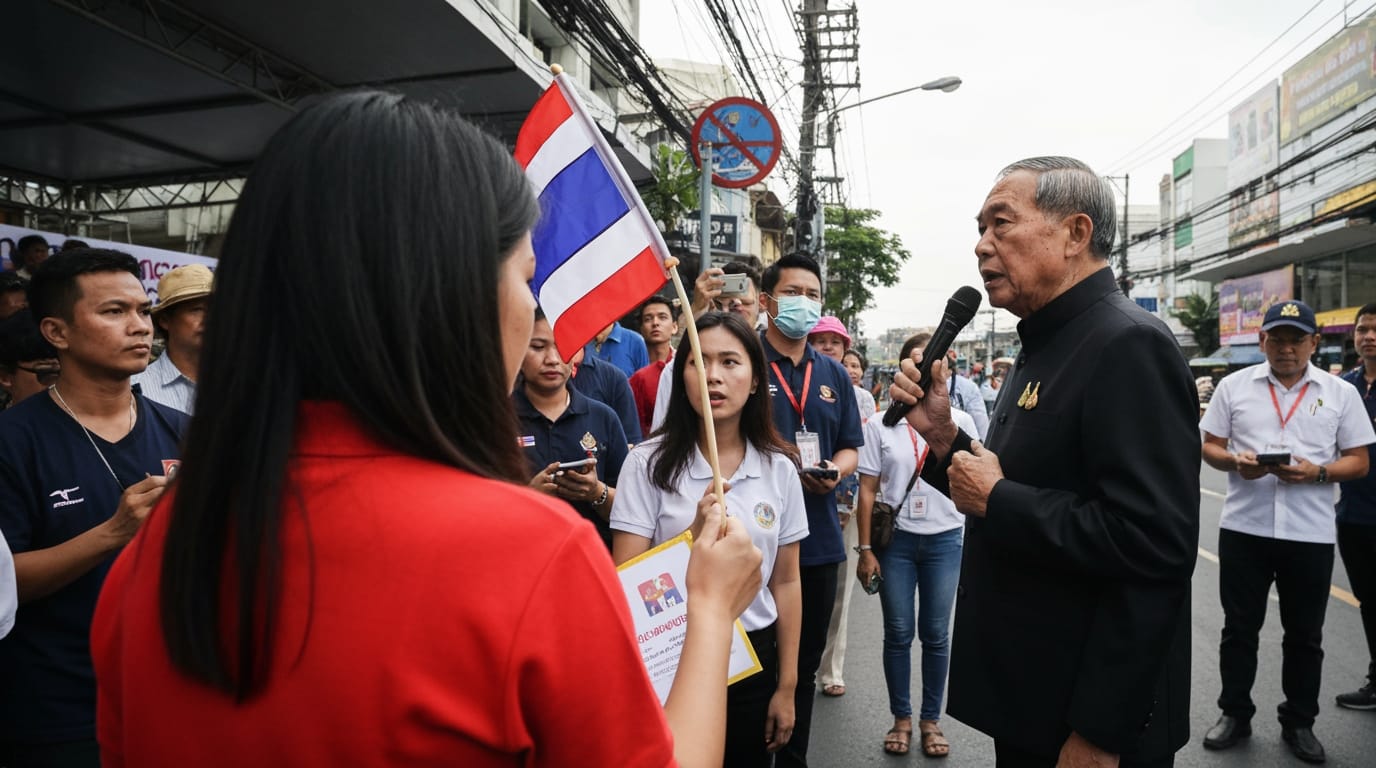
BANGKOK – Thailand finds itself perpetually at a political crossroads, where the clamor for democratic reforms repeatedly clashes with the enduring influence of a conservative establishment rooted in military and royalist traditions. The general election of May 2023 served as a stark illustration of this divide, delivering a stunning popular mandate to progressive forces only to see their path to power obstructed by an intricate web of constitutional mechanisms and entrenched interests. As the nation gears up for another election, scheduled for February 8, 2026, the echoes of past struggles reverberate, highlighting a persistent fight for the kingdom's political future.
The Mandate for Change: The 2023 Election Upset
The May 14, 2023, general election marked a watershed moment in Thai politics, witnessing an unprecedented turnout of nearly 40 million voters and a decisive swing towards opposition parties. Defying pre-election predictions that favored the Pheu Thai Party, the progressive Move Forward Party (MFP), led by Pita Limjaroenrat, emerged as the unexpected victor, securing the largest share of seats in the House of Representatives with 151 mandates. This victory signaled a significant liberal breakthrough, driven largely by younger, urban voters disillusioned with decades of political instability, military coups, and a stagnant economy.
The MFP campaigned on a bold platform of fundamental reforms aimed at democratizing the country and curbing military influence. Key proposals included amending the controversial lèse-majesté law (Article 112 of the Criminal Code), which penalizes criticism of the monarchy, decentralizing power, tackling corruption, abolishing military conscription, and scrutinizing the royal budget. These stances positioned MFP as a direct challenge to the traditional power structures that had long dominated Thai politics. The incumbent Prime Minister at the time, Prayut Chan-o-cha, a former army chief who seized power in a 2014 coup and governed for nine years, saw his United Thai Nation Party and other pro-military factions lose significant ground. Prayut ultimately retired from politics in July 2023, stepping down from his long-held position.
The Unyielding Grip: Constitutional Obstacles and Senate's Veto
Despite the clear electoral success of the Move Forward Party, their path to forming a government was fraught with constitutional hurdles designed to protect the conservative establishment. Under Thailand's 2017 Constitution, drafted post-coup, the Prime Minister is elected by a combined vote of both the 500-member House of Representatives and the 250-member military-appointed Senate. This meant a prime ministerial candidate needed at least 376 votes from the combined National Assembly.
The unelected Senate, largely composed of individuals appointed by the previous military junta, proved to be an insurmountable barrier for the reformists. Critics argued that the Senate's powers were explicitly designed to maintain the influence of the National Council for Peace and Order (NCPO), the military body that governed after the 2014 coup. When Pita Limjaroenrat of MFP sought the premiership, the Senate, alongside pro-establishment parties, effectively blocked his nomination, thwarting the will of the electorate. This parliamentary deadlock eventually led the Pheu Thai Party, which came in second in the general election, to dissolve its alliance with MFP and form a government with conservative and pro-military parties, nominating Srettha Thavisin as Prime Minister in August 2023.
Dissolution and Re-emergence: The Ongoing Fight for Reform
The challenges for the reformist movement did not end with the blocked premiership. In August 2024, the Constitutional Court delivered a significant blow by dissolving the Move Forward Party and banning its 11 executives, including former leader Pita Limjaroenrat, from politics for 10 years. The court ruled that MFP's proposal to amend the lèse-majesté law amounted to an attempt to overthrow Thailand's constitutional monarchy, thereby violating the Political Parties Act. This decision, which effectively disenfranchised over 14 million voters, drew criticism from human rights groups and international observers, who viewed it as a setback for democratic principles.
However, the spirit of reform proved resilient. Former members of MFP swiftly regrouped under a new banner, forming the People's Party, with Natthaphong Ruengpanyawut, an IT entrepreneur, taking the helm. The People's Party has inherited the reformist mantle, advocating for similar policies such as abolishing conscription, enacting a democratic constitution, and reforming the bureaucracy, alongside a strong focus on anti-corruption efforts and economic equality.
A Nation at the Crossroads: The Road to the 2026 Election
As Thailand approaches the upcoming general election on February 8, 2026, the political landscape continues to be shaped by the enduring struggle between calls for change and the forces of continuity. The People's Party, as the successor to MFP, is once again leading opinion polls, particularly among young and urban voters, although an outright majority remains uncertain.
A significant change in the electoral process for this upcoming election is the exclusion of the Senate from the prime ministerial selection. The transitional five-year period during which the military-appointed Senate had the power to vote for the prime minister expired in 2024, meaning that the new Prime Minister will now be elected solely by the 500 members of the House of Representatives. This shift theoretically lowers the threshold for a party or coalition to form a government, requiring 251 seats in the House.
However, the shadow of judicial intervention looms large, with the Constitutional Court having removed four prime ministers in the past 16 years. The current Prime Minister, Anutin Charnvirakul of the Bhumjaithai Party, assumed office in September 2025, following a period of political volatility that saw two other prime ministers removed by the Constitutional Court since the 2023 election.
The economy remains a primary concern for Thai voters, with household debt at 90% of GDP and sluggish growth since 2019. Parties are actively addressing these concerns, with the Pheu Thai Party, for instance, proposing populist economic policies such as cash handouts, expanded healthcare, and minimum wage increases, while also being conservative on monarchy reforms. The People's Party emphasizes tackling corruption and creating more decentralized job opportunities to address economic disparities. The Bhumjaithai Party, currently in power, is also a key player, often acting as a kingmaker in coalition negotiations and appealing to conservative regions.
Conclusion
The upcoming Thai election represents another critical juncture in the nation's protracted journey towards a more fully democratic system. The 2023 election demonstrated a powerful public appetite for change and reform, yet the subsequent political machinations and judicial interventions underscored the formidable obstacles posed by an entrenched conservative establishment. While the Senate's diminished role in selecting the prime minister offers a ray of hope for a more representative outcome, the ongoing influence of conservative forces and the potential for further judicial interference mean that the struggle for democratic aspirations against traditional power structures remains the defining feature of Thai politics. The upcoming polls will not just elect representatives but will once again test the resilience of Thailand's evolving democracy.


