The Drone Doctrine: How Unmanned Aircraft Reshaped Iran's Regional Axis
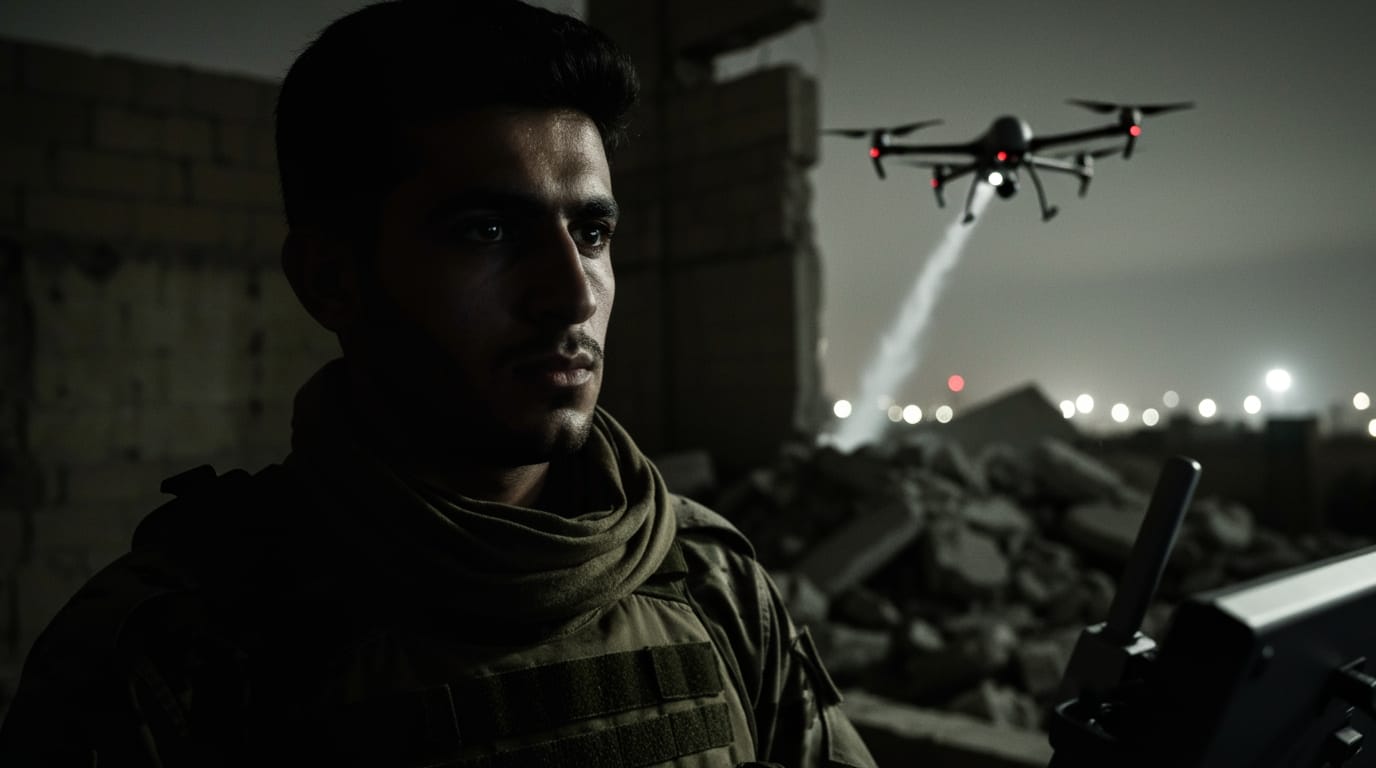
The Middle East stands at a critical juncture, witnessing a profound transformation in regional power dynamics largely driven by the proliferation and strategic deployment of drones. Iran's consistent development and transfer of advanced unmanned aerial vehicle (UAV) technology to its network of allied militias, often referred to as the "Axis of Resistance" in Lebanon, Gaza, Yemen, and Iraq, have fundamentally altered the landscape of asymmetric warfare. This strategic shift empowers non-state actors with unprecedented precision strike capabilities and a potent, cost-effective means to challenge technologically superior adversaries, reshaping both tactical engagements and broader geopolitical calculations across the region.
The Genesis of an Asymmetric Advantage
Iran has, for decades, cultivated a robust indigenous drone program, born out of necessity to counter the conventional military superiority of its regional rivals and global powers. Under heavy international sanctions, Tehran recognized UAVs as a highly effective, low-cost alternative to traditional airpower, capable of both intelligence gathering and offensive operations. This program accelerated, moving from early surveillance drones like the Mohajer in the mid-1980s to the versatile Ababil series, laying the groundwork for a sophisticated industry.
The core strategy behind Iran's drone proliferation is to provide its proxies with an asymmetric advantage, enabling them to impose costs on adversaries and project influence beyond Iran's immediate borders. This approach leverages the relatively inexpensive nature of drones, such as the Shahed-136, which can cost as little as $7,000 per unit, against much more expensive defensive systems like Patriot missiles, which run into millions of dollars. This cost asymmetry allows for saturation attacks designed to overwhelm sophisticated air defenses through sheer volume, thereby stretching an adversary's resources and inflicting a psychological toll.
Hezbollah's Evolving Aerial Arsenal in Lebanon
Hezbollah, Iran's most established and potent proxy in Lebanon, has been a primary beneficiary of Tehran's drone technology transfers since as early as 2004. Initially, these drones were used for reconnaissance and surveillance, such as the Mirsad-1, which successfully penetrated Israeli airspace in 2004 and 2005, evading detection by Israeli radars. This early success highlighted vulnerabilities in conventional air defenses and signaled a new era of regional threats.
Over the years, Hezbollah's drone capabilities have evolved significantly, moving beyond mere surveillance to encompass attack roles. The group has integrated Iranian-made UAVs into its operational doctrine, employing them in Syria and, more recently, against Israeli targets. Reports indicate Hezbollah's use of drones with explosive payloads, capable of flying hundreds of kilometers and even damaging Israeli military infrastructure. The introduction of First-Person View (FPV) drones, supported by Iranian expertise, represents a tactical leap, offering precision strike capabilities, enhanced maneuverability, and a heightened challenge for interception due to their small size, low radar signature, and ability to evade electronic jamming. These low-cost FPV drones, estimated at $500-$1000 each, provide a rapidly deployable and effective tool for tactical precision strikes within a range of 5-20 km, filling a previous gap in Hezbollah's arsenal.
Expanding Reach: Gaza, Yemen, and Iraq
The Iranian drone doctrine has found fertile ground among other Axis of Resistance members, notably Hamas in Gaza, the Houthi movement in Yemen, and various Shiite militias in Iraq. These groups have adapted and deployed Iranian-supplied or inspired drone technologies with increasing sophistication.
In Gaza, Hamas has effectively utilized drones to disrupt Israeli surveillance capabilities and coordinate assaults. During the October 2023 conflict, Hamas deployed both commercial off-the-shelf quadcopters fitted with explosives and purpose-built fixed-wing drones like the Zouari and the longer-range Shehab. These drones were instrumental in overwhelming Israeli defenses by striking communication towers, surveillance cameras, and even armored vehicles, creating a "smokescreen" for ground forces. The group has also established manufacturing and storage facilities for UAVs within residential areas in Gaza, indicating a growing local production capability, although it's unclear if components are locally made or smuggled.
In Yemen, the Houthi movement has demonstrated a remarkable embrace of drone warfare, commencing large-scale attacks with armed drones since 2016. Their arsenal, including the Qasif-1 (an Iranian Ababil-T variant) and the Samad-3, has been used extensively against Saudi-led coalition forces, commercial shipping in the Red Sea, and directly targeting Israeli territory. Houthi drone attacks on commercial and military ships from November 2023 to January 2024 targeted over 100 merchant vessels, sinking two and significantly impacting global trade through the Red Sea corridor. A notable Houthi drone attack in July 2024 struck Tel Aviv, killing one person and injuring ten, demonstrating their expanding reach and the evolving threat they pose.
Iraqi militias, particularly Kataib Hezbollah, have also integrated advanced drone capabilities, mirroring tactics seen in Yemen. Since early 2021, these groups have shifted from traditional rocket attacks to launching kamikaze drones against U.S. forces and diplomatic targets. In March 2026, Kataib Hezbollah released footage of an FPV drone strike on Camp Victory near Baghdad International Airport, showcasing the drone's ability to evade air defenses and strike specific targets like a Sentinel radar system. The use of fiber-optic controlled FPV drones allows these militias to bypass electronic jamming, enhancing precision and challenging conventional U.S. defenses.
Strategic Implications and Regional Fallout
The widespread adoption of Iranian drone technology by these non-state actors has significant strategic implications. It democratizes access to aerial power, enabling groups with limited conventional military strength to challenge state actors. Drones offer a means to generate persistent military and psychological pressure, impose economic strain, and force adversaries to expend costly interceptors against low-cost systems.
The conflicts involving these proxies highlight a critical shift where drones are no longer merely auxiliary systems but central instruments of modern air campaigns. Their effectiveness stems from a combination of affordability, mass production, and adaptability, allowing for strategic effects even when air defense penetration rates are not perfect. This has forced conventional militaries, like those of the U.S. and Israel, to adapt their defensive measures, including developing improved detection systems and counter-drone tactics, while facing the economic challenge of defending against swarms of cheap drones.
Conclusion: A New Era of Asymmetric Warfare
The transformation wrought by drones within Iran's Axis of Resistance militias is undeniable. From surveillance to precision strikes, these unmanned aircraft have become indispensable tools, granting regional non-state actors unprecedented capabilities. This strategic evolution, heavily supported by Iran's indigenous drone program and technology transfers, has reshaped the calculus of regional conflicts, creating new vulnerabilities for conventional forces and amplifying the asymmetric threat landscape. The ongoing proliferation and innovative use of drones by Hezbollah, Hamas, the Houthis, and Iraqi militias underscore a future where low-cost, adaptable aerial platforms will continue to play a pivotal, and potentially escalatory, role in the Middle East's complex security environment. The dynamic interplay between offensive drone capabilities and defensive countermeasures will undoubtedly define the next chapter of warfare in the region.