The End of a Saga: Rescued Humpback 'Timmy' Found Dead Off Danish Coast
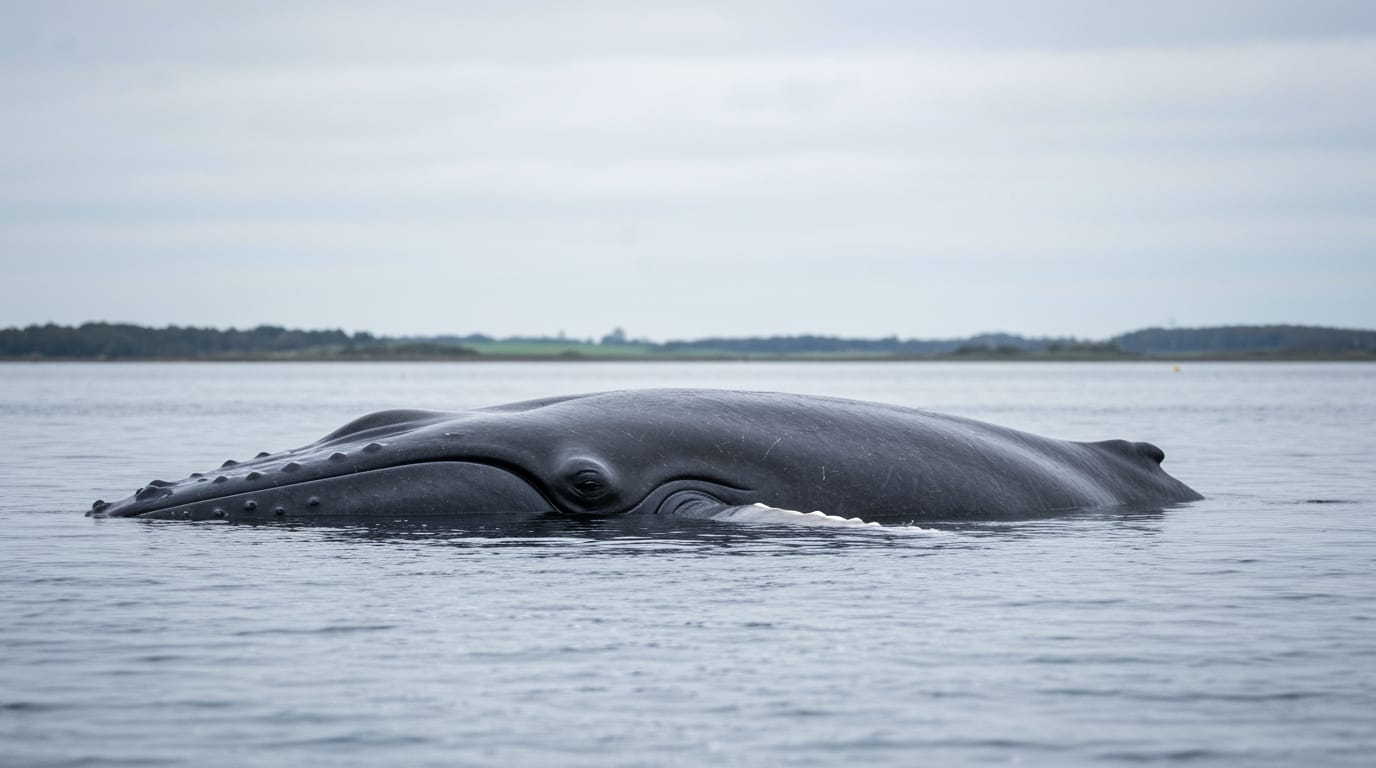
Anholt, Denmark — The widely followed and deeply controversial saga of Timmy, the humpback whale whose dramatic rescue from German shallow waters captivated international attention, has reached a somber conclusion. Danish authorities confirmed Saturday that a dead whale discovered off the island of Anholt is indeed the same young humpback that was the subject of an expensive and highly debated operation to return it to the North Sea just two weeks prior. The identification was made possible through a tracking device attached during the rescue, bringing a definitive end to a narrative that sparked both hope and skepticism among conservationists and the public alike.
The discovery Friday near Anholt in the Kattegat strait, which lies between Denmark and Sweden, ended a period of uncertainty since Timmy's release. The Danish Environmental Protection Agency officially confirmed the whale's identity on Saturday, noting that a local employee was able to retrieve the tracking device, whose unique number corresponded with Timmy's. This development reignites discussions surrounding the ethics and efficacy of such large-scale interventions for distressed wild animals, particularly those already deemed to be in a compromised state.
A Whale of a Rescue: Timmy's Journey from Stranding to the Sea
Timmy's plight began in late March when the juvenile humpback became stranded on Timmendorfer beach, a sandbank off Germany's Baltic coast. The whale repeatedly ran aground, unable to navigate back to deeper waters. This unusual appearance in the Baltic Sea, an environment generally unsuited for humpbacks, quickly garnered widespread media coverage and public sympathy, particularly in Germany, where the whale affectionately earned the nickname "Timmy."
As Timmy's health deteriorated, German officials initially expressed doubts about the feasibility of a successful rescue, suggesting that the animal was likely too ill or disoriented to survive. However, a national outcry and an outpouring of public concern led to an extraordinary, privately funded rescue initiative. Reports indicated the operation cost approximately €1.5 million. The ambitious plan involved moving the 10-to-12-meter-long whale onto a specialized water-filled barge. This colossal effort saw Timmy transported by tugboat from Wismar Bay, near Lübeck in Germany, through Danish waters, and finally released into the North Sea on May 2.
The rescue attempt was a spectacle, with some parts of the journey even broadcast live, drawing an international audience. However, the exact moment of Timmy's release into the vastness of the North Sea was not publicly televised. The entire operation was marked by a blend of public adoration and scientific apprehension.
Expert Warnings and Lingering Questions
From the outset, the rescue mission was not without its critics. Concerns were raised by marine experts and organizations, including the International Whaling Commission, who deemed the intervention "inadvisable." These experts pointed to Timmy's already compromised state, weakened by weeks of stranding in shallow waters. They cautioned that the stress of the rescue, coupled with potential muscle weakness and exhaustion, made the whale's long-term survival unlikely. The debate underscored a fundamental tension in wildlife conservation: when does human intervention, driven by compassion, become detrimental to an animal's welfare? Some experts had even suggested that euthanasia might have been a more humane option, considering the whale's slim chances of recovery.
The whale was found approximately 70 kilometers (about 45 miles) south of its release location near Skagen, at Denmark's northern tip. The carcass now rests in shallow water, about 75 meters from the shore near Anholt. As of now, Danish authorities have not provided an official explanation for Timmy's death. Furthermore, there are no immediate plans to remove the whale's body or conduct a necropsy, as it is not currently considered to pose a problem in the area.
Despite the decision not to perform a necropsy, the death of Timmy leaves unanswered questions regarding the ultimate cause. Whether it was the cumulative toll of its prolonged stranding, underlying illness, or complications from the rescue effort remains speculative without further examination.
Public Safety and the Broader Context of Humpbacks
In light of the public interest in Timmy, the Danish Environmental Protection Agency has issued warnings urging people to maintain a safe distance from the carcass. This cautionary advice is twofold: to prevent potential transmission of diseases the whale might carry and to mitigate the risk of explosion. As the whale decomposes, internal gases can accumulate, creating a hazardous situation.
Timmy's unusual presence in the Baltic Sea also highlights broader ecological considerations. Humpback whales are highly migratory creatures, typically traveling thousands of kilometers annually between warm tropical breeding grounds and colder, food-rich feeding areas, such as those found in the North Atlantic. While humpback populations, particularly in the North Atlantic, have shown significant recovery since the cessation of commercial whaling in 1986, reaching an estimated 12,000 to 13,000 individuals, their presence in the shallow, less saline waters of the Baltic Sea is atypical.
Experts suggest that Timmy might have entered the Baltic Sea while pursuing prey or simply lost its way during migration. While increasing sightings of humpbacks are noted in northern European waters, especially near Norway, finding a dead humpback close to shore in the Kattegat is still considered relatively rare.
A Poignant Reminder
The unfortunate death of Timmy serves as a poignant reminder of the complex challenges involved in human-wildlife interactions and conservation efforts. The rescue, born of genuine public empathy and a desire to save a magnificent creature, also exposed the scientific realities and inherent risks in intervening with wild animals, especially those far from their natural habitat and already severely weakened.
While the emotional investment in Timmy's fate was considerable, the outcome underscores the delicate balance of nature and the limitations of human intervention. The brief, high-profile life of "Timmy" will likely contribute to ongoing discussions among scientists and policymakers about the most effective and humane approaches to protecting marine megafauna in an increasingly anthropogenically impacted world. The lessons learned from this young humpback's journey, from a German sandbank to its final resting place off a Danish island, will undoubtedly shape future responses to similar wildlife emergencies.


