The Enduring Echo of "Irrational Exuberance": Alan Greenspan's Legacy and the Path to Financial Turmoil
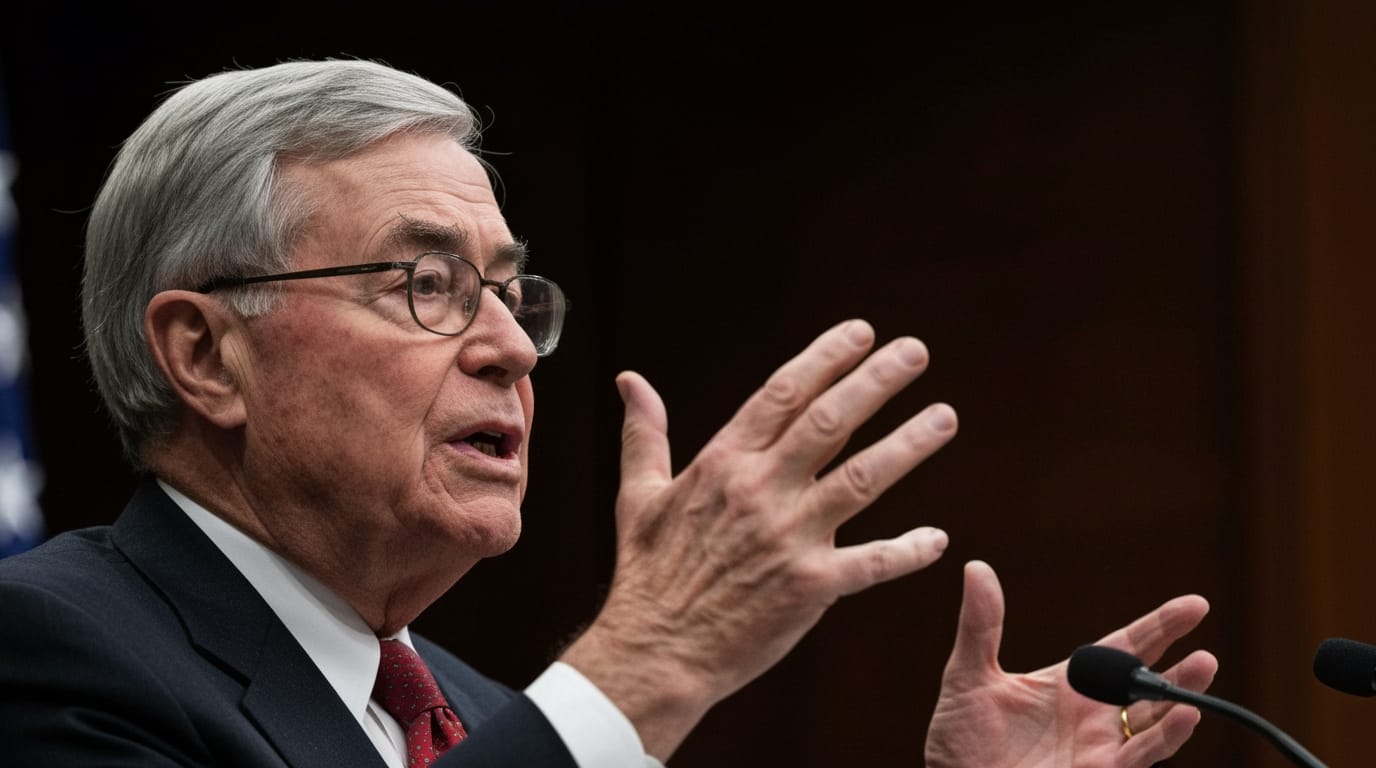
In an era of unprecedented technological boom and soaring stock markets, former Federal Reserve Chairman Alan Greenspan delivered a speech in December 1996 that would etch a phrase into the lexicon of financial markets and economic history: "irrational exuberance." What began as a cautious question about escalating asset values became a prescient, albeit unheeded, warning that many retrospectively link to the subsequent dot-com bust and, more profoundly, to the conditions that fostered the 2008 global financial crisis. Greenspan's nearly two-decade tenure at the helm of the world's most influential central bank is now viewed through the complex lens of economic prosperity, a perceived mastery of monetary policy, and the significant criticisms that emerged in the wake of financial catastrophes.
The Genesis of a Phrase and its Immediate Ripple
On December 5, 1996, addressing the American Enterprise Institute, Greenspan posed a question that resonated far beyond the confines of the black-tie dinner: "But how do we know when irrational exuberance has unduly escalated asset values, which then become subject to unexpected and prolonged contractions...?" This inquiry into the sustainability of rising stock prices, particularly amidst the burgeoning dot-com bubble, was interpreted globally as a direct warning from the influential Fed chair. The immediate market reaction was swift and palpable; stock markets around the world experienced sharp declines. The Tokyo market fell 3%, Hong Kong's Hang Seng dropped 2.9%, and Germany's DAX saw a 4% decrease. In London, the FTSE 100 was down 4% at one point, while the Dow Jones Industrial Average fell 2.3% at the start of trading in the United States. Despite Greenspan's notoriously opaque "Fedspeak," the message was clear: the Federal Reserve harbored concerns about the escalating optimism driving asset values. Economist Robert J. Shiller, who would later title his seminal book "Irrational Exuberance," defined the concept as a psychological basis for speculative bubbles, where news of price increases fuels investor enthusiasm and brings in a growing class of investors driven by envy and excitement, despite doubts about real value.
The Dot-Com Rollercoaster and Unanswered Questions
Greenspan's caution came during the height of the internet stock craze of the 1990s, a period marked by rapid growth in technology companies and an unprecedented surge in their stock valuations. While his remarks caused a momentary market dip, they did not halt the upward trajectory. The NASDAQ index, home to many internet stocks, continued its ascent for another three years after Greenspan's speech, tripling in value by the end of 1999. This prolonged rally before the eventual bust led some to question the effectiveness or timing of his warning. By March 2000, however, the dot-com bubble spectacularly burst, with the NASDAQ losing approximately 60% of its value in the following 12 months. The episode highlighted a central dilemma for central bankers: how to identify and address asset bubbles without inadvertently triggering a market panic or stifling legitimate economic growth. Greenspan himself acknowledged the difficulty in knowing precisely when exuberance becomes "unduly escalated."
The "Greenspan Put" and the Fueling of Bubbles
Beyond the dot-com era, Greenspan's broader monetary policy strategy, often dubbed the "Greenspan put," became a focal point of discussion and criticism. This term refers to the perceived tendency of the Federal Reserve under Greenspan to intervene with interest rate cuts and other liquidity provisions whenever financial markets faced significant downturns or crises. Critics argue that this implicit guarantee against major market losses encouraged excessive risk-taking, fostering moral hazard among investors and financial institutions who anticipated a Fed bailout.
Following the dot-com bust and the economic impact of the September 11, 2001, terrorist attacks, the Federal Reserve under Greenspan aggressively cut interest rates. By the summer of 2003, the federal funds rate reached a historic low of 1%. This period of "easy money" was intended to stave off deflationary risks and stimulate a sluggish economy. However, many economists and critics contend that these sustained low interest rates inadvertently fueled another, far larger, asset bubble: the housing market. Cheaper mortgages, a direct consequence of low rates, contributed to a dramatic run-up in national home prices, creating a "wealth effect" that encouraged increased consumer spending financed by rising home equity.
The Road to the Great Recession
The most significant and lasting criticism of Alan Greenspan's legacy centers on his role in creating the conditions for the 2008 global financial crisis. Although he retired in January 2006, just ahead of the full meltdown, many argue his policies laid the groundwork for the subprime mortgage crisis and the subsequent Great Recession. Critics point to his "loose money" policies, which kept interest rates low for an extended period, encouraging excessive borrowing and lending, particularly in the housing market.
Furthermore, Greenspan was a strong proponent of deregulation and a believer in the self-correcting nature of markets. He resisted calls for stricter regulation of the financial sector, including oversight of exotic financial instruments like derivatives and the burgeoning subprime mortgage market. The Financial Crisis Inquiry Commission, established to investigate the collapse, concluded that "more than 30 years of deregulation and reliance on self-regulation by financial institutions, championed by former Federal Reserve [chair] Alan Greenspan and others... had stripped away key safeguards, which could have helped avoid catastrophe."
In the aftermath of the 2008 crisis, Greenspan himself acknowledged a fundamental error in his worldview, telling a congressional committee in October 2008: "I made a mistake in presuming that the self-interest of organizations, specifically banks and others, were such that they were best capable of protecting their own shareholders and their equity in the firms… I have found a flaw."
A Complex Legacy
Alan Greenspan's career represents a pivotal period in American economic history, characterized by both remarkable stability and profound instability. Hailed as "the maestro" during a prolonged period of economic growth and low inflation known as the "Great Moderation," his reputation faced a dramatic reassessment following the financial crisis. His "irrational exuberance" speech serves as a powerful reminder of the inherent volatility in financial markets and the challenges central bankers face in managing economic cycles.
While Greenspan's defenders note his successful navigation of several crises during his tenure, including the 1987 stock market crash and the Asian financial crisis, the enduring shadow of the 2008 crisis casts a long pall over his legacy. The debate continues over the precise extent to which his policies, his philosophical approach to regulation, and the very concept of "irrational exuberance" contributed to the economic turmoil that followed his departure. Ultimately, Greenspan's impact underscores the intricate relationship between central bank policy, market psychology, and the delicate balance required to foster sustainable economic prosperity while mitigating the risks of speculative bubbles.