The Enduring Enigma of Trump's Popularity: Are Polls Telling the Whole Story?
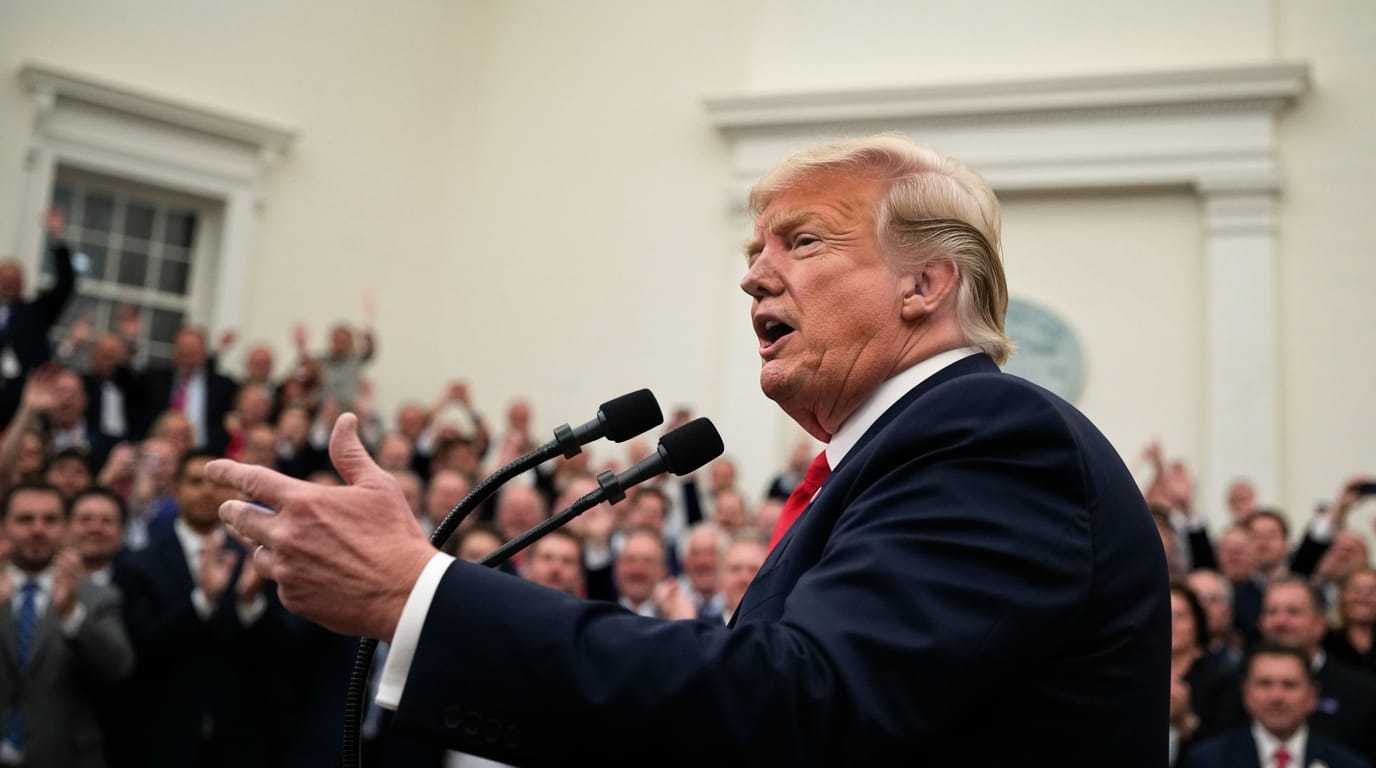
The current political landscape continues to grapple with the complexities of public opinion surrounding former President Donald Trump, whose second term has seen fluctuating approval ratings and persistent debate over the accuracy of polling methodologies. While recent surveys largely indicate a decline in his favorability, the question of whether polls fully capture the breadth of his support remains a contentious point among analysts and the electorate. This ongoing scrutiny highlights the inherent challenges in measuring public sentiment, particularly for a figure who consistently defies traditional political norms.
Current Pulse of Public Opinion: A Declining Trend
Recent national public opinion polls paint a picture of decreasing approval for President Trump during his second tenure in the White House. An Economist/YouGov poll conducted in February 2025 found that a majority of U.S. adults held an unfavorable view of Trump (52 percent), compared to 46 percent who viewed him positively, resulting in a net favorability score of minus 6 percentage points. A Morning Consult poll from the same period similarly reported his favorability at 47 percent, with 50 percent viewing him unfavorably. These figures suggest a shift, as his overall score had reportedly moved back into negative territory after an initial, albeit brief, spike following his return to office.
Further data corroborates this downward trajectory. Gallup's latest poll, conducted in April 2025, indicated that Trump's approval rating stood at 44 percent, with 53 percent disapproving, placing him "underwater." This marked a slide from his position at the beginning of his second term. By November 2025, Gallup reported an even lower approval rating of 36 percent, with 60 percent disapproving, marking a new second-term low. A Pew Research Center survey from January 2026 mirrored these trends, showing Trump's approval rating at 37 percent, down from 40 percent in the fall, with 50 percent of Americans believing his administration's actions were worse than expected. Only about a quarter of Americans (27 percent) supported all or most of his policies and plans at that time, a decrease from 35 percent a year prior.
Economic Headwinds and Policy Impacts Shape Sentiment
Several factors appear to be contributing to the observed decline in President Trump's approval ratings. Foremost among these are growing concerns over the economy and persistent inflation, issues that heavily impacted his predecessor's approval ratings. Major policy announcements, such as a substantial tariff declaration in early 2025, sparked a trade war with key international partners, leading to significant financial market sell-offs and heightened fears of a recession. These economic anxieties have demonstrably affected public confidence, with data suggesting a notable decline in approval regarding his handling of inflation.
The political landscape also remains deeply fractured along partisan lines. The latest Gallup poll highlighted a stark divide, with nine out of ten Republicans expressing approval of Trump's performance, while only 4 percent of Democrats shared that sentiment. Among independents, a critical demographic often swayed by broader issues, only 37 percent approved of his job performance. This pronounced polarization means that shifts in independent and even Republican support can significantly impact overall averages. Indeed, the Pew Research Center noted that the decrease in support for Trump's policies was "entirely among Republicans," indicating a potential weakening within his base as well.
The Enduring Question of Polling Methodology and the 'Shy Voter' Debate
Despite the consistent indications from recent polls, the debate about whether these numbers fully capture President Trump's actual popularity persists. The question of whether he is "more popular than polls suggest" often stems from historical instances where polling models have struggled to accurately predict outcomes, particularly in 2016. This phenomenon has led to discussions around the "shy Trump voter" theory, suggesting that some supporters might be less inclined to express their preferences to pollsters due to social desirability bias or a distrust of media institutions.
Pollsters continually refine their methodologies to account for challenges such as declining response rates, difficulties in reaching diverse segments of the population, and the nuances of voter identification and likelihood. Factors like non-response bias, where certain demographic groups are less likely to participate in surveys, can subtly skew results. While the available data from the current period overwhelmingly points to a decline in Trump's standing, the underlying challenges of accurately gauging public sentiment for a polarizing figure remain a constant consideration for analysts. The explicit notion that his numbers might be "worse than they look" has also been suggested by some analyses, highlighting the complexity of interpreting polling data in a highly charged political environment.
Historical Context and Future Implications
Comparing President Trump's current approval ratings to his predecessors and even his own first term reveals a volatile political trajectory. His average approval rating during the first quarter of his second year in office, at 45 percent according to Gallup, showed an improvement from his 41 percent average during the same period in 2017. However, this figure remains notably lower than many previous presidents, such as John F. Kennedy and Dwight Eisenhower, who registered above 70 percent, or even Jimmy Carter, Barack Obama, and Ronald Reagan, who averaged between 60 percent and 69 percent. The significant drop to 36-37 percent approval by late 2025 and early 2026 indicates a marked shift in public perception.
The ongoing scrutiny of Trump's popularity, alongside the methodological hurdles faced by pollsters, underscores the dynamic nature of contemporary American politics. The interplay between economic conditions, policy decisions, and deep partisan divides creates a challenging environment for accurately gauging voter sentiment. While current polls largely suggest a downturn in his approval, the underlying currents of support and opposition continue to evolve, ensuring that the question of his "true" popularity will likely remain a central theme in political discourse. The debate over polling accuracy, rather than being settled, becomes an integral part of understanding the complex tapestry of voter behavior in a polarized nation.


