The Enduring Paradox: Why Nations Hesitate to Tax the Ultrarich
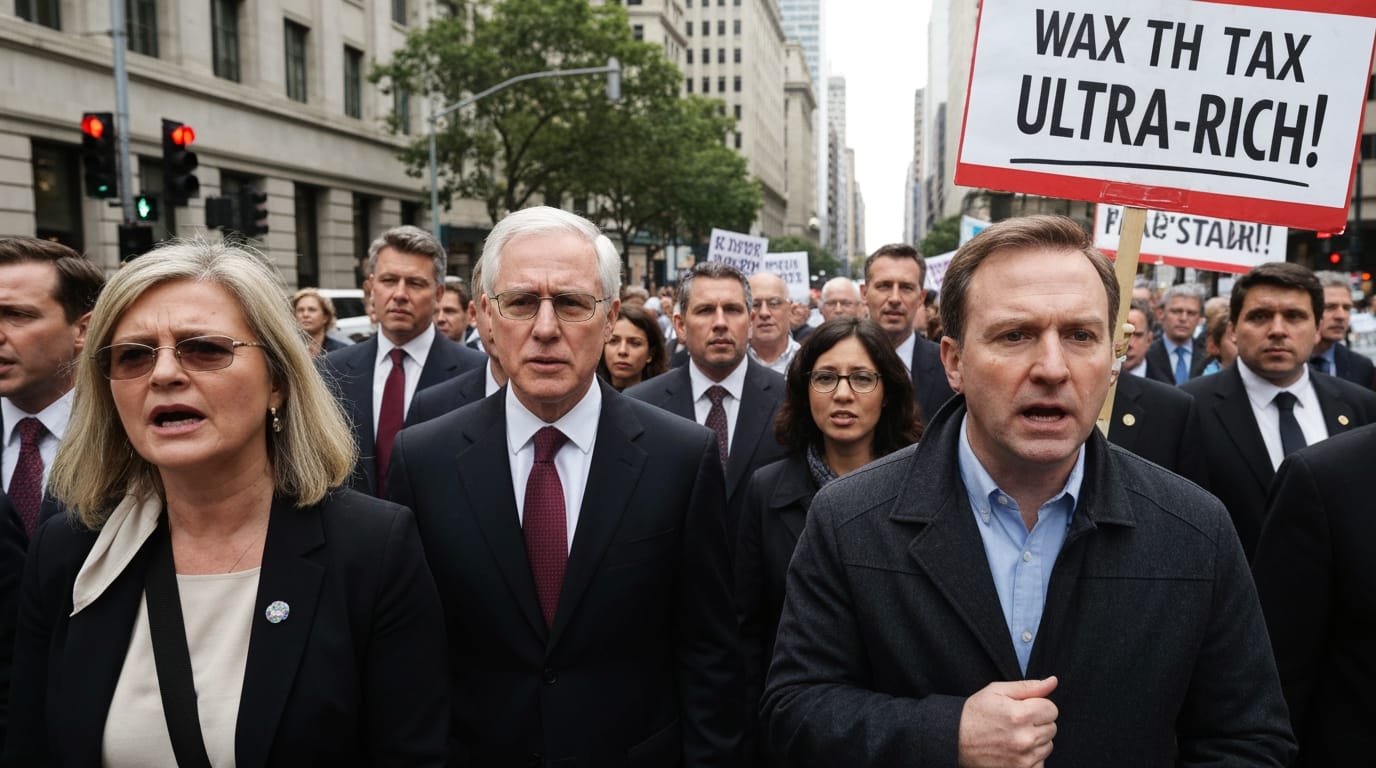
The concept of a wealth tax, once a fringe idea, has resurfaced as a prominent debate in global economic policy. Amidst growing wealth inequality and pressing needs for public funding, proponents argue that taxing the assets of the ultrarich could be a powerful tool for redistribution and revenue generation. Yet, despite widespread public support and compelling economic arguments, most nations, particularly developed ones, remain hesitant, with many having previously experimented with and subsequently abandoned such taxes. This reluctance stems from a complex interplay of administrative difficulties, concerns over capital flight, potential economic disincentives, and legal challenges, creating a persistent paradox in modern fiscal policy.
The Resurgence of a Concept: Defining and Justifying the Wealth Tax
A wealth tax is typically defined as an annual levy on an individual's net worth—the total value of their assets, such as real estate, stocks, bonds, and other holdings, minus their liabilities like debts, above a certain exemption threshold. Unlike income tax, which targets earnings, a wealth tax directly targets accumulated assets. The renewed interest in this fiscal instrument is largely driven by soaring wealth inequality, which often far exceeds income inequality. Reports indicate that the wealthiest 1% often controls a substantial portion of national wealth, and billionaire fortunes have seen significant growth in recent years.
Advocates argue that a wealth tax could address this imbalance, reduce social unrest, and provide substantial revenue for public services and investments, especially in the wake of economic crises and the ongoing need for social programs. For instance, proponents suggest that taxing a very small fraction of the wealthiest households could yield significant revenue, thereby making the tax system more progressive. The perspective is that those who have benefited disproportionately from economic systems and societal infrastructure should contribute more to collective well-being.
The Appeal: Addressing Inequality and Bolstering Public Coffers
The core appeal of a wealth tax lies in its potential to directly counter widening economic disparities. By imposing a levy on accumulated wealth, policymakers aim to reduce the concentration of assets at the very top of the economic spectrum, making it harder for extreme wealth to self-perpetuate across generations. This is seen by many as a vital mechanism for promoting fairness and enhancing public confidence in institutions, especially when existing tax systems may inadvertently favor capital income over labor income.
Furthermore, a wealth tax is presented as a direct and potent tool for revenue generation. Economists have estimated that even a modest wealth tax on multimillionaires could generate hundreds of billions or even trillions of dollars over a decade, depending on the thresholds and rates applied. This revenue could fund critical public infrastructure, education, healthcare, and climate initiatives, addressing societal needs that often go underfunded. Recent polling data indicates substantial public support for higher taxes on the superrich in many G20 countries, with some studies even suggesting that a majority of millionaires themselves favor such measures. This perceived mandate provides a strong political impetus for exploring wealth taxation.
The Intricate Web of Challenges: Why Hesitation Persists
Despite its theoretical appeal, the practical implementation of a wealth tax presents formidable challenges that explain much of the widespread governmental reluctance. One of the primary hurdles is the administrative complexity involved in valuing diverse and often illiquid assets. Determining the fair market value of privately held businesses, real estate, art collections, or intellectual property on an annual basis is a labor-intensive and costly undertaking. Unlike publicly traded stocks with readily available market prices, many forms of wealth lack transparent valuation, leading to disputes, high compliance costs for taxpayers, and significant administrative burdens for tax authorities.
Another significant concern is the risk of capital flight and tax avoidance. Wealthy individuals and their assets are highly mobile. Faced with an annual wealth tax, there is a strong incentive for the ultrarich to move their residency or transfer their assets to jurisdictions with more favorable tax regimes. Even with the implementation of "exit taxes," as proposed in some models, the effectiveness remains debatable, as it may not deter future investors or prevent a one-time outflow of existing wealth. The departure of high-net-worth individuals, as seen in some countries, can lead to a loss of not only wealth tax revenue but also other forms of taxation they would have paid.
Economic disincentives also weigh heavily on the minds of policymakers. Critics argue that an annual tax on wealth could discourage investment, entrepreneurship, and long-term savings. The argument suggests that by reducing the net return on accumulated capital, a wealth tax might deter risk-taking and productive economic activity, potentially slowing economic growth. Furthermore, a wealth tax can represent a form of double taxation, as the underlying assets or the income used to acquire them may have already been subject to income or capital gains taxes. This can lead to situations where individuals who are "asset-rich but cash-poor," such as those owning valuable property but with limited liquid funds, face difficulties in paying the tax.
Finally, legal and constitutional challenges pose substantial obstacles. In some countries, wealth taxes have been challenged on grounds of fairness or equal treatment under the law. For example, Germany's wealth tax was declared unconstitutional in 1997 due to unequal treatment of different asset types. Similar constitutional debates have arisen in the United States, adding another layer of uncertainty to potential implementation.
A Troubled History and Glimmers of a New Era
The skepticism surrounding wealth taxes is not unfounded; it is deeply rooted in historical experience. Over the past few decades, many developed countries in Europe, including Austria, Denmark, Germany, the Netherlands, Finland, Iceland, Luxembourg, Sweden, and France, have introduced and subsequently repealed their wealth taxes. The primary reasons cited for these repeals include administrative difficulties, widespread noncompliance, limited revenue generation, and significant capital flight. Historically, these taxes often generated only a small fraction of total tax revenues, frequently less than 1% of GDP, and were riddled with exemptions that further eroded their tax base.
Despite this challenging past, a handful of OECD countries, namely Colombia, Norway, Spain, and Switzerland, continue to implement some form of net wealth tax. Their systems often feature specific designs; for instance, Switzerland's cantonal wealth taxes operate in the absence of a federal capital gains tax, while Norway's system has still seen instances of capital flight after rate increases.
Today, the discussion is evolving. Recent proposals, particularly in the United States by figures like Senator Elizabeth Warren, incorporate higher exemption thresholds and "exit taxes" designed to mitigate capital flight, aiming to target only the ultrarich and prevent broader economic impacts. Furthermore, there is a growing call for international coordination to tackle tax avoidance more effectively. Brazil, during its G20 presidency in 2024, notably proposed a global minimum wealth tax on billionaires, suggesting a path forward through multilateral cooperation to prevent a "race to the bottom" in tax policy. This reflects a recognition that unilateral wealth tax efforts are highly vulnerable to global asset mobility.
Conclusion: Navigating the Complexities of Wealth Taxation
The debate over taxing the ultrarich underscores a fundamental tension in modern economies: the desire to address profound wealth inequality and fund public services versus the practical difficulties and potential economic repercussions of implementing such measures. While the ethical and fiscal arguments for a wealth tax are compelling, especially in an era of unprecedented wealth concentration, the historical record and contemporary analysis highlight significant hurdles.
For a wealth tax to be effective and sustainable, it would likely require sophisticated valuation mechanisms, robust international cooperation to prevent capital flight, and careful design to minimize economic disincentives. The journey of wealth taxation, marked by both aspiration and abandonment, reflects societies grappling with how to balance equity with economic stability in an increasingly interconnected global economy. As calls for greater fairness grow louder, policymakers continue to search for viable strategies that can navigate these complexities and ensure a more equitable distribution of economic prosperity.