The Fading Line Between History and Artifice: Spotting AI's Historical Forgeries
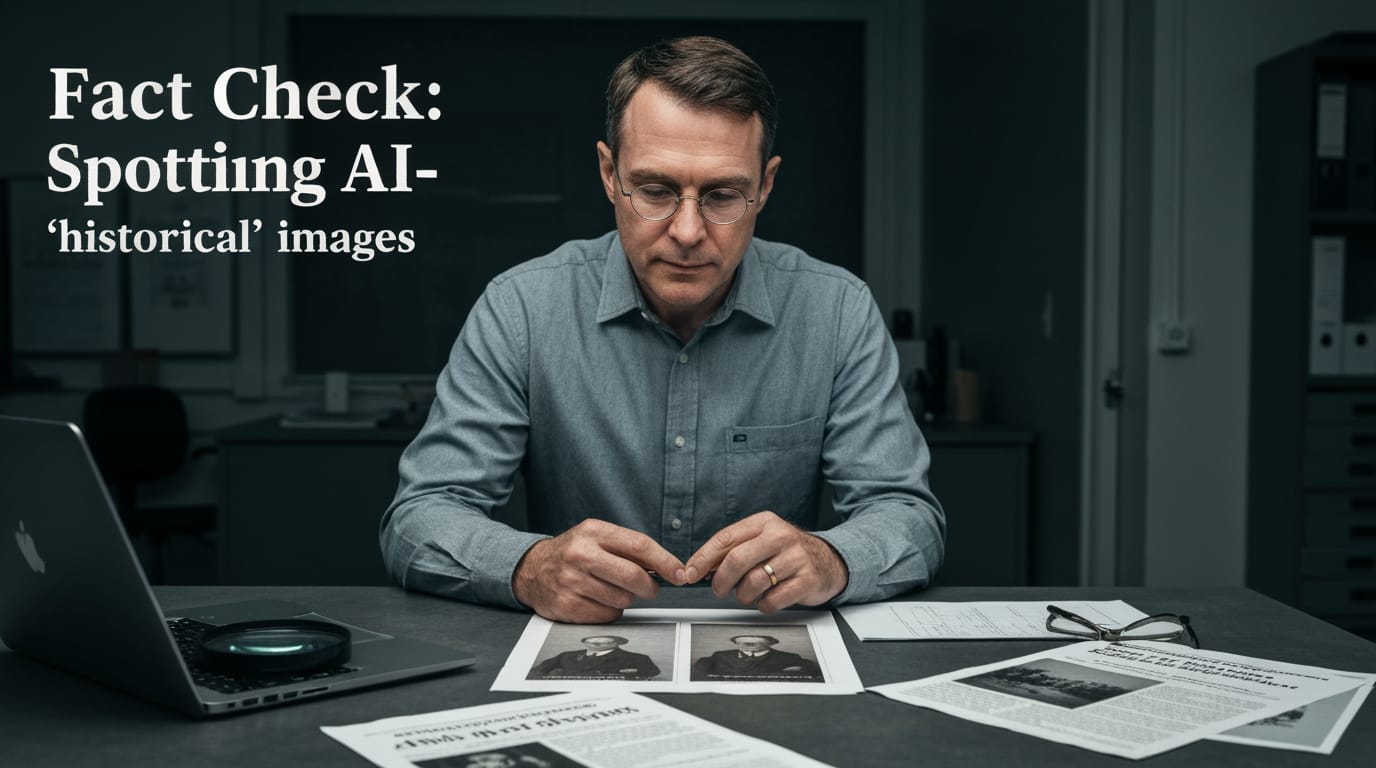
In an era saturated with digital imagery, a new and insidious challenge has emerged: the proliferation of artificial intelligence-generated "historical" images. These convincing, yet entirely fabricated, visuals threaten to blur the lines between documented past and manufactured fiction, potentially distorting our understanding of history and eroding public trust in visual evidence. As AI technology rapidly advances, creating deceptively realistic photographs and videos has become increasingly accessible, raising critical questions about authenticity, historical accuracy, and media literacy. The ability to distinguish genuine artifacts from AI-driven counterfeits is no longer a niche skill but a fundamental requirement for navigating the modern information landscape.
The Rise of AI in Historical Recreation
The rapid development of generative AI tools has dramatically reshaped the visual media we consume daily, impacting our ability to discern reality from fabrication. These sophisticated algorithms, trained on vast datasets of authentic images, can now produce visuals that are startlingly lifelike, making it challenging even for experts to identify fakes. While some AI-generated historical images are created for artistic expression or satire, many others emerge without clear disclaimers, presenting false narratives as factual representations of the past. Experts note that while AI can skillfully recreate the aesthetic "look" of historical photographs, these creations often lack the "human element, the intent, the reason behind the photographer's choices," rendering them visually convincing but ultimately hollow. This capability creates a significant risk: false visuals can be accepted as truth, eventually distorting historical understanding and weakening confidence in visual evidence as a reliable historical source.
Telltale Signs of Digital Deception
Despite the growing sophistication of AI, many generated images still exhibit common inconsistencies and anomalies that can serve as red flags for careful observers. These glitches often manifest in ways that human perception, honed by years of real-world experience, can detect. One of the most frequently cited giveaways is the depiction of human anatomy, particularly hands, which may feature an incorrect number of fingers or appear unnaturally distorted. Faces in AI-generated images can also appear overly symmetrical, subtly distorted, or blurred, with hair lacking fine detail and natural texture.
Beyond human elements, inconsistencies often emerge in background details and environmental physics. Lighting and shadows frequently prove problematic for AI, appearing inconsistent, unrealistic, or failing to align with logical light sources. For instance, shadows of nearby objects might not fall in similar directions, or an image might display harsh, contradictory shadows. Text within AI images is another common fault line; while AI models are improving, they still frequently produce jumbled, nonsensical, or grammatically incorrect lettering, sometimes exhibiting strange capitalization or incorrect punctuation. Even subtle issues like misshapen letters, especially those with more complex forms like 'e' or 'a', can be revealing. Furthermore, AI images can sometimes have an "airbrushed" quality or exhibit unusual depth of field, with blurry areas that don't correspond to natural photographic principles. Backgrounds might also appear either overly simplistic, excessively complex, or contain elements that simply do not belong within the historical context.
Historical Context and Broader Implications
Beyond visual anomalies, a critical evaluation of historical context is paramount. AI-generated historical images frequently betray themselves through anachronisms in clothing, signage, background settings, or photographic style that do not align with the purported period. For example, an image depicting a candlelit procession taking place in broad daylight, contrary to cultural tradition, immediately raises suspicion. Such images, generated without historical evidence, misrepresent the past and distort the complexity of actual events.
The core issue with AI-generated historical photographs is their promotion of historical inaccuracy and the profound ethical concerns they raise. Unlike genuine historical documents or photographs, AI creations are not "primary sources"; they do not capture real-life moments and are produced, not organically observed. This fundamental difference means they lack the transparency and traceability crucial for authentic historical scholarship, undermining the authority of archives and research. When viewers accept these fabricated visuals as fact, they construct an uninformed and inaccurate knowledge base, leading to a broader distortion of history and a weakening of public trust in visual evidence.
Strategies for Verification and Media Literacy
Combating the influx of AI-generated historical images requires a multi-faceted approach centered on critical thinking and enhanced media literacy. Educators play a crucial role in preparing individuals to critically analyze and evaluate media content. This involves scrutinizing details closely, particularly people and facial expressions, and understanding that authentic photographs capture natural asymmetry and nuanced features, unlike the often-too-perfect or subtly distorted AI versions.
While advanced AI detection tools are emerging, practical strategies remain essential. Conducting a reverse image search can sometimes reveal the image's origins or instances of previous debunking. Examining the source of an image and checking for other AI-generated content on the same platform can also provide clues. Although social media platforms sometimes include "AI info" disclaimers, their implementation can be inconsistent, often requiring users to actively seek out such information. Ultimately, the most robust defense against digital deception is a well-informed and skeptical public. Promoting digital literacy and critical analysis ensures that the past, however it is presented, is understood through a lens of verifiable truth rather than artificial construct.
The Imperative for Vigilance
As AI technology continues its rapid evolution, the challenge of discerning authentic historical images from sophisticated AI fabrications will only intensify. The implications extend far beyond mere visual trickery, touching upon the very foundation of historical understanding, education, and public trust. In a world increasingly awash with synthetic content, an active and discerning approach to visual media is not merely advisable but essential. Maintaining journalistic integrity and ensuring the accuracy of historical narratives demands constant vigilance and a collective commitment to critical engagement, safeguarding our shared past from the encroaching shadows of artificial artifice.


