The Forbidden Beat: How Jazz Became a Clarion Call of Defiance in Nazi Germany

In the oppressive shadow of Nazi Germany, where conformity was enforced and dissent brutally suppressed, an unlikely art form emerged as a potent symbol of defiance: jazz. Dismissed by the regime as "degenerate music" and a product of "inferior" races, the vibrant, improvisational rhythms of jazz and swing became a clandestine anthem for a generation of young Germans who dared to resist the totalitarian grip on their lives. This musical rebellion, often subtle but profoundly significant, highlighted the inherent conflict between artistic freedom and authoritarian control, offering a glimpse into the human spirit's resilience amidst profound darkness.
The Ideological War on Sound
From the moment the Nazi Party seized power in 1933, they embarked on a systematic campaign to purify German culture, aligning it with their twisted ideology of Aryan supremacy. Jazz, with its African-American origins and strong association with Jewish musicians, stood in direct opposition to this vision. Propaganda Minister Joseph Goebbels spearheaded the condemnation, labeling jazz "Entartete Musik" (degenerate music) and vilifying it with racist and antisemitic slurs. It was frequently referred to as "Negermusik," a derogatory term designed to demonize musical styles created by Black people. The Nazis viewed jazz as a dangerous, "un-German" cultural "contamination" that threatened traditional values and racial purity.
Initially, the suppression involved issuing specific limits and qualifications for jazz and swing bands, such as restricting "foxtrot rhythm" (swing) to no more than 20% of a band's repertoire and banning "non-Aryan" elements like "wa-wa" effects from wind and brass instruments. Broadcasting of jazz was forbidden as early as 1935, and records by certain artists were banned. An infamous "Degenerate Music" exhibition in Düsseldorf in 1938 publicly showcased jazz alongside other outlawed forms, featuring caricatures linking it to Jewish conspiracies against German culture. Jewish musicians were excluded from the Reichsmusikkammer, effectively ending their professional careers in Germany and forcing many into exile or worse. Yet, despite these efforts, a complete, nationwide ban on jazz was never fully implemented, revealing an odd duality in the regime's approach, partly due to the music's enduring popularity and Goebbels's understanding of music's role in maintaining morale.
The Rise of the "Swing Kids"
Against this backdrop of cultural repression, a distinctive youth counterculture emerged, primarily in cities like Hamburg, Berlin, and Frankfurt, known as the "Swingjugend" or "Swing Kids". Composed mainly of 14- to 21-year-olds from middle or upper-class backgrounds, though also including some from the working class, these young people deliberately rejected the rigid, authoritarian values of the Nazi regime. Their defiance was primarily cultural, focusing on a deep appreciation for American jazz, swing music, and fashion that stood in stark contrast to the militarism and uniformity promoted by the Hitler Youth.
The Swing Kids cultivated an Anglo-American style, wearing long hair, fashionable hats, and distinct clothing, often choosing English words over German in their conversations. They organized secret dance festivals and contests, where they would listen to banned music and mock Nazi slogans with their own defiant greetings, such as "Swing Heil!". These gatherings, often held in clandestine clubs or private homes, provided a vital space for individuality and self-expression that was explicitly denied by the state. They refused to join the mandatory Hitler Youth, seeing its uniform and indoctrination as an affront to their desire for personal freedom and non-conformity. Their actions, while not overtly political in the same vein as other resistance groups, were a powerful form of passive resistance against Nazi cultural norms and strict social control.
Hidden Rhythms and Secret Sounds
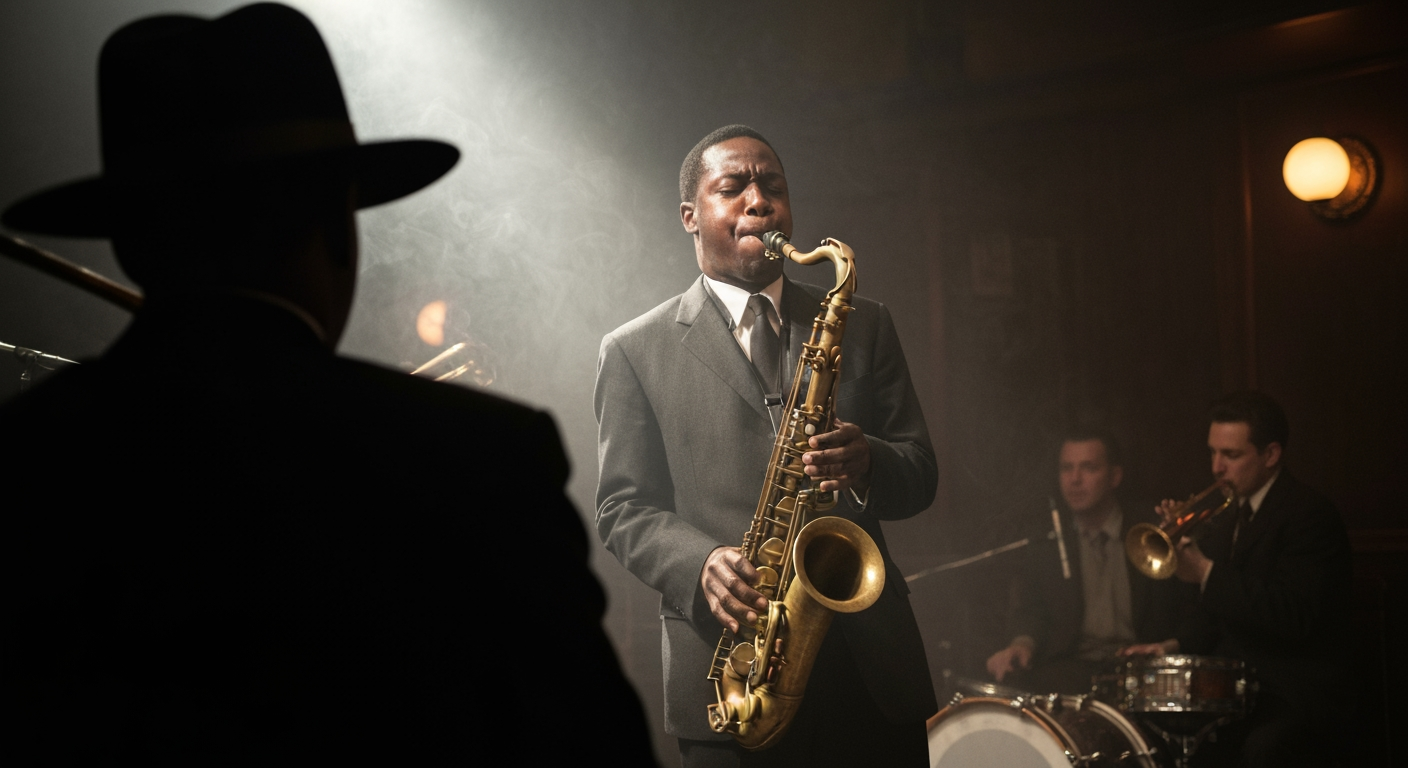
Despite the ever-present threat of detection and severe punishment, jazz continued to thrive underground. Young people went to great lengths to acquire forbidden records, sometimes even learning dance moves from anti-American propaganda reels shown in cinemas. Clubs like the "Hot Club" in Frankfurt, formed by Horst Lippmann and fellow jazz enthusiasts in 1941, held secret jamming sessions in the back of Lippmann's parents' restaurant. Lookouts would be posted to alert musicians and dancers to the arrival of the Gestapo, allowing them to quickly switch to "acceptable" German music.
The appeal of jazz lay in its inherent qualities of improvisation, syncopation, and its embodiment of individualism and freedom – concepts antithetical to Nazi ideology. It provided a psychological escape and fostered a sense of community among those who felt alienated by the regime. The dangers were real; those caught listening to foreign radio stations or participating in swing activities faced brutal interrogations, confiscation of their records, forced hair cutting, and even detention in concentration camps. Leaders of the Swing Youth could be sent to concentration camps for years, and Jewish Swing Kids faced the horrors of the Holocaust. Yet, even within the concentration camps, jazz-related music found a way to persist, sometimes performed by prisoners who, through their music, maintained an oppositional stance and a sense of identity.
The Paradox of Propaganda Jazz
In a bizarre twist, the Nazi regime itself would later attempt to co-opt jazz for its own purposes. Recognizing the music's widespread appeal and its potential as a psychological weapon, Goebbels's propaganda ministry formed "Charlie and His Orchestra". This German swing band, led by Karl Schwedler, played popular American jazz tunes but with rewritten, propagandistic lyrics designed to sow discord among the Allies and weaken their resolve. These altered songs, filled with antisemitic and anti-Allied messages, were broadcast via shortwave radio to British and American listeners, a stark example of how even condemned art could be twisted for totalitarian ends. Ironically, jazz remained officially condemned within Germany, and Germans caught listening to these propagandized versions still faced punishment.
An Enduring Legacy of Freedom
The story of jazz in Nazi Germany underscores the profound power of art as a means of resistance. For a generation of young Germans, jazz was more than just music; it was a lifeline to a world outside the suffocating confines of Nazi ideology. It represented a longing for individuality, freedom, and a cultural connection to the wider world that the regime desperately sought to sever. The "Swing Kids" and others who dared to embrace this forbidden music, despite the immense personal risk, carved out spaces of cultural autonomy and expressed their profound dissatisfaction with the state.
While their defiance was largely cultural rather than overtly political, it nevertheless posed a significant challenge to the Nazi state's demand for absolute conformity. Their actions, from secret dances to defiant greetings, were a testament to the fact that even in the darkest of times, the human desire for self-expression and freedom can find its voice, often in the most unexpected and rhythmic forms. The legacy of jazz in Nazi Germany stands as a powerful reminder that culture, when suppressed, can become a battleground, and music, a powerful weapon for liberty.
Related Articles


Yayoi Kusama, Visionary Artist Whose Polka Dots and Infinity Rooms Transformed Modern Art, Dies at 97
TOKYO – Yayoi Kusama, the avant-garde Japanese artist whose kaleidoscopic visions of polka dots, immersive "Infinity Mirror Rooms," and profound exploration of mental health captivated global audiences for over six...


Martin Walser: Germany's Acclaimed Author and Enduring Enigma
Martin Walser, a literary titan whose prolific career spanned decades and garnered numerous accolades, carved out a unique and often contentious space within German letters. While celebrated for his keen observations of...