The Global Race for Limitless Energy: German Startups Challenge Established Giants in Nuclear Fusion Quest
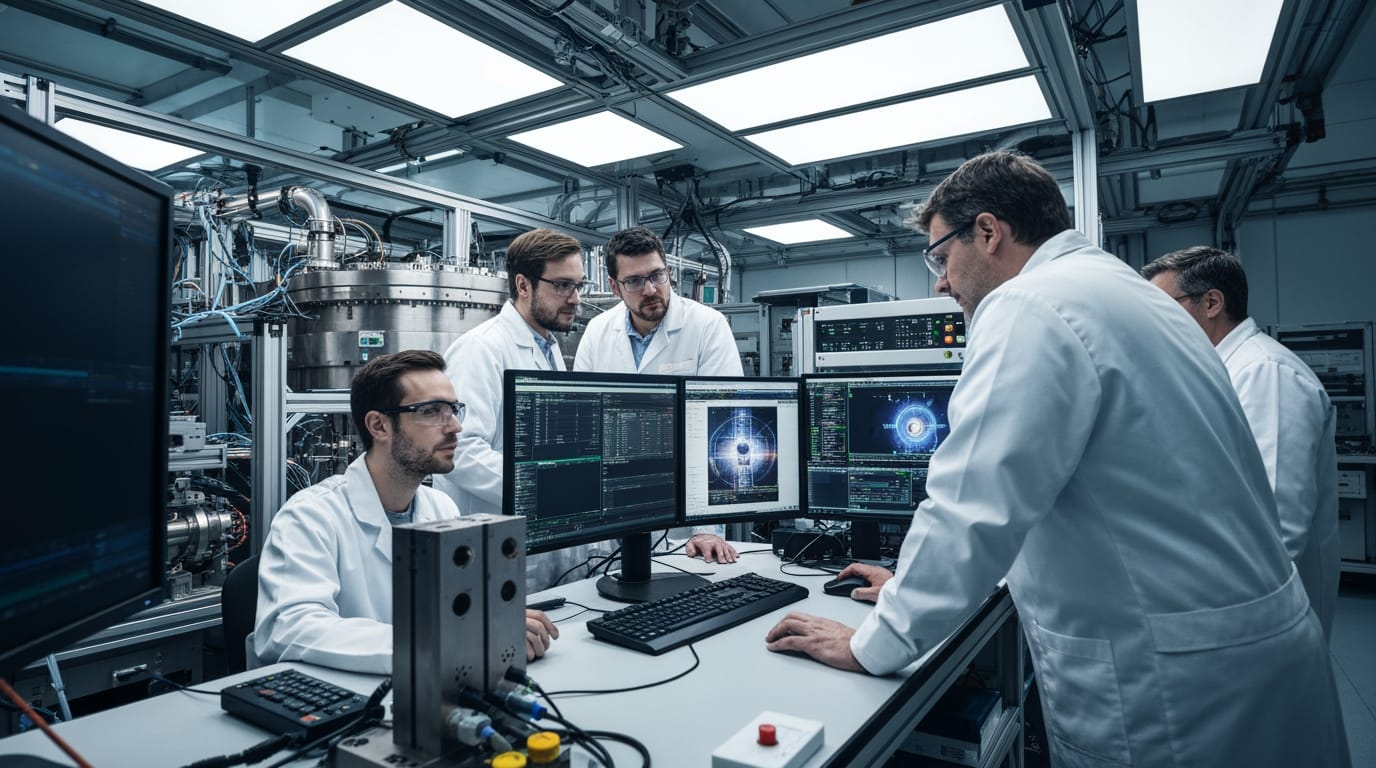
A high-stakes global competition is intensifying in the quest to harness nuclear fusion, the energy source that powers the sun and stars. As nations and corporations worldwide pour billions into research and development, a new wave of nimble German startups is emerging, challenging established international players and aiming to accelerate the timeline for commercial fusion power. The prize is immense: a clean, virtually limitless, and safe energy source that could revolutionize the global energy landscape and address pressing climate and energy security concerns.
For decades, nuclear fusion has been dubbed "the energy of the future and always will be," a jibe reflecting the formidable scientific and engineering hurdles. However, recent scientific breakthroughs, including significant net energy gain milestones in laboratories and rapid advancements in materials and magnet technology, have injected unprecedented optimism and attracted a surge of private capital. This shift has ignited a fervent race, with global firms and innovative German companies vying to be the first to deliver grid-scale fusion power.
The Enduring Promise of Fusion: A Paradigm Shift in Energy
Nuclear fusion involves forcing light atomic nuclei, typically isotopes of hydrogen like deuterium and tritium, to combine under extreme heat and pressure. This process releases vast amounts of energy, millions of times more per kilogram than fossil fuels, without producing long-lived radioactive waste or risking meltdowns associated with traditional nuclear fission. If successfully commercialized, fusion power plants would offer a carbon-free, baseload electricity source, capable of meeting rising energy demands, enhancing energy security, and supporting the transition away from fossil fuels.
The core scientific challenge lies in creating and sustaining a plasma—an ionized gas hotter than the sun's core—at temperatures exceeding 100 million degrees Celsius, and confining it long enough for fusion reactions to generate more energy than is consumed to create and maintain the plasma. Two primary approaches dominate research: magnetic confinement fusion (MCF) and inertial confinement fusion (ICF). MCF typically uses powerful magnetic fields to contain the superheated plasma in devices like tokamaks or stellarators, while ICF uses high-energy lasers or ion beams to compress and heat fuel pellets rapidly. Recent advancements, particularly in superconducting magnets and laser technologies, have pushed the boundaries of what was previously thought possible, making commercial viability seem closer than ever before.
Global Titans and Diverse Technological Paths
The international arena for fusion development is dominated by significant investments from the United States and China, with the European Union, including the United Kingdom, also playing a crucial role. The U.S. leads in private-sector investment, accounting for approximately 80% of global private funding, with 25 fusion companies at the forefront. Companies such as Commonwealth Fusion Systems (CFS) and Helion Energy are leading American efforts, having secured billions in funding from prominent investors. CFS, a spin-off from MIT, focuses on tokamak technology using high-temperature superconducting magnets and aims to deliver power to the grid by the early 2030s. Helion Energy, another major player, is already constructing its first commercial fusion power facility, Orion, in Washington, aiming to deliver electricity by 2028. TAE Technologies, focusing on aneutronic fusion, has also attracted substantial investment and is developing its next-generation reactors.
China has rapidly advanced its state-backed fusion capabilities, investing billions in projects like the Experimental Advanced Superconducting Tokamak (EAST) and the Burning Plasma Experimental Superconducting Tokamak (BEST), with goals to achieve net fusion output around 2030. Chinese universities are also cultivating thousands of fusion PhDs, and companies like Energy Singularity are setting records in superconducting magnet technology. The European Union is heavily involved in ITER, the world's largest experimental fusion project in France, a collaborative effort of 35 countries aiming for first plasma around 2035 and full deuterium-tritium fusion by 2039. While ITER will not generate electricity, it is crucial for demonstrating the physics and engineering for future commercial plants. The UK is also a leader in regulatory innovation and hosts advanced projects like STEP, aiming for grid-connected fusion by 2040.
Germany's Ambitious Challenge: Startups on the Ascent
Amidst this global landscape, Germany is carving out an increasingly significant position, fueled by ambitious startups and a growing push for national support. German companies, notably Proxima Fusion, Marvel Fusion, and Focused Energy, are at the forefront of European private fusion development. These startups are not merely contributing to basic research; they are aggressively pursuing commercial applications with bold timelines, targeting the first industrial pilot plants by 2030 and commercial operations by the late 2030s.
Proxima Fusion, a spin-out from Germany's Max Planck research network, has secured over €200 million in funding, including a record-breaking €130 million private investment round in Europe. The company is developing a stellarator-based design, building on the success of the Wendelstein 7-X experiment, and plans to build an extremely complex magnet central to its approach. In a significant development, Proxima Fusion secured €400 million in backing from Bavaria to help build a €2 billion test facility, with the goal of constructing Europe's first commercial fusion plant within the 2030s. Marvel Fusion and Focused Energy, meanwhile, are concentrating on laser fusion technologies, with Marvel Fusion raising substantial Series B funding. Focused Energy has signed an agreement with energy company RWE and the German state of Hesse to build a 1GW fusion energy pilot plant at the former Biblis nuclear plant site by 2035.
These German startups have collectively called on their government to commit substantial funding, urging a €3 billion investment by 2029 for the construction of demonstration plants, arguing that public support needs to move beyond basic research to enable industrial application. The German government has responded, pledging over €2 billion by 2029 for fusion research and pilot projects, recognizing the technology as a strategic opportunity for energy independence and technological leadership.
Navigating the Hurdles on the Path to Commercialization
Despite the heightened optimism and increased investment, significant scientific, engineering, and economic challenges remain before commercial fusion power becomes a reality. Achieving a sustained "net electricity gain"—where the total electricity generated by a plant is greater than the total electricity consumed to operate the entire facility—is a primary technical hurdle. While facilities like the National Ignition Facility have achieved scientific net energy gain in the fuel, translating this into a practical, power-generating system requires overcoming enormous engineering complexities.
Materials science presents another critical barrier. Fusion reactors must withstand extreme conditions, including temperatures exceeding 100 million degrees Celsius and intense neutron radiation, requiring the development of robust and durable materials that can contain the plasma without degradation. The high upfront capital costs for building fusion plants, coupled with the need for robust regulatory frameworks for permitting, safety, and commercial integration, further complicate the path to market.
Furthermore, competition from rapidly advancing and increasingly cost-effective renewable energy sources and the development of energy storage solutions present market challenges for fusion. Policymakers and industry leaders emphasize that sustained public-private cooperation, significant investment in workforce development, and public education are essential to overcoming these obstacles and ensuring fusion's success on a climate-relevant timeline.
A New Era for Fusion Energy
The global race for nuclear fusion is accelerating, driven by unprecedented investment, technological breakthroughs, and the urgent need for clean energy solutions. German startups, with their ambitious plans and innovative approaches to both stellarator and laser fusion technologies, are positioning themselves as critical players in this competition. While global giants continue to lead in overall funding, the dynamism of these European innovators, coupled with increasing governmental support, signals a new era for fusion. The journey from scientific curiosity to commercial power remains challenging, yet the intensifying competition and rapid progress suggest that the long-held dream of limitless, clean energy may finally be within reach, potentially transforming the world's energy future within the coming decades.


