The Last Drop: Physicists Unravel the Everyday Mystery of Lingering Liquids
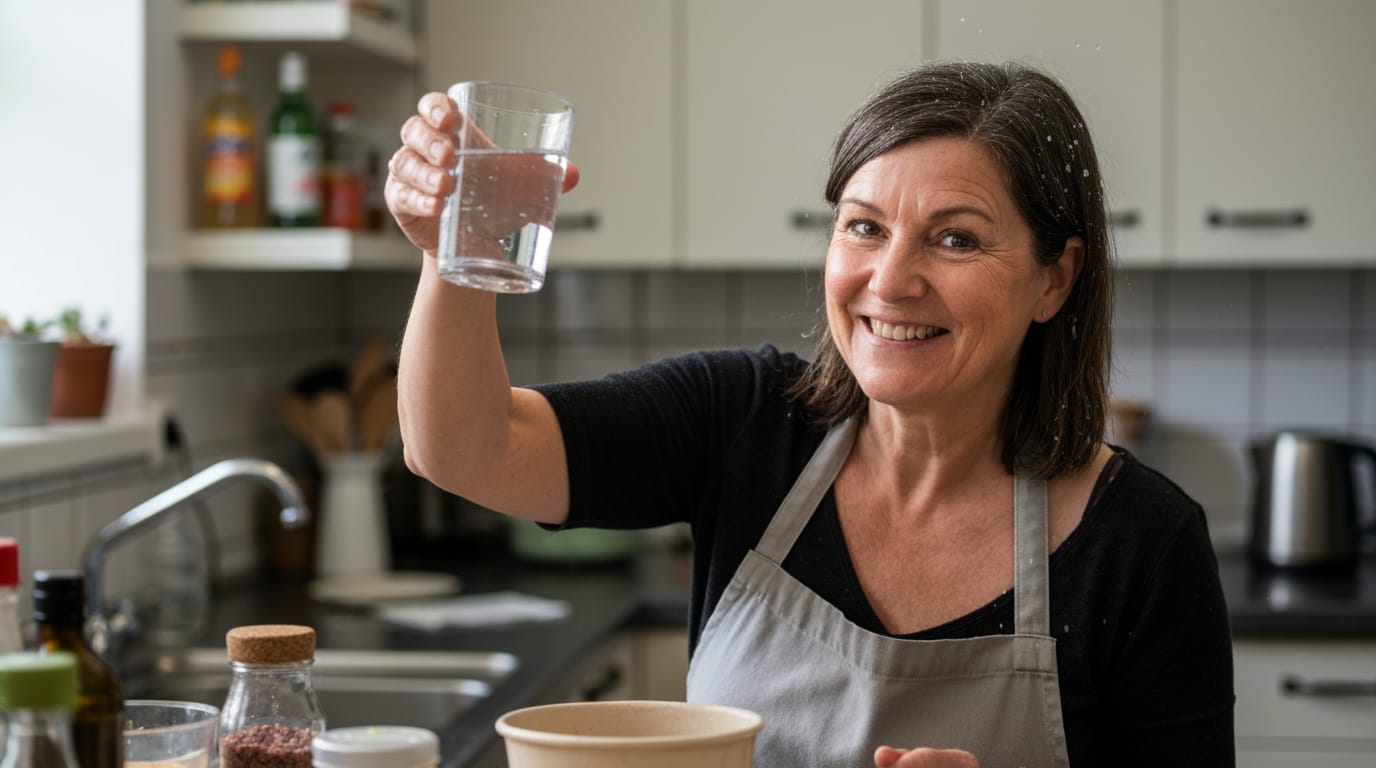
PROVIDENCE, R.I. – A persistent kitchen conundrum, familiar to anyone who has ever patiently coaxed the final few drops of olive oil or maple syrup from a nearly empty container, has finally met its match in the realm of fluid dynamics. New research from Brown University is shedding light on the fundamental physics governing these stubborn remnants, offering both a scientific understanding and practical insights into how long the wait truly is. This investigation moves beyond mere household annoyance, touching upon principles critical to industries ranging from manufacturing to environmental waste management.
The common frustration stems from a universal experience: the seemingly inescapable film of liquid that clings to the inside of bottles, cartons, and jars, despite diligent effort to extract every last drop. Whether it is the final squeeze from a ketchup bottle, the viscous trail of honey resisting gravity, or the thin layer of milk left in a carton, this everyday challenge represents a significant, if often overlooked, source of waste and inefficiency. For many, it's a test of patience; for some, like Ph.D. candidate Thomas Dutta's grandmother, it's an obsessive quest to avoid waste. Physics Professor Jay Tang, Dutta's collaborator, also found personal motivation in a related kitchen dilemma: efficiently drying a cast iron wok after washing to prevent rust. These relatable scenarios highlight a pervasive problem, now tackled by rigorous scientific inquiry.
At the heart of this stubborn clinginess are several key principles of fluid mechanics. Liquids, unlike solids, deform and flow under stress, but their behavior is intricately shaped by forces both within the liquid and between the liquid and its container. Viscosity, a measure of a fluid's resistance to flow, plays a paramount role; highly viscous liquids like syrup or thick oils flow much slower than low-viscosity counterparts like water or milk. Beyond this, surface tension, adhesion, and cohesion are critical players. Surface tension is the energy required to increase a liquid's surface area, caused by the imbalanced attractive forces experienced by molecules at the surface compared to those in the bulk liquid. Cohesive forces are the attractions between like molecules within the liquid, while adhesive forces describe the attractions between the liquid molecules and a different surface, such as the container wall. When adhesive forces are strong, the liquid tends to "wet" the surface, clinging to it even against gravity. These forces, particularly when a liquid forms a thin film, conspire to hold onto those "last drops." The movement of these thin liquid layers is governed by the Navier-Stokes equations, fundamental mathematical descriptions of fluid flow, which were central to the Brown University study.
Brown University physicists Thomas Dutta and Jay Tang embarked on a study to quantify these common kitchen frustrations, publishing their findings in the journal Physics of Fluids. Their research was initially conceived as a "training exercise" to better understand the fluid mechanics relevant to their primary work on the biophysics of bacteria, which also involves the flow of thin fluid layers on surfaces. Using a combination of theoretical calculations based on the Navier-Stokes equations and practical experiments, they investigated how long it takes for thin liquid films of varying viscosities to drain from a tilted surface. In their experiments, common kitchen liquids were poured over plates tilted at a 45-degree angle, and the time taken for 90% of the liquid to drain was precisely measured. The results provided concrete timelines for common liquids. For low-viscosity liquids like milk, approximately 30 seconds are needed to drain 90% of a thin film. Olive oil, being more viscous, demands significantly more patience, requiring over nine minutes for a 90% recovery. Even more challenging liquids, such as cold maple syrup, could take several hours to fully drain. Dutta also applied these principles to Tang's cast iron wok problem, developing a computer simulation that estimated an optimal waiting time of about 15 minutes for residual water to pool before being dumped, preventing rust. Tang admitted this was longer than his usual wait, underscoring the value of the scientific findings.
The implications of this research extend far beyond the domestic kitchen. Understanding the precise behavior of thin liquid films and the forces that govern them is crucial in numerous industrial and scientific applications. For example, in laboratories, effectively emptying containers is vital for accurate measurements and safe disposal of chemical waste, often requiring specific rinsing procedures to ensure minimal residue. In manufacturing, minimizing liquid residue can reduce material waste, improve product recovery, and enhance cleaning efficiency in processes involving large fluid containers. The insights gained from studies on viscosity, adhesion, and surface tension can also drive the development of new container designs or advanced surface coatings that actively repel liquids. While not directly part of the Brown University study, efforts have been made to create bottle coatings inspired by nature, like the lotus leaf, which use tiny nanoparticles to minimize contact between the liquid and the container surface, making it easier to get every last drop. These innovations promise to reduce product waste for consumers and improve sustainability across various sectors.
Ultimately, the humble act of emptying a bottle reveals a complex interplay of physical forces that dictate our everyday experiences. The work by physicists like Dutta and Tang at Brown University demonstrates that even the most mundane kitchen frustrations are ripe for scientific investigation, yielding not only quantitative answers to long-held questions but also fundamental knowledge with broad implications. By precisely calculating the time it takes to overcome the unseen forces keeping liquids in place, this research not only satisfies our curiosity but also paves the way for more efficient and less wasteful practices in kitchens and industries worldwide.


