The Unfolding Cost: Assessing the Sustainability of a U.S. Conflict in Iran
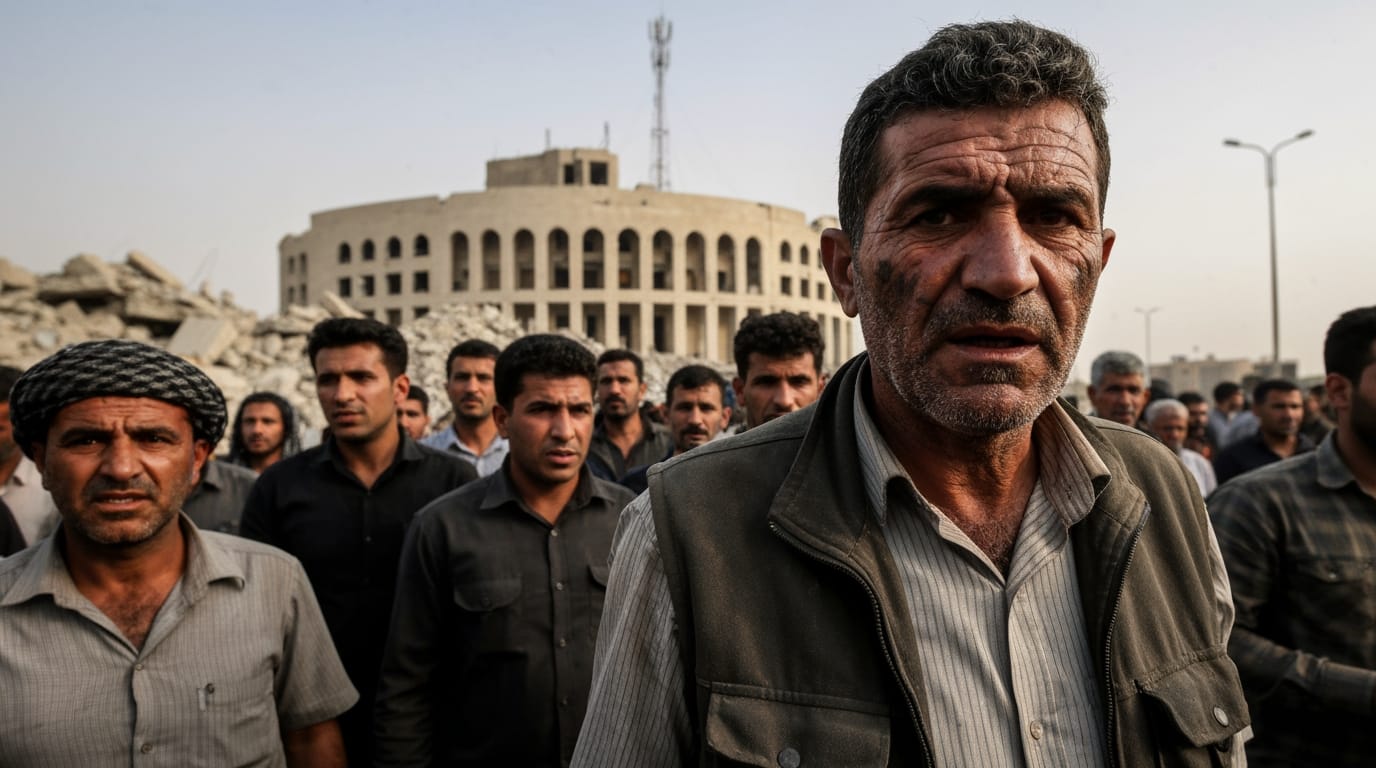
The recent launch of "Operation Epic Fury" against targets in Iran has garnered tactical and operational successes, yet the long-term sustainability of such a conflict for the United States remains a complex and critical question. Initial military achievements, including precision strikes against command nodes and infrastructure, belie a deeper strategic calculus fraught with significant challenges to military readiness, economic stability, and regional geopolitical balance. The ongoing campaign, while seemingly effective in its early stages, is already raising concerns about the depletion of crucial resources and the potential for a protracted engagement with far-reaching global implications.
Military Readiness and the Strategic Resource Drain
The initial phase of Operation Epic Fury has demonstrated the overwhelming military superiority of the United States and its allies, with air forces dominating the skies and intelligence capabilities enabling precise targeting of Iranian military infrastructure. Strikes have focused on degrading Iran's military capabilities, targeting command nodes, missile infrastructure, drone facilities, and naval assets. However, this tactical success comes at a considerable strategic cost. The conflict is rapidly depleting scarce munitions, specifically standoff, anti-ship, air defense, and counter-drone systems, which are essential for responding to other potential global crises, most notably a conflict in the Indo-Pacific region.
While direct-attack weapons are reportedly plentiful, allowing U.S. forces to levy attacks on Iranian targets for an extended period given air superiority, the inventory of high-end weaponry is under significant strain. Air defense interceptors, for instance, are expensive and have seen substantial depletion in defending Israel and naval assets in the Red Sea. The United States also faces a deficit in the number of launchers required to cover all potential targets and is likely conserving these critical interceptors for ballistic missile threats, which Iran demonstrated the capacity to launch by the hundreds in the early days of the conflict.
Furthermore, the strain extends beyond munitions. The U.S. Navy's tanker fleet is acutely stretched, and the surface Navy is being thinned by current demands. Should the U.S. Navy assume convoy escort duties through the critical Strait of Hormuz—a chokepoint for a quarter of global oil and gas supplies—the demand for air defenses and tanker sorties would climb steeply, leaving other vital targets potentially exposed. Carrier strike groups are absorbing deployments that are creating lasting readiness gaps, compounding the challenge. While efforts are underway to ramp up production of certain weapons, structural constraints within the industrial base mean that replenishing critical stockpiles and platforms will take years, not months. Each week of high-tempo operations further deepens a deficit that the industrial base is ill-equipped to quickly erase.
Economic Pressures and Global Market Volatility
A sustained conflict in the Middle East carries immense economic risks, particularly concerning global energy markets. The closure of the Strait of Hormuz, through which 20-25% of the world's oil and gas supplies typically flow daily, immediately sent shockwaves through the global economy. Oil prices spiked dramatically, reaching $US119 per barrel, reflecting fears of significant supply disruptions. While prices have fluctuated based on shifting perceptions of the war's duration, a prolonged conflict or widespread regional instability could push oil prices significantly higher, potentially exceeding $US150 per barrel, leading to sharp and sustained falls in investment markets.
The financial burden on the United States would be substantial. The cost of a protracted war, coupled with surging gasoline prices, would impose significant economic pressure domestically, impacting American consumers and potentially influencing upcoming elections. From Iran's perspective, a strategy of resilience and prolonging the conflict becomes a powerful tool to impose economic costs on the United States and its allies, aiming to leverage global energy markets, maritime logistics, and regional alliances as pressure points. This suggests that even if Iran's conventional military capabilities are degraded, its ability to sow uncertainty and disrupt global energy flows represents a potent asymmetric weapon.
Geopolitical Fallout and Regional Escalation
The conflict has already demonstrated a propensity for expansion across the Middle East. Despite an initial "decapitation strike" that reportedly killed Iran's Supreme Leader Ayatollah Ali Khamenei and several senior military commanders, the Islamic Republic's war machine did not collapse as some in Washington and Jerusalem might have anticipated. Instead, Iran continued to launch missiles at Israeli targets and attack U.S. military bases across the region.
Iran's strategic objective in a protracted conflict is not necessarily a conventional military victory against a superior adversary, but rather to endure economic, political, and strategic pressure over time. This resilience, viewed as a strategic weapon, aims to reshape the broader strategic environment surrounding the war and generate pressure across multiple domains. Tehran has historically tolerated a controlled level of regional instability to deter adversaries and maintain strategic influence, a doctrine now being tested under extreme conditions. Iran's extensive network of proxies, including Hezbollah, Shia militias in Iraq, the Houthis, and Hamas, further complicates the conflict, providing avenues for continued asymmetric attacks and regional destabilization even if Iran's core military is weakened.
Moreover, the ongoing military action raises critical new nuclear risks. While strikes may set back Iran's nuclear program and destroy infrastructure, they are unlikely to eliminate the proliferation risk entirely. Iran will retain the nuclear expertise and likely key materials necessary for developing a nuclear weapon. Proposals for a ground operation to seize Iran's enriched uranium stockpiles would put U.S. troops directly on the ground, increasing the risk of direct engagements with Iranian forces and exposing personnel to hazardous materials like UF6 gas, which can sustain a fission reaction. Such an incursion could also be perceived by the Iranian regime as a profound violation of its territorial integrity, potentially providing further justification for factions advocating for the development of nuclear weapons as a deterrent against future attacks.
Domestic Considerations and Political Will
Public opinion within the United States presents another significant challenge to the sustainability of a prolonged conflict. Polling data suggests relatively low public support for this particular war, estimated at around 27%, a stark contrast to the high levels of support (70% or more) seen for conflicts in Iraq and Afghanistan. This limited public backing places considerable pressure on leadership to keep the conflict short and to avoid deploying ground troops, especially with surging gasoline prices likely to become a major domestic political issue ahead of upcoming elections.
There is an evident search for an "off-ramp" — a point at which the United States could declare victory and disengage. However, Iran may not be inclined to cooperate with such a narrative, having an incentive to prolong the conflict to maximize costs for the U.S. and its consumers. The uncertainty surrounding the war's duration and the potential for Iran to descend into chaos, with various military groups continuing to threaten shipping in the Strait of Hormuz, could necessitate a much longer-term U.S. involvement, further complicating any efforts to find a rapid resolution.
Conclusion
While Operation Epic Fury may have achieved initial military objectives, the question of whether the United States can sustainably wage a prolonged war in Iran remains profoundly uncertain. The conflict is actively draining critical military resources, stressing the industrial base, and creating lasting readiness gaps that could compromise U.S. ability to respond to other global threats. Economically, the war has already triggered significant volatility in global oil markets, with the potential for far greater disruption and financial cost should the conflict escalate or endure. Geopolitically, the region is bracing for further destabilization, with Iran demonstrating resilience and a strategic intent to prolong the engagement to its advantage, while the risk of nuclear proliferation looms larger. Domestically, low public support and impending political pressures underscore the challenges of maintaining the necessary political will for a long-term commitment. The path ahead is fraught with the potential for escalating costs, unintended consequences, and a complex web of challenges that far transcend the tactical successes of its opening chapter.


