Tigrayan Survivors Seek Justice in German Courts for Alleged War Crimes
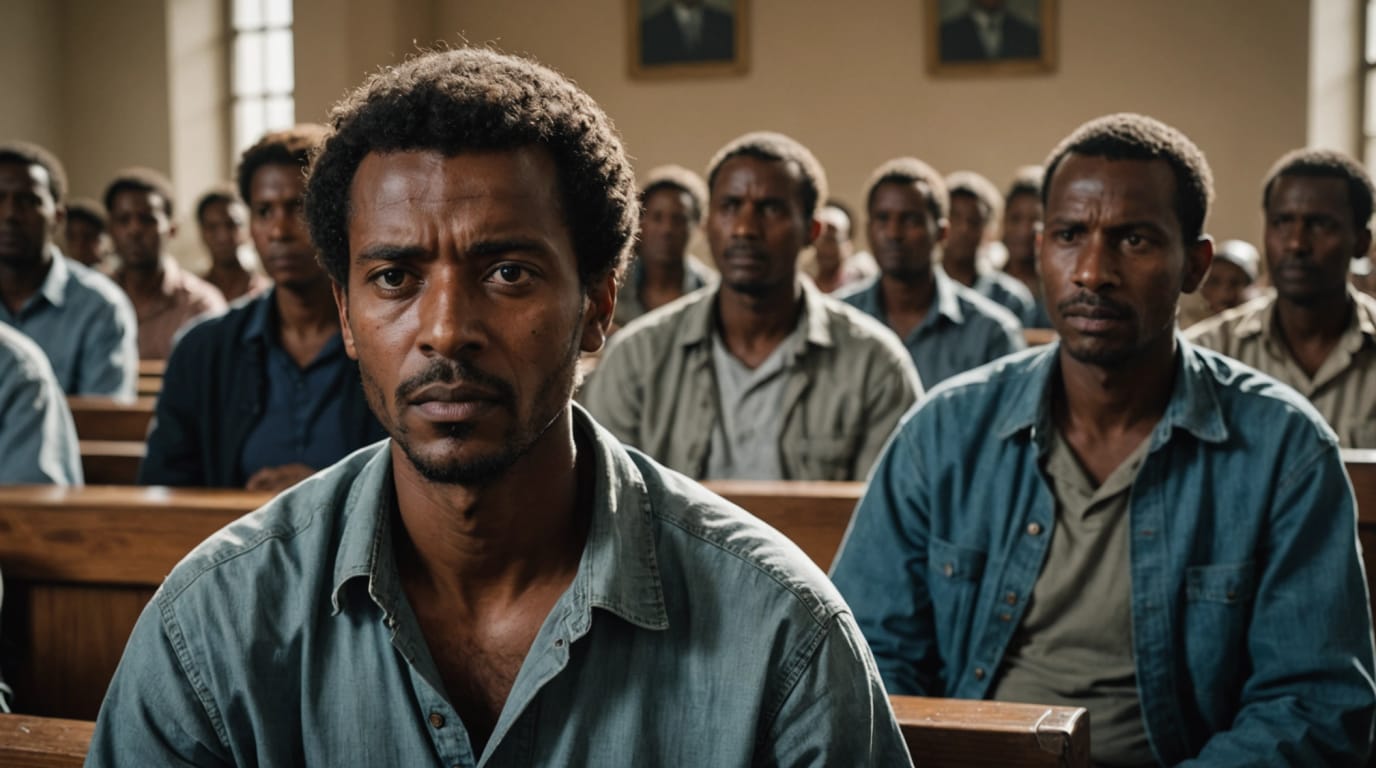
Eight survivors of the Tigray conflict in Ethiopia have filed a criminal complaint in Germany against senior Ethiopian and Eritrean officials, seeking justice for alleged war crimes and crimes against humanity committed during the conflict. The move leverages Germany's universal jurisdiction laws, offering a potential avenue for accountability that has been elusive on the international stage.
A Groundbreaking Complaint
The complaint, filed with the German Federal Public Prosecutor, targets twelve senior government and military officials from Ethiopia and Eritrea. It alleges their involvement in atrocities perpetrated during the Tigray conflict, which began in November 2020. The legal action is spearheaded by Legal Action Worldwide (LAW) and Dr. Anna Oehmichen, with support from Debevoise & Plimpton LLP and the European Center for Constitutional and Human Rights (ECCHR).
The survivors, including a former humanitarian aid worker and a former interim government official, recount experiences of sexual violence, arbitrary detention, torture, and starvation. They represent a fraction of the hundreds of thousands of Tigrayans who have allegedly suffered similar abuses during the conflict.
Universal Jurisdiction: A Path to Accountability
Germany's legal system recognizes the principle of universal jurisdiction, which allows its courts to prosecute certain serious crimes under international law regardless of where they were committed or the nationality of the suspects or victims. This principle has been successfully applied in Germany in cases involving atrocities committed in Syria, The Gambia, and Iraq.
The legal team representing the Tigrayan survivors hopes to replicate these successes, arguing that the severity of the alleged crimes warrants investigation and prosecution in Germany. They emphasize that the survivors have been denied access to justice through other avenues, making the German legal system a crucial forum for seeking accountability.
The Atrocities of the Tigray Conflict
The Tigray conflict has been marked by widespread allegations of atrocities committed against Tigrayan civilians. These include forced starvation, humanitarian aid blockades, massacres, sexual and gender-based violence, torture, and arbitrary detention. While Ethiopian and Eritrean forces, along with allied militia groups, are primarily accused of these abuses, reports also implicate other parties to the conflict.
Estimates of the death toll range from 300,000 to 800,000 people, highlighting the scale of the devastation. The conflict has also displaced millions, creating a humanitarian crisis that continues to affect the region. In March 2023, the U.S. determined that war crimes and crimes against humanity were committed in the Tigray region during the two-year war.
Hopes for Justice and Deterrence
The survivors and their legal representatives express hope that the German investigation will lead to prosecutions and ultimately hold those responsible for the atrocities accountable. They believe that such action would not only provide a measure of justice for the victims but also deter future human rights violations.
Dr. Anna Oehmichen, one of the legal representatives, described the alleged crimes as "dramatic" and stressed the need for an investigation to "stop ongoing grave violations" and "deter other world leaders." Antonia Mulvey, Executive Director of Legal Action Worldwide, emphasized the importance of holding perpetrators accountable, stating that victims are "no closer to seeing those responsible held to account" despite the end of active hostilities.
A Long Road Ahead
If the German Federal Public Prosecutor decides to open an investigation, it would mark the first time such an investigation has been undertaken regarding the Tigray war. However, the road to justice is likely to be long and complex.
The investigation would involve gathering evidence, interviewing witnesses, and potentially issuing arrest warrants for the accused individuals. Extraditing suspects to Germany could also prove challenging, as it would require cooperation from the countries where they are located.
Despite these challenges, the Tigrayan survivors remain determined to pursue justice through the German legal system. Their pursuit underscores the importance of universal jurisdiction as a tool for holding perpetrators of international crimes accountable, particularly when other avenues for justice are unavailable. The case also highlights the ongoing suffering of the Tigrayan people and their unwavering quest for recognition and redress.


