To Lam Consolidates Power as Vietnam's President, Reshaping Political Landscape
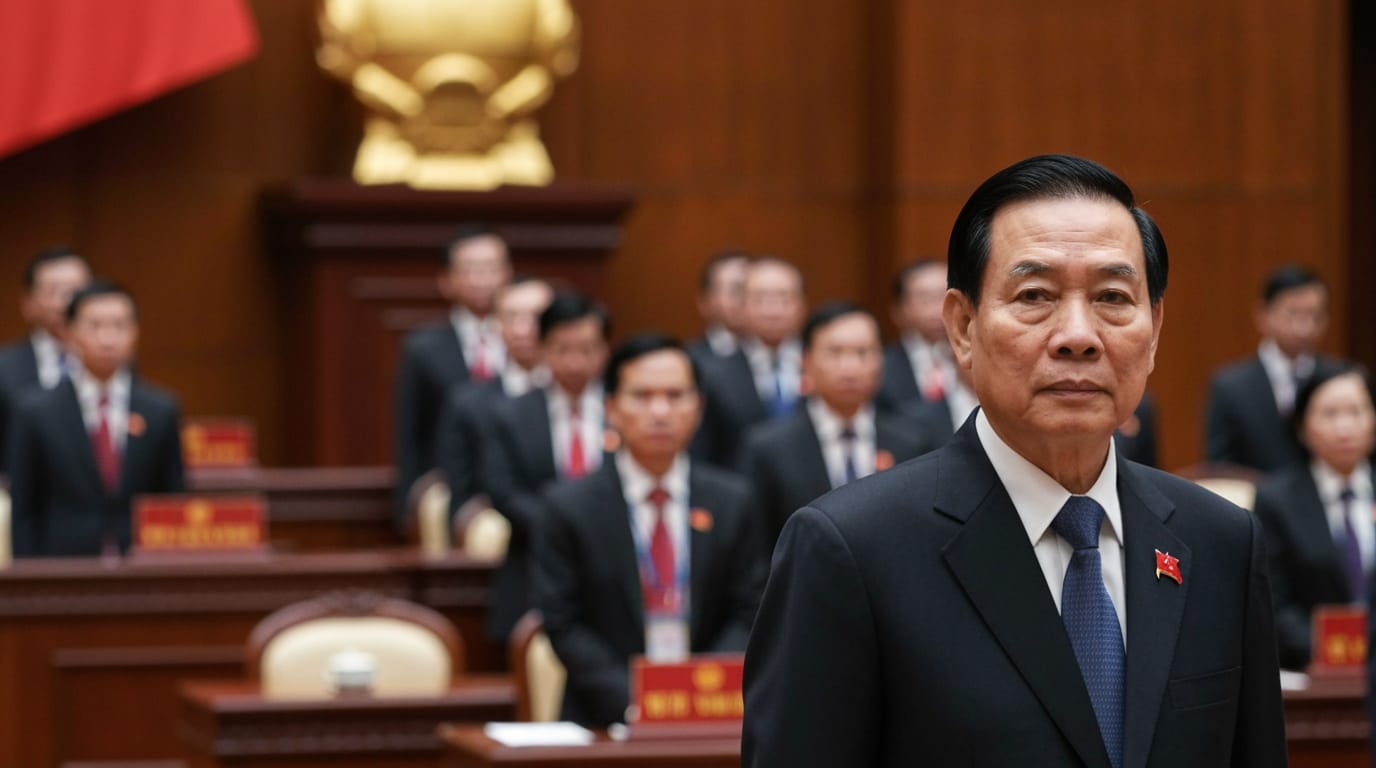
HANOI, Vietnam – To Lam, the influential General Secretary of Vietnam's Communist Party, has been elected as the nation's state president by the National Assembly, marking a significant consolidation of power in the one-party state. The unanimous vote on April 7, 2026, places both the party's top position and the head of state role under his authority for the 2026-2031 term, a move that analysts suggest signals a profound shift away from Vietnam's traditional collective leadership model. This dual leadership structure draws comparisons to the political framework observed in neighboring China under President Xi Jinping, potentially ushering in a new era of centralized decision-making and intensified governance.
The election of Mr. Lam comes amidst a turbulent period in Vietnamese politics, characterized by an extensive anti-corruption campaign that has seen several high-ranking officials removed from office. His ascent to the presidency, while already holding the paramount position of General Secretary of the Communist Party of Vietnam (CPV), consolidates an unprecedented level of influence, effectively making him the most powerful leader the country has seen in decades. The development is expected to have far-reaching implications for Vietnam's domestic policy, economic trajectory, and its delicate balancing act in international relations.
A Calculated Ascent to Dual Authority
To Lam's election as president by the National Assembly was a widely anticipated outcome following his re-election as General Secretary of the CPV in January 2026. He had previously held the presidential post briefly in 2024, a temporary measure after the passing of former General Secretary Nguyễn Phú Trọng in July 2024. However, the current mandate as both Party General Secretary and state President for a full five-year term (2026-2031) solidifies his command over both the political and administrative apparatus of the nation.
The National Assembly, Vietnam's unicameral legislature comprising 478 members, overwhelmingly endorsed Mr. Lam, with 100 percent of the deputies present approving the resolution. This near-unanimous support underscores the centralized nature of Vietnam's single-party political system, where the Communist Party plays a dominant and guiding role in all state affairs. The presidential role, while officially head of state and nominal commander-in-chief, is traditionally considered secondary to the General Secretary of the CPV, who leads the Party's Politburo and Central Military Commission. By assuming both roles, Mr. Lam effectively eliminates the traditional separation of power, creating a streamlined, singular leadership structure.
Architect of "Blazing Furnace": To Lam's Formidable Background
Born on July 10, 1957, in Hưng Yên province, To Lam has spent over four decades within Vietnam's powerful People's Public Security Forces. His career trajectory showcases a steady and formidable rise through the ranks, starting as a student at the Central Public Security School in 1974 and joining the Communist Party of Vietnam in 1981. He served as Deputy Minister of Public Security from 2010 to 2016 before being appointed Minister of Public Security in April 2016, a position he held until May 2024. In January 2019, he was promoted to the rank of General.
Throughout his extensive career, Mr. Lam has been a prominent figure in the CPV's Central Committee since 2011 and a member of the Politburo since 2016. He holds a PhD in Jurisprudence and is recognized as a Professor of Security Sciences, reflecting his deep expertise in national security matters. His most defining role prior to assuming the dual leadership was his central involvement in the CPV's sweeping anti-corruption campaign, famously known as the "Blazing Furnace." This campaign, initiated by his predecessor Nguyễn Phú Trọng, has led to an unprecedented number of arrests and high-profile resignations across all levels of government and party structures, including two former presidents and a National Assembly chairman within the past year. Mr. Lam has consistently pledged an unwavering resolve to continue this campaign, emphasizing that "all wrongdoings must be dealt with" and that there will be "no exceptions, no 'forbidden zones'."
Implications of a Centralized Leadership
The consolidation of power under To Lam signifies a notable departure from the consensus-based collective leadership that has traditionally characterized Vietnamese politics. This shift has prompted varied analyses regarding its potential impact on Vietnam's future.
One perspective suggests that a more centralized leadership could lead to increased authoritarian tendencies within the one-party state. Critics point to concerns over human rights, citing allegations that Mr. Lam's tenure as Minister of Public Security saw crackdowns on dissidents, suppression of civil society organizations, and tightened internet censorship. However, proponents argue that such a concentration of authority could also facilitate faster and more decisive policy implementation, particularly crucial at a time when Vietnam aims to accelerate economic growth and modernization.
Economically, Mr. Lam has championed a "new growth model" emphasizing science, technology, innovation, and digital transformation as primary drivers for rapid and sustainable development. His ambitious targets include transforming Vietnam into an upper-middle-income country with modern industry by 2030 and a high-income developed country by 2045, with aims for 10% annual economic growth. He has already initiated significant administrative reforms, including streamlining government bodies and reducing the number of provinces and cities, along with substantial cuts to the state payroll. While these reforms are intended to boost competitiveness and attract foreign investment, they also raise questions about potential favoritism towards large domestic conglomerates and risks of corruption, which the anti-corruption campaign aims to address.
In foreign policy, Vietnam is expected to maintain its pragmatic approach, often referred to as "Bamboo Diplomacy." This strategy involves balancing relations with major global powers, including the United States and China, while expanding international partnerships. Mr. Lam has emphasized national defense and self-reliance, signaling a continuity in Vietnam's strategic autonomy amidst complex geopolitical dynamics.
Conclusion: A New Chapter for Vietnam
To Lam's election as president, coupled with his role as General Secretary, marks a pivotal moment in Vietnam's political evolution. This unprecedented consolidation of power, moving away from a collective leadership style, suggests a strategic shift aimed at enhancing governmental efficiency and accelerating national development goals. While concerns about centralized authority and its implications for political freedoms persist, the leadership's stated objectives are clear: relentless pursuit of anti-corruption efforts, ambitious economic reforms driven by technology and innovation, and a continued commitment to a balanced foreign policy.
The coming years under President and General Secretary To Lam will be crucial in determining how this new leadership structure shapes Vietnam's trajectory. The nation stands at a crossroads, balancing the desire for stability and rapid progress with the challenges inherent in a more centralized political system. The success of Mr. Lam's vision will depend on his ability to navigate these complex internal and external pressures while delivering on his promises of prosperity and a strengthened national standing.


