Tourist Massacre in Kashmir Presents India With Security and Diplomatic Challenges
A brazen terrorist attack in the Baisaran meadow near Pahalgam, a popular tourist destination in Indian-administered Kashmir, has left India grappling with a complex security dilemma. The April 22, 2025, massacre, which claimed the lives of at least 26 civilians, mostly tourists, has triggered widespread condemnation and demands for swift retribution. The attack, the deadliest on civilians in the region since the Pulwama bombing in 2019, threatens to derail the nascent sense of normalcy that had been returning to the valley and presents a significant challenge to India's efforts to project an image of stability and progress in the region.
Attack Details and Aftermath
Gunmen opened fire on tourists visiting the Baisaran meadow, a scenic spot accessible only by foot or pony, approximately 5 kilometers from Pahalgam. The attack occurred as the tourist season was gaining momentum, aiming to undermine the economic and social gains achieved since the revocation of Kashmir's autonomous status in August 2019. The Resistance Front (TRF), believed to be an offshoot of the Pakistan-based Lashkar-e-Taiba, claimed responsibility, linking the attack to the issuance of residency permits to non-Kashmiris.
The incident drew immediate condemnation from global leaders, with condolences pouring in from France, Italy, China, and the United States. U.S. Vice President JD Vance, who was in India on a four-day trip, expressed grief over the attack. Prime Minister Narendra Modi, who was on a state visit to Saudi Arabia, cut short his trip and returned to New Delhi to chair a high-level security meeting. Home Minister Amit Shah also rushed to Srinagar to assess the situation and interact with the families of the victims.
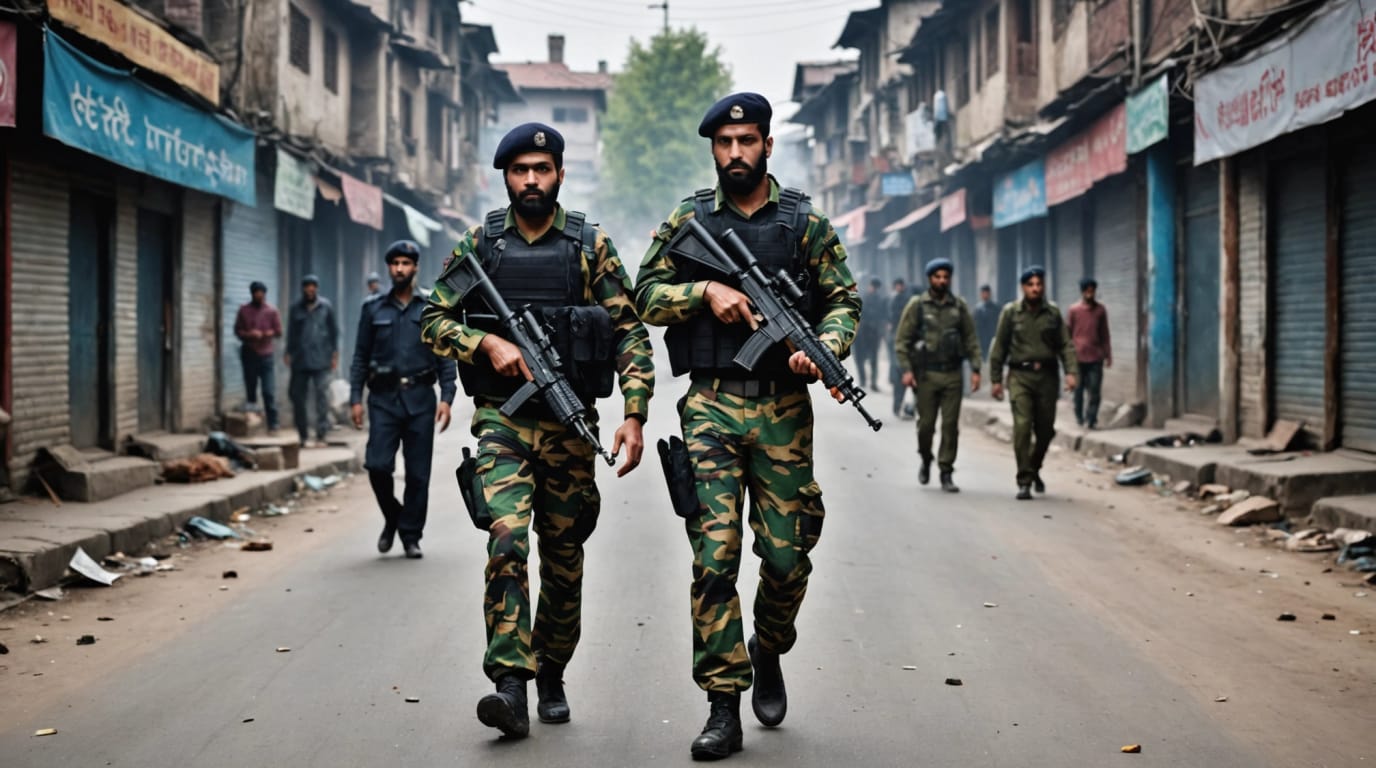
Indian security forces, including the Army, CRPF, and J&K Police, launched a massive search operation in the Baisaran valley to apprehend the perpetrators. Security agencies have released sketches of three suspected individuals involved in the attack, and hundreds have been detained for questioning.
India's Response: A Balancing Act
The attack has placed immense pressure on the Indian government to respond decisively. Defense Minister Rajnath Singh vowed a "loud and clear" response, while Prime Minister Modi asserted that the perpetrators would be brought to justice. However, India must carefully calibrate its response to avoid further escalation and international repercussions.
Several options are under consideration, each with its own set of risks and rewards:
- Surgical Strikes: A limited, precise military operation targeting terrorist launch pads across the Line of Control (LoC) in Pakistan-occupied Kashmir, similar to the 2016 Uri surgical strikes.
- Airstrikes: A more aggressive response involving airstrikes on terrorist training facilities deep inside Pakistan, akin to the 2019 Balakot airstrikes.
- Covert Operations: Targeted elimination of TRF handlers in Pakistan or PoK via RAW and special units.
- Cyber Operations: Targeting ISI's digital infrastructure to disrupt command-and-control or leak communication intercepts implicating Pakistan.
- Diplomatic Escalation: Isolating Pakistan at international forums such as the UN and the Financial Action Task Force (FATF).
A layered response, combining short-term kinetic actions with covert operations and diplomatic pressure, appears to be the most likely scenario.
The Kashmir Factor in India-Pakistan Relations
The Pahalgam attack underscores the enduring impact of the Kashmir dispute on India-Pakistan relations. The conflict, which dates back to the partition of British India in 1947, has been a constant source of tension and mistrust between the two nuclear-armed neighbors. Pakistan asserts that Muslim-majority Kashmir should be part of Pakistan, while India maintains that Kashmir is an integral part of India.
The attack also occurs against the backdrop of a fraying 2021 ceasefire recommitment between India and Pakistan. Many in India point out that the Pahalgam shooting comes a week after Pakistan's army chief described Kashmir as his country's "jugular vein." The timing, choice of target, and the manner in which the attack was carried out suggest strategic objectives, including embarrassing the Indian government, reversing economic gains in Kashmir, and provoking a strong reaction from India.
Implications for Regional Security
The Pahalgam attack has significant implications for regional security. It threatens to escalate tensions between India and Pakistan, potentially leading to another military confrontation. It also undermines efforts to promote peace and stability in Afghanistan, as the rivalry between India and Pakistan hinders regional cooperation.
Furthermore, the attack could complicate relations for third countries with India and Pakistan, as the rivals would expect support for their positions. The international community has called for restraint and urged both countries to engage in dialogue to resolve their differences peacefully.
The Road Ahead
The Pahalgam attack presents India with a formidable challenge. The government must take decisive action to bring the perpetrators to justice, reassure the public, and prevent future attacks. At the same time, it must exercise caution to avoid escalating tensions with Pakistan and undermining regional stability.
The attack also highlights the need for a comprehensive approach to addressing the root causes of terrorism in Kashmir. This includes strengthening security measures, promoting economic development, addressing grievances, and engaging in dialogue with all stakeholders. Only through a sustained and multifaceted effort can India hope to achieve lasting peace and stability in the region.


