Trade War Escalates: Trump Tariffs Prompt Xi's Asia Diplomacy Push
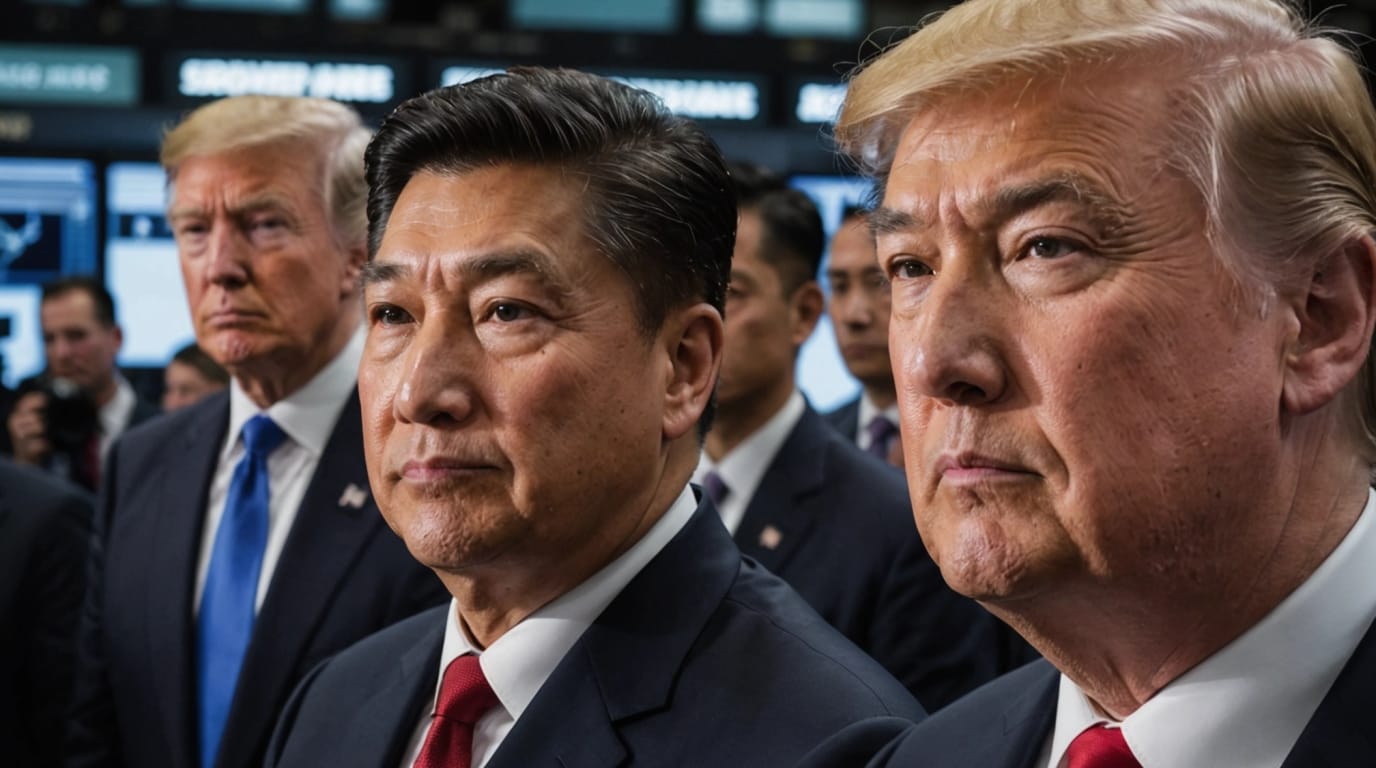
The trade war between the United States and China intensified this month, with President Donald Trump's tariff hikes triggering retaliatory measures from Beijing and prompting Chinese President Xi Jinping to embark on a diplomatic tour of Southeast Asia. The escalating tensions have raised concerns about the global economic impact and the future of trade relations between the world's two largest economies.
Trump's Tariff Offensive
On April 2, 2025, President Trump declared what he called "Liberation Day," announcing a baseline tariff of 10% on goods imported from all foreign countries. He also introduced higher, "reciprocal" tariffs on nations that impose levies on U.S. exports. Shortly after, Trump paused the high-level tariffs for virtually every country aside from China. The administration then increased tariffs on Chinese goods, bringing the total import tariff to 54% on April 9. China responded with retaliatory tariffs of 84% on U.S. goods, leading Trump to further increase tariffs on Chinese goods to 125% that same day. The White House later clarified that the tariff rate had risen to 145%.
These moves are aimed at addressing what the U.S. claims are longstanding unfair trade practices and intellectual property theft by China. The Trump administration has stated that these practices contribute to the U.S.-China trade deficit and force American companies to transfer technology to China.
China's Retaliation and Xi's Diplomatic Response
China has responded to the U.S. tariffs with its own levies on American goods. On April 11, 2025, China announced an increase in tariffs on all American imports from 84% to 125%, effective April 12. Some reports indicate China has vowed to ignore any further tariffs imposed by the United States, arguing that the Chinese market can no longer accept U.S. imports at the current tariff levels.
In addition to retaliatory tariffs, President Xi Jinping is actively seeking to strengthen trade ties with other Asian nations. This week, Xi is visiting Vietnam, Malaysia, and Cambodia in an effort to shore up trade relationships in the region. These countries are important trade partners for China, with Vietnam importing over $161 billion worth of Chinese goods in 2024 and Malaysia importing over $101 billion.
No Plans for Direct Talks
Despite the escalating trade war, there are currently no plans for direct talks between Presidents Trump and Xi. U.S. Trade Representative Jamieson Greer stated that there are "no existing plans" for the two leaders to speak. Greer emphasized that the issue is currently at the leaders' level, but expressed hope that a conversation would be possible at some point.
Economic Impact and Global Concerns
The trade war between the U.S. and China has raised concerns about the potential impact on the global economy. The tit-for-tat tariffs have disrupted supply chains, increased costs for businesses and consumers, and created uncertainty in financial markets.
The tariffs are so high that it’s almost impossible for any businesses making products and trying to sell them in each other’s countries to make a profit.
Some analysts believe that the trade war could lead to a slowdown in global economic growth. The International Monetary Fund (IMF) has warned that the trade tensions are a significant risk to the global outlook.
Shifting Trade Dynamics
The trade war is also leading to shifts in global trade patterns. As the U.S. and China impose tariffs on each other's goods, companies are looking for alternative sources of supply. This has benefited some countries, such as Vietnam and Mexico, which have seen an increase in exports to the U.S.
The conflict is also pushing China to diversify its trade relationships and reduce its reliance on the U.S. Xi's diplomatic tour of Southeast Asia is a clear indication of this strategy.
Uncertainty and the Future of Trade
The future of the trade war remains uncertain. While President Trump has expressed optimism that a deal can be reached with China, the two sides remain far apart on key issues. The U.S. is demanding significant changes to China's trade practices, while China is resisting what it sees as unfair pressure.
The trade war has already had a significant impact on the global economy, and its long-term consequences are still unknown. The outcome of the conflict will likely shape the future of trade relations between the U.S. and China for years to come.


