Tragic Air Disaster Claims Libyan Military Head After Ankara Visit
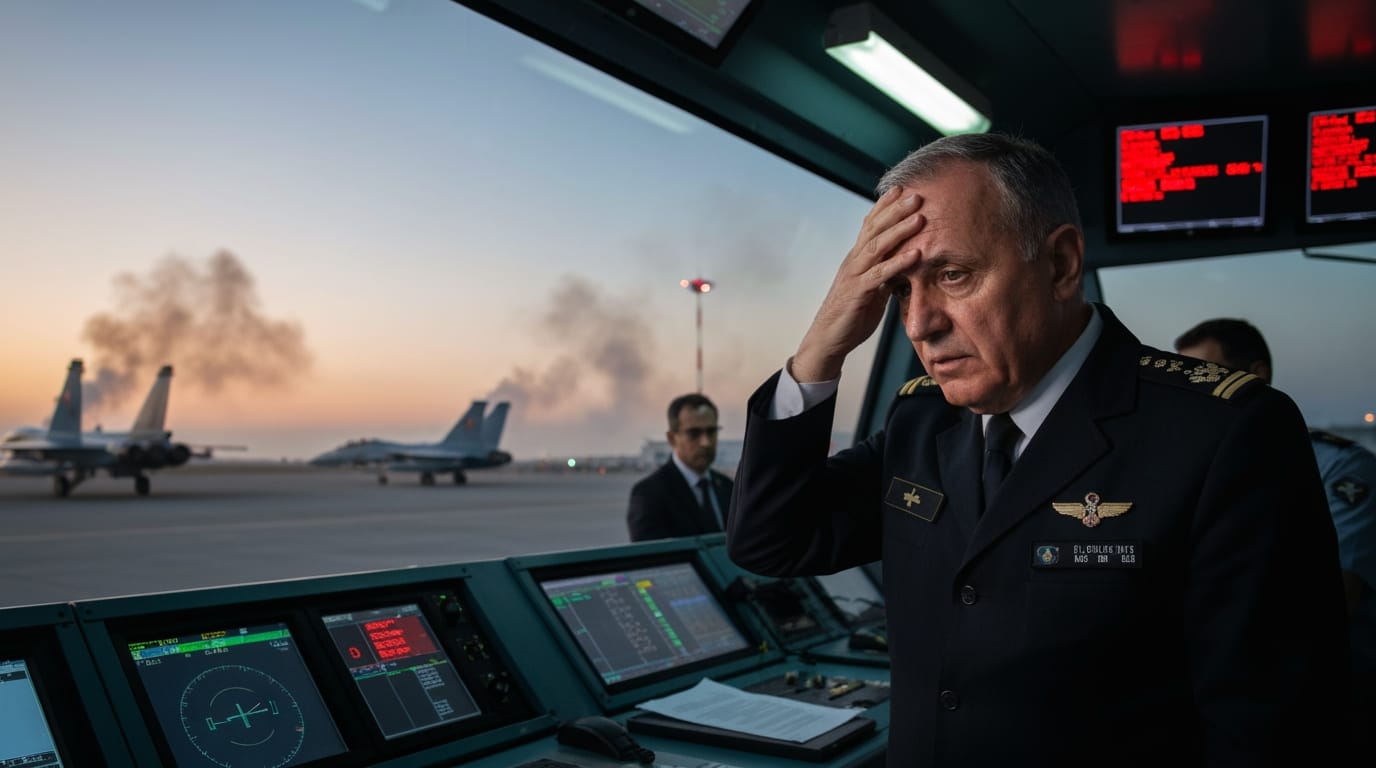
Ankara, Turkey – A private jet carrying Libya's Chief of General Staff, General Muhammed Ali Ahmed al-Haddad, and four other individuals tragically crashed near Ankara on Tuesday evening, December 23, 2025, after reporting a technical malfunction shortly after takeoff. All five people on board were killed in the devastating incident, confirmed by Libyan Prime Minister Abdul Hamid Dbeibeh. The crash marks a significant blow to Libya's internationally recognized Government of National Accord (GNA) and its key ally, Turkey, at a critical juncture for regional stability and ongoing efforts to unify the fractured North African nation.
The Ill-Fated Flight and Emergency
The Falcon 50 business jet, bearing tail number 9H-DFJ, departed from Ankara's Esenboga Airport at approximately 8:10 p.m. local time, bound for the Libyan capital, Tripoli. However, just 42 minutes into its journey, at 8:52 p.m., air traffic controllers lost all contact with the aircraft. Turkish Interior Minister Ali Yerlikaya disclosed that prior to the loss of communication, the crew had issued an emergency landing notification, indicating a technical issue, over the Haymana district, located about 75 kilometers south of Ankara. Despite immediate activation of emergency protocols and the dispatch of search and rescue teams, wreckage was subsequently located, confirming the worst fears.
A Critical Diplomatic Mission Concludes in Tragedy
General Muhammed Ali Ahmed al-Haddad, the Chief of General Staff for the Libyan Army under the Tripoli-based GNA, had been an official guest in Ankara, where he engaged in high-level discussions with Turkish defense officials. His itinerary on Tuesday included meetings with Turkish Defense Minister Yasar Guler and Turkish Chief of General Staff General Selcuk Bayraktaroglu. These crucial talks focused on bilateral defense cooperation and broader regional security concerns, underscoring the deep military ties between Turkey and the GNA. The visit coincided with a significant development in Turkish domestic policy, as the Turkish Parliament had earlier approved a motion to extend the mandate for Turkish troops deployed in Libya for an additional two years. General al-Haddad, appointed to his role in August 2020, played a pivotal role in leading the GNA's military forces. Among the other four fatalities was Lieutenant General Futuri Gribel, the commander of Libyan Land Forces, who had accompanied al-Haddad on his diplomatic mission.
Turkey's Enduring Role in Libya's Conflict
The tragic loss of General al-Haddad comes against a backdrop of Turkey's significant and sustained military and economic support for the GNA in Libya. Since January 2020, Turkey has militarily intervened to bolster the GNA against the rival Libyan National Army (LNA), led by Field Marshal Khalifa Haftar, which primarily controls eastern Libya. Turkish assistance has included on-the-ground advisers, training, operational support, unmanned aerial vehicles (UAVs), intelligence operatives, and naval backing for Libyan ground forces. This intervention has been interpreted by many as an effort by Ankara to secure access to resources and maritime boundaries in the Eastern Mediterranean, aligning with its "Blue Homeland Doctrine." The deepening cooperation is further evidenced by recent agreements, including a memorandum of understanding submitted to the Turkish parliament in August 2024, which grants Turkish forces broad legal protections and logistical support while operating on Libyan soil. The death of General al-Haddad creates a leadership void at a time when the GNA is actively working to consolidate control and maintain stability in western Libya amidst persistent political divisions.
Investigation Underway Amidst Calls for Clarity
While initial reports suggest a technical malfunction, the exact cause of the crash remains under investigation. Interior Minister Yerlikaya stated that the public would be informed of further developments as the inquiry progresses. Reports from Turkish media outlets shortly after the incident showed images of what appeared to be a bright flash of light or an explosion near the crash site, in the Haymana area. This visual information, coupled with the emergency landing notification, forms a critical part of the ongoing assessment into the accident. In the immediate aftermath, Ankara's airspace was temporarily closed as search and rescue operations commenced, highlighting the urgency and seriousness of the event. The loss of a high-ranking military official underscores the risks inherent in the complex geopolitical landscape of the region, emphasizing the need for a thorough and transparent investigation.
The untimely demise of General Muhammed Ali Ahmed al-Haddad and his delegation casts a somber shadow over the strategic partnership between Turkey and the Libyan Government of National Accord. His death leaves a significant gap in the GNA's military leadership, potentially impacting ongoing efforts to stabilize Libya and navigate its intricate political transition. As investigations into the precise cause of the crash continue, the international community watches closely for any implications this tragic incident may have on the delicate balance of power and future trajectory of the Libyan conflict.


