Transatlantic Tensions Simmer as US Demands Greater European Self-Reliance, NATO Chief Reassures Unity
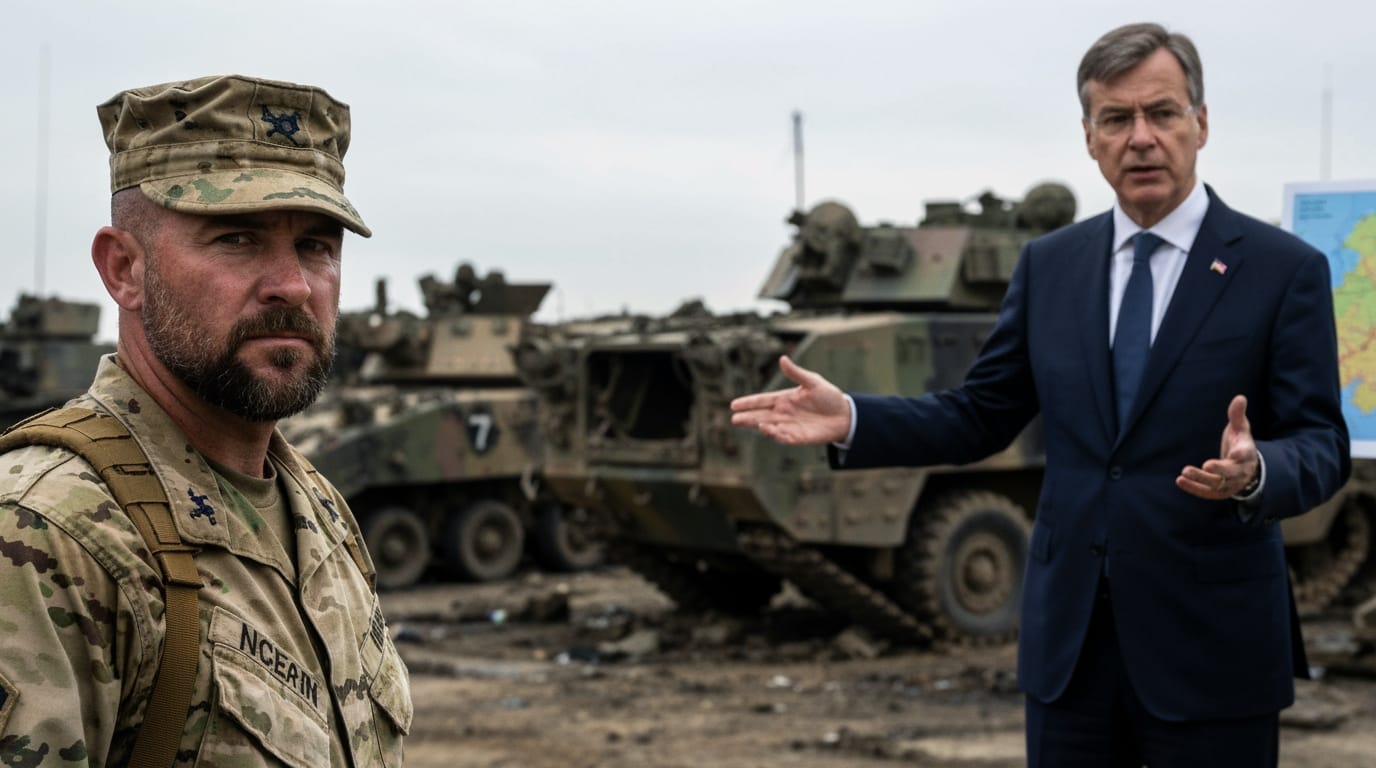
Brussels, Belgium – The bedrock of transatlantic security, the North Atlantic Treaty Organization, finds itself navigating increasingly choppy waters as the United States intensifies its calls for European allies to assume greater responsibility for their own defense, even as the alliance's leadership seeks to project an image of unwavering unity and progress. Recent pointed criticisms from Washington, notably from U.S. Defense Secretary Pete Hegseth, underscore a growing divergence in strategic priorities, forcing European nations to confront a future where American military support may no longer be a given.
Washington's Stern Warning: A Call to Arms and Accountability
The latest friction erupted this week in Brussels, where U.S. Defense Secretary Pete Hegseth delivered a sharply worded address to his NATO counterparts. Hegseth explicitly chastised European allies for their perceived lack of support during the recent US-Israeli war against Iran, specifically citing failures to provide critical access to bases for military operations. He declared these actions "shameful," arguing they placed American military personnel at unnecessary risk. In a move signaling Washington's serious intent, Hegseth announced a six-month Pentagon review of American forces stationed in Europe, with the outcome directly linked to the pace at which European nations commit to leading their own security.
The Secretary's remarks echoed previous, often more incendiary, criticisms from President Donald Trump, who has consistently questioned the alliance's value and threatened to reduce American commitments, even invoking doubts about the sacred Article 5 collective defense clause. Trump's past comments, labeling NATO a "paper tiger" and suggesting a potential US withdrawal, have created an undercurrent of uncertainty for European leaders. Furthermore, Hegseth criticized European spending priorities, suggesting an undue focus on "gender equity and climate change" at the expense of tangible defense capabilities like tanks, fighters, and air defenses. This "NATO 3.0" push from Washington signifies a fundamental shift, moving beyond traditional "burden-sharing" towards "burden-shifting," where European allies are expected to take primary operational control of their continental defense.
NATO Leadership's Balancing Act: Reassurance Amidst Scrutiny
In response to the escalating rhetoric, NATO Secretary-General Mark Rutte has consistently adopted a more conciliatory tone, striving to highlight European efforts and assuage concerns about the alliance's cohesion. Rutte, who recently met with President Trump, described their discussions as "frank" and "open," acknowledging disagreements but emphasizing that the alliance is "not a one-way street." He asserted that European leaders have "heard the message" from the US "loud and clear" and are actively responding by increasing their logistical and military support.
The Secretary-General pointed to significant increases in defense spending across Europe and Canada, noting an additional $90 billion spent in 2025 compared to 2024, representing a nearly 20% surge. While acknowledging some initial slowness in European responses to the Iran conflict, Rutte attributed this partly to the United States' decision not to inform allies ahead of the initial strikes, maintaining "the element of surprise." He stressed that allies are now providing "massive amount of support, basing, logistics and other measures" to assist US operations in denying Iran nuclear weapons. Rutte's steadfast message is one of European commitment and capability growth, aimed at demonstrating that the alliance remains robust despite internal pressures.
The Shifting Landscape of Defense Spending and Capabilities
At the heart of the transatlantic debate is the perennial issue of defense spending. President Trump's administration has aggressively championed a new target, urging NATO members to dedicate 5% of their Gross Domestic Product (GDP) to defense, a substantial increase from the long-standing 2% guideline. While the 2025 NATO Summit in The Hague saw allies agree to aim for the 5% target by 2035, this commitment comes with fiscal and operational challenges. Only Poland, with 4.2% of GDP, currently approaches this ambition.
This drive for increased European defense autonomy is further underscored by Washington's signal that it may no longer automatically provide certain high-value military assets, such as aircraft carriers, fighter jets, and refueling aircraft, in future NATO crises. Such a shift would necessitate European nations rapidly developing their own equivalent capabilities, including air policing, air defense, maritime security, and logistics. The Pentagon's announcement of a reduction of 5,000 US troops from Germany, with evaluations for further cuts across Europe, reinforces the urgency for allies to bolster their independent defense capacities.
Navigating a Fractured Geopolitical World
The current tensions within NATO are not isolated incidents but rather reflections of a complex and increasingly fractured global landscape. The Iran war serves as a critical flashpoint, highlighting differing strategic interests and operational approaches between the US and some European allies. Beyond immediate conflicts, the ongoing war in Ukraine continues to demand collective attention and resources, though even here, the question of Ukraine's full NATO membership remains a delicate balancing act to preserve alliance cohesion.
Former NATO Secretary General Jens Stoltenberg, reflecting on the current climate, acknowledged that tensions between the US and European allies are "more difficult to manage" now than during his tenure. He emphasized that while compromise is essential, there are "limits" to what Europe should accept from the United States, recalling past episodes like President Trump's controversial comments regarding Greenland as "unacceptable." European leaders, facing an unpredictable geopolitical environment and the prospect of an evolving US commitment, are increasingly evaluating their strategic independence.
Conclusion: A Test of Resilience
As NATO approaches its next phase, the alliance faces a critical test of its resilience and adaptability. The robust demands from the United States for greater European self-reliance, coupled with the steadfast reassurances from NATO leadership, paint a nuanced picture of an organization grappling with its future. While the commitment to collective defense remains a foundational principle, the pathways to achieving it are clearly diversifying. The coming months will undoubtedly reveal how successfully the transatlantic partners can reconcile their evolving strategic interests and solidify a common vision for security in a volatile world.


