Trump Administration Overhauls Childhood Vaccine Policy, Igniting Public Health Debate
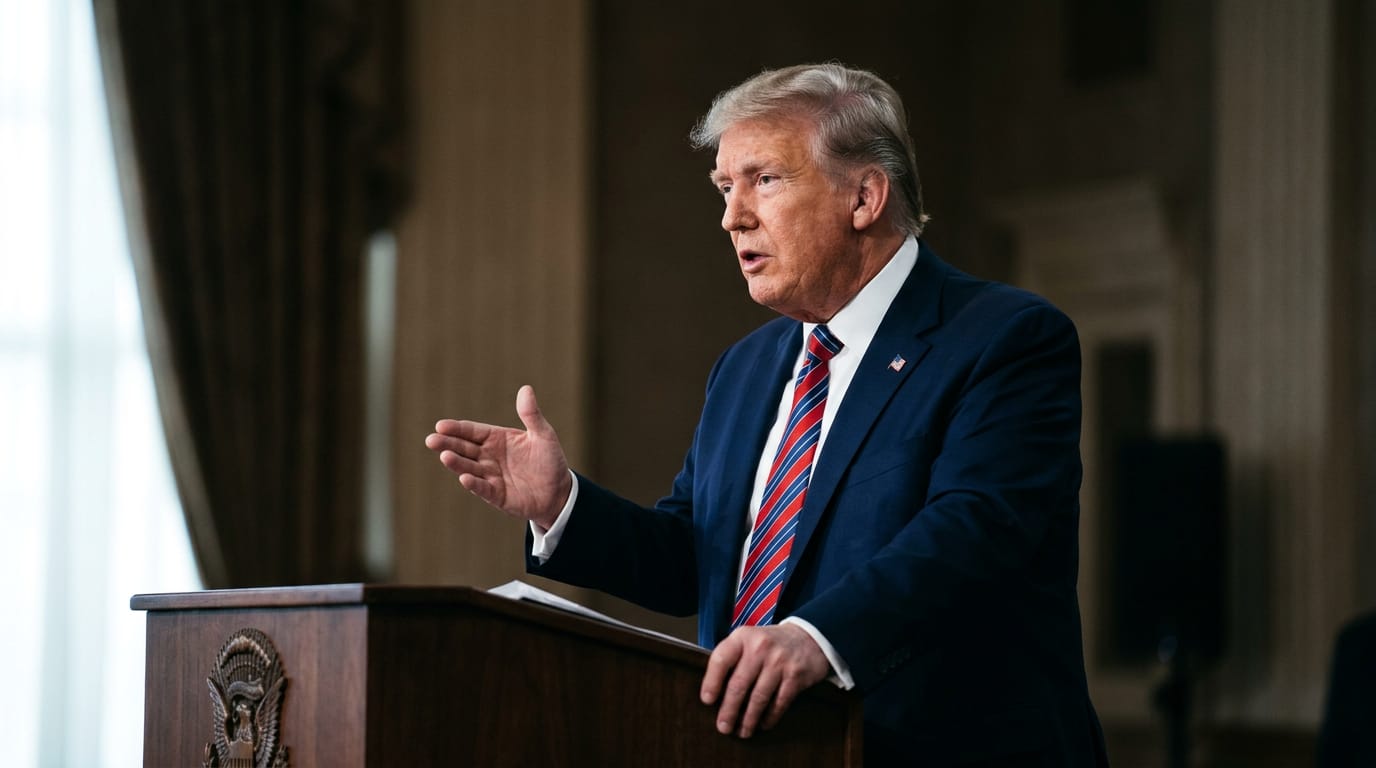
Washington D.C. — In a sweeping move set to redefine pediatric healthcare in the United States, President Donald Trump signed an executive order on Monday, initiating a significant overhaul of the nation's recommended childhood vaccine schedule. The directive aims to reduce the number of universally recommended vaccinations, space out immunizations, and empower parental choice, drawing immediate and sharp criticism from leading medical and public health organizations.
The executive order, dubbed "Gold Standard Childhood Vaccine Recommendations," marks the administration's most significant attempt to reshape how American children are vaccinated, a process that has been under review since late 2025. Flanked by Health Secretary Robert F. Kennedy Jr., a vocal critic of current vaccine policy, President Trump asserted the changes would align the U.S. with "peer nations" and reflect "common sense" in vaccination practices. However, experts warn the revisions could unravel decades of public health progress, potentially leading to a resurgence of preventable diseases.
A New Framework for Childhood Immunization
Under the newly signed executive order, the administration's plan significantly alters the landscape of childhood vaccinations. The number of diseases for which vaccines are universally recommended for all children will be reduced from 18 to 11, focusing on what the administration terms "the most serious and dangerous diseases." Vaccines against measles, mumps, rubella, polio, whooping cough, chickenpox, diphtheria, Haemophilus influenzae type B (Hib), pneumococcal disease, tetanus, and HPV (with a reduced dose) remain universally recommended.
Meanwhile, vaccines for hepatitis A, hepatitis B, rotavirus, meningococcal disease, influenza, and COVID-19 have been reclassified. These immunizations are now recommended only for specific high-risk groups or subject to "shared clinical decision-making" between parents and doctors. This shift is intended to provide parents with more autonomy in their children's healthcare decisions.
A particularly notable aspect of the order is the call to break up the combined measles, mumps, and rubella (MMR) vaccine into three separate shots, administered at separate medical visits. President Trump articulated that this approach would significantly reduce the perceived volume of vaccine administered at any given time. He suggested that by spacing out immunizations over multiple appointments, children would receive one-fifth of the vaccine volume currently administered during a single medical visit. However, separate MMR vaccines are not currently available in the U.S. market, and medical experts note that creating them would require substantial pharmaceutical development and regulatory approval.
The order also directs the U.S. Attorney General to challenge state laws that conflict with the administration's emphasis on religious freedom, parental authority, and medical exemptions from vaccine requirements. White House officials have indicated that health insurers are expected to continue covering recommended vaccines.
Decades of Guidance Upended
The federal government's recommended childhood vaccine schedule has historically been developed through a rigorous, evidence-based process involving the Centers for Disease Control and Prevention (CDC) and its Advisory Committee on Immunization Practices (ACIP), an external panel of experts. This process ensures that recommendations are rooted in comprehensive scientific data on vaccine safety and effectiveness, aiming to protect children from a broad spectrum of infectious diseases. Prior to the administration's recent actions, the CDC's schedule typically recommended vaccines against 18 diseases.
The Trump administration's push for this overhaul began in December 2025 with a Presidential Memorandum, followed by an HHS memo in January 2026 implementing major changes. However, a federal judge blocked the CDC's previously recommended changes in March 2026, citing a violation of due process. This latest executive order represents a renewed and intensified effort to implement these revisions.
A core argument put forth by the administration is that the U.S. currently recommends more childhood vaccines than any "peer nation." An HHS scientific assessment, conducted at President Trump's direction, reportedly concluded that some European nations recommend significantly fewer vaccine doses.
Public Health Community Raises Alarm
The administration's new policy has met with widespread condemnation from scientific, medical, and public health communities. Organizations like the American Academy of Pediatrics have called the order "disheartening" and "dangerous," while the World Federation of Public Health Associations (WFPHA) issued a critical statement, emphasizing that "children's health is not a policy experiment."
Critics argue that the changes are largely unscientific and could have dire consequences for public health. Concerns include increased risks of infection for children, delayed vaccinations, and potential resurgences of vaccine-preventable diseases. Experts point out that the U.S. is already experiencing its worst measles year in 35 years, a trend that could worsen with reduced immunization rates. Professor Bill Hanage of Harvard T.H. Chan School of Public Health warned that if fewer people are protected, there will be more preventable illness, suffering, and death.
Furthermore, the claim that the U.S. recommends significantly more vaccines than other developed nations has been contested. While schedules vary, many wealthy countries recommend a similar or even greater number of immunizations, and direct comparisons can be misleading due to differences in population, healthcare access, and disease burdens.
A significant point of contention stems from President Trump's repeated references to a long-debunked link between childhood vaccines and autism during the order's signing. Despite overwhelming scientific consensus refuting this connection, the president mused on the current number of vaccines and suggested reducing their frequency was "common sense" to address autism rates. Health Secretary Robert F. Kennedy Jr. has also consistently promoted this unproven link.
Medical professionals also highlight the logistical and financial burdens of spacing out vaccinations. Requiring multiple separate visits for immunizations, including splitting the MMR vaccine, would increase parental appointments and costs, potentially leading to missed doses and decreased overall vaccination coverage.
Implications and the Path Forward
The executive order applies immediate pressure on states, health insurers, and pharmaceutical companies to align with the new recommendations. However, the actual implementation of these changes remains complex. While the CDC advises states on policy, states ultimately set their own vaccine requirements for school entry. Many states have indicated they plan to continue following the recommendations of the American Academy of Pediatrics, which advocate for the previously established immunization policies.
Public health leaders fear that undermining established, evidence-based vaccine schedules not only jeopardizes individual children but also erodes public trust in medical science, with global implications. The long-term effects of this policy shift, particularly on the incidence of vaccine-preventable diseases and the broader public health infrastructure, will be closely monitored as the nation navigates this contentious new chapter in vaccine policy.


