Trump Administration Urges Supreme Court to Permit Continuation of White House Ballroom Construction Amid Legal Battle
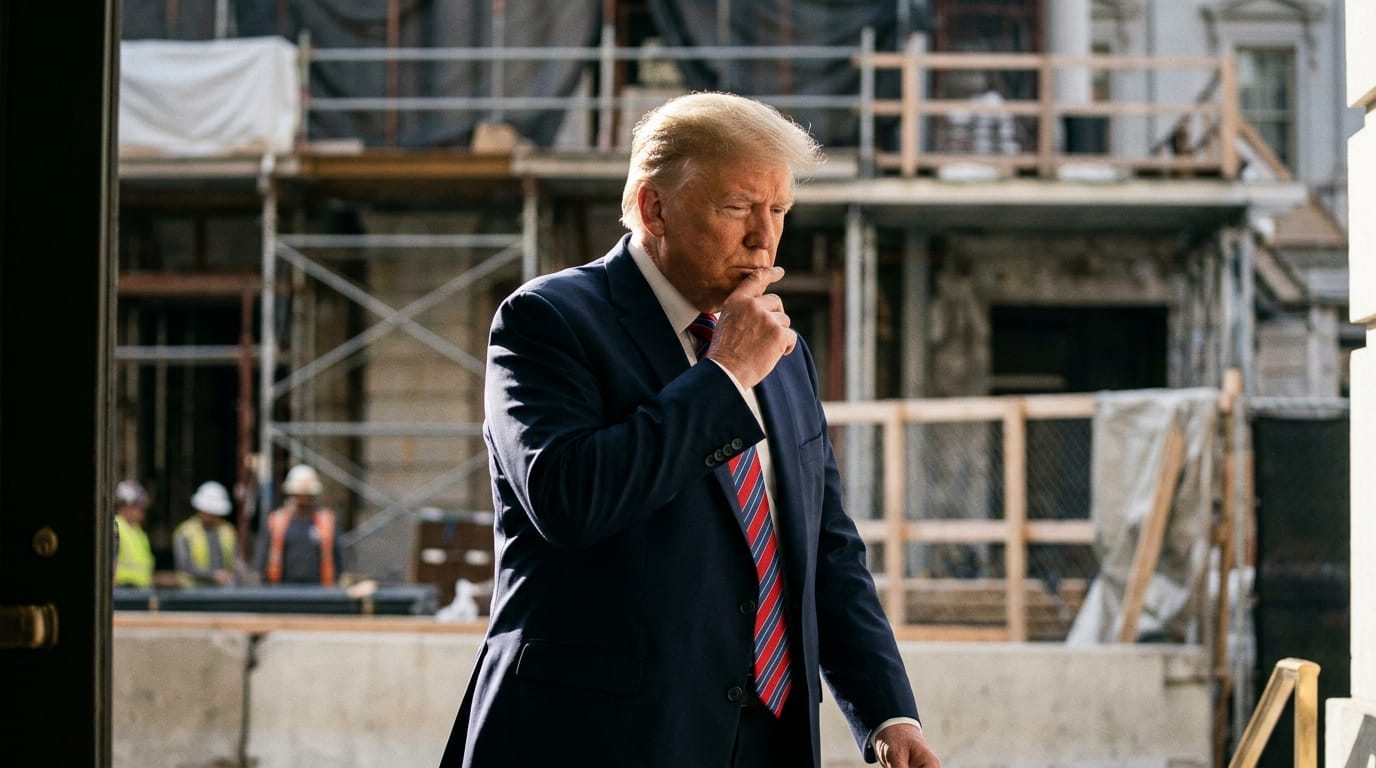
Washington, D.C. — The Trump administration has escalated its legal fight over the controversial White House ballroom project, filing an emergency request with the U.S. Supreme Court on Friday to allow construction to proceed. This urgent appeal comes just one week after a federal appeals court ordered a halt to the above-ground work on the estimated $400 million project, ruling that the President lacked the unilateral authority to undertake such a significant renovation without congressional approval. The high-stakes legal maneuver pits executive authority against legislative oversight and historic preservation, with the fate of a major White House transformation now resting with the nation's highest court.
Legal Challenge Reaches Nation's Highest Bench
The White House, through Solicitor General D. John Sauer, petitioned the Supreme Court to suspend a decision rendered by a three-judge panel of the U.S. Court of Appeals for the District of Columbia Circuit. That divided panel, in a 2-1 ruling, mandated that construction on the 90,000-square-foot ballroom must cease because it had not received proper authorization from Congress. The appeals court had, however, temporarily paused its own ruling for two weeks, setting an August 21 deadline for the administration to seek intervention from the Supreme Court. Sauer's filing on behalf of the administration argues that the injunction issued by the lower court is "extraordinary and unlawful" and directly jeopardizes national security by halting the development of what it describes as an "integrated military complex" and a "totally secure ballroom space."
The legal saga began in December 2025 when the National Trust for Historic Preservation filed a lawsuit challenging the project, asserting that it violated federal laws by proceeding without necessary reviews or congressional consent. U.S. District Judge Richard Leon initially expressed skepticism regarding the administration's claims of proper authority, and in April, he ordered a stop to above-ground construction, though he permitted underground work, including bunkers and medical facilities, to continue. The appeals court largely upheld Judge Leon's decision, emphasizing that "whether or not a massive ballroom should be constructed is for Congress to decide and is not a matter for Executive self-help."
A $400 Million Vision: Security, Scale, and Controversy
The ambitious project involves the demolition of the White House's historic East Wing, which occurred last fall, to make way for the new ballroom. Touted by President Trump as a "gift" to the American people and funded by private donors rather than taxpayers, the administration insists the overhaul is critical for national security. Officials, including Solicitor General Sauer, claim the new facility is "vitally required" to enhance the safety of the President, his family, staff, and visiting dignitaries, citing recent domestic and international assassination threats. The administration contends that the current state of the project, which is approximately 65% complete and features a concrete-and-steel superstructure stretching five stories deep and 70 feet high in some areas, leaves the White House complex in a state of "needless vulnerability."
However, the national security rationale has been met with skepticism by preservationists and some members of the judiciary. The National Trust for Historic Preservation argues that the sheer scale of the project, which they contend is the largest structural change to the White House in over 70 years, requires explicit congressional approval. They maintain that the Constitution grants Congress, not the President, full authority over federal property and its funding. Critics have also raised concerns about the use of private funds and the lack of transparency, with some public comments describing the proposed ballroom as "ugly," "grossly out of scale," and an "invitation for corruption."
Competing Interpretations of Presidential Power
At the heart of this dispute is a fundamental question of presidential authority versus congressional oversight. The Trump administration argues that the President, as the head of the Executive Branch, possesses the inherent authority to renovate, secure, and protect the White House, akin to actions taken by previous presidents. Solicitor General Sauer stated that the matter "should be a matter for the President and the political process, not construction-by-injunction." The administration's legal team has also challenged the standing of the National Trust for Historic Preservation to sue over the project.
Conversely, the appeals court majority, consisting of Judges Patricia Millett and Bradley Garcia, both appointed by Democratic presidents, asserted that "the president occupies the White House, but does not personally own it." They underscored that no previous president had "unilaterally" demolished substantial portions of the White House using private funds. Judge Neomi Rao, a Trump appointee, dissented from the appeals court's ruling, arguing that the preservationist group lacked legal standing and that the district court had prioritized "aesthetic displeasure" over the government's security interests.
The Supreme Court's decision on the emergency stay request is anticipated swiftly, as the appeals court's mandate to halt construction is set to take effect on August 21. Chief Justice John Roberts has already set a deadline for the plaintiffs to respond to the administration's filing.
What Lies Ahead
The Supreme Court's impending decision carries significant implications not only for the future of the White House ballroom but also for the balance of power between the executive and legislative branches concerning federal property and security projects. A ruling in favor of the administration would permit work to continue while the broader legal appeals play out, potentially allowing the project to be completed before a definitive judgment on its legality. Conversely, upholding the injunction would compel an immediate cessation of above-ground construction, leaving a partially built structure and forcing the administration to seek congressional approval or abandon significant aspects of its plan. The outcome will shape precedents for how future presidents can undertake renovations to the nation's most iconic residence, ensuring this legal drama will have lasting ramifications beyond the immediate controversy.


