Trump and Zelenskyy Trade Barbs as Disinformation Surges
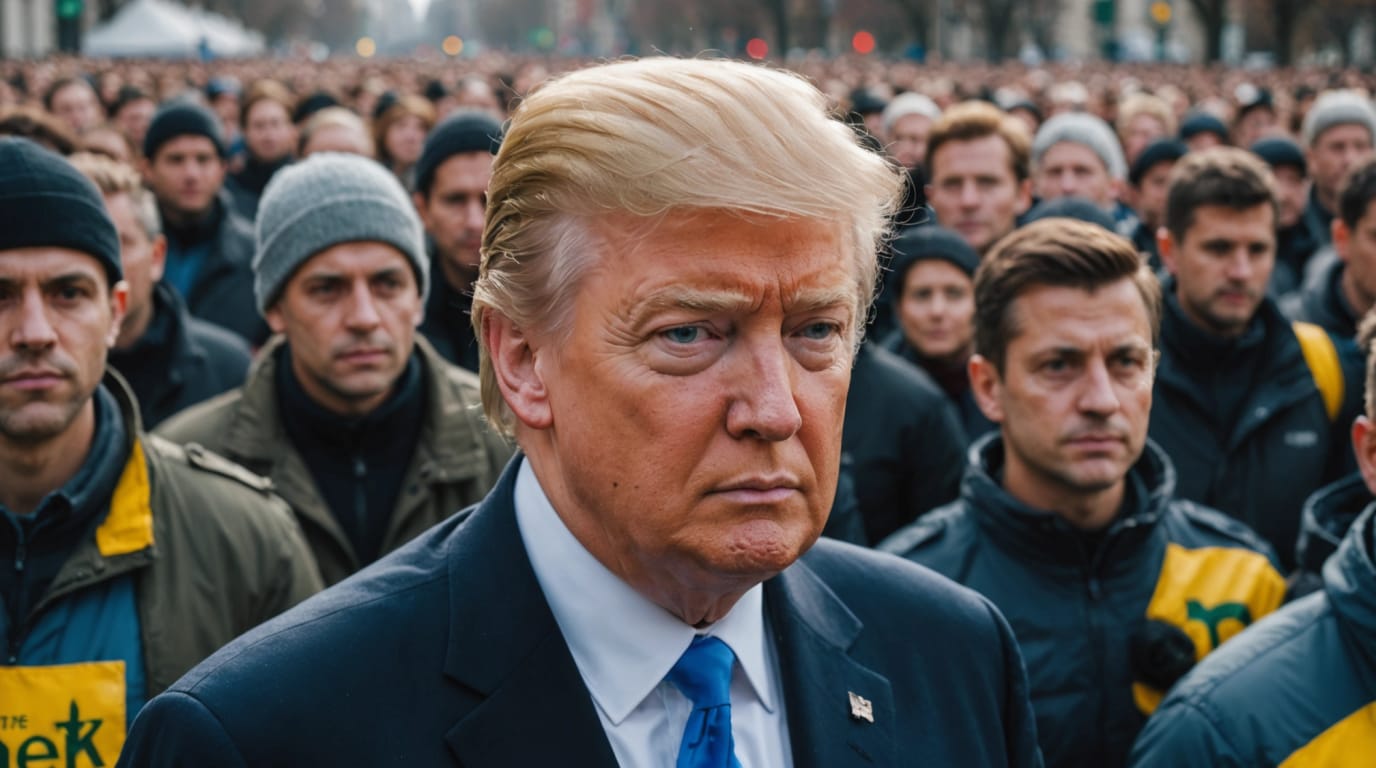
Relations between the United States and Ukraine have sharply deteriorated after a series of public statements and accusations traded between President Donald Trump and Ukrainian President Volodymyr Zelenskyy. The escalating tensions have fueled a surge in disinformation, echoing narratives promoted by Russia and raising concerns about the future of U.S.-Ukraine relations.
Accusations Fly Between Leaders
The recent spat began when President Trump, during a press conference Tuesday, blamed Ukraine for the ongoing war with Russia. He claimed Ukraine "should have never started" the conflict and asserted that Zelenskyy's approval rating was a mere 4%. These remarks came after high-level U.S.-Russia talks in Riyadh, from which Ukraine was excluded.
Zelenskyy responded on Wednesday, accusing Trump of living in a "Russian-made disinformation space." He refuted the claim about his approval rating, citing a recent study by the Kyiv International Institute of Sociology that placed his approval rating at 57%, a figure he stated had increased by 5% since December. Zelenskyy also expressed disappointment with the Trump administration's approach to Russia, suggesting it was enabling Russia to emerge from international isolation.
Trump further escalated the situation with a social media post referring to Ukraine's postponed elections due to martial law, calling Zelenskyy a "dictator without elections." He also claimed Ukraine had manipulated the U.S. into spending $350 billion on a war that "couldn't be won."
Disinformation Echoes Russian Narratives
Trump's statements have been criticized for aligning with Russian narratives about the conflict. Russia has long sought to portray Ukraine as the aggressor and has used disinformation to undermine international support for the country. Zelenskyy directly addressed this, stating that the disinformation was coming from Russia.
The claim about Zelenskyy's 4% approval rating, specifically, has been identified as a piece of Russian disinformation. This figure has been circulating in Russian media and online channels, aiming to delegitimize Zelenskyy's leadership and sow discord within Ukraine.
Implications for U.S.-Ukraine Relations
The exchange of accusations has strained relations between the two countries, which have been allies since Russia's initial aggression in 2014. Under the previous administration, the U.S. provided significant military and financial aid to Ukraine, helping it to defend itself against Russian aggression.
The Trump administration's shift in policy, marked by outreach to Russia and a push for a peace deal, has raised concerns in Kyiv. Ukrainian officials fear that the U.S. is prioritizing its relationship with Russia over the security and sovereignty of Ukraine. The exclusion of Ukraine from the U.S.-Russia talks in Riyadh further fueled these concerns.
Ukraine's Response and International Reactions
Despite the criticism from Trump, Ukrainian officials have rallied around Zelenskyy. Borys Filatov, the mayor of Dnipro, emphasized that regardless of internal opinions about Zelenskyy, no external entity had the right to criticize him. Other Ukrainian figures echoed this sentiment, underscoring the importance of national unity in the face of external pressure.
Key European leaders held an emergency meeting in Paris, expressing concern about being sidelined by the Trump administration's approach to the conflict. They reaffirmed their commitment to supporting Ukraine and finding a peaceful resolution to the war, but the growing rift between the U.S. and Ukraine casts a shadow over these efforts.
The Battlefield Reality
While the political tensions escalate, the situation on the ground in Ukraine remains dire. Russian forces continue to exert pressure in eastern Ukraine, slowly gaining ground in some areas. Ukraine's military is facing shortages of personnel and equipment, making it increasingly difficult to hold the line.
The ongoing conflict has resulted in significant casualties and displacement, with millions of Ukrainians forced to flee their homes. The war has also had a devastating impact on Ukraine's economy and infrastructure, setting back the country's development by years.
A Precarious Future
The spike in disinformation surrounding the Trump-Zelenskyy row highlights the challenges of navigating a complex geopolitical landscape. The spread of false narratives can undermine public trust, sow discord, and ultimately impact the course of international relations.
As the U.S. and Russia seek to negotiate a resolution to the conflict in Ukraine, it is crucial that all parties involved prioritize truth and transparency. Failure to do so risks further destabilizing the region and prolonging the suffering of the Ukrainian people. The future of U.S.-Ukraine relations, and the prospects for peace in the region, hinge on the ability to overcome disinformation and engage in constructive dialogue.


