Trump Backs Ukrainian Patriot Production Amid Air Defense Crisis
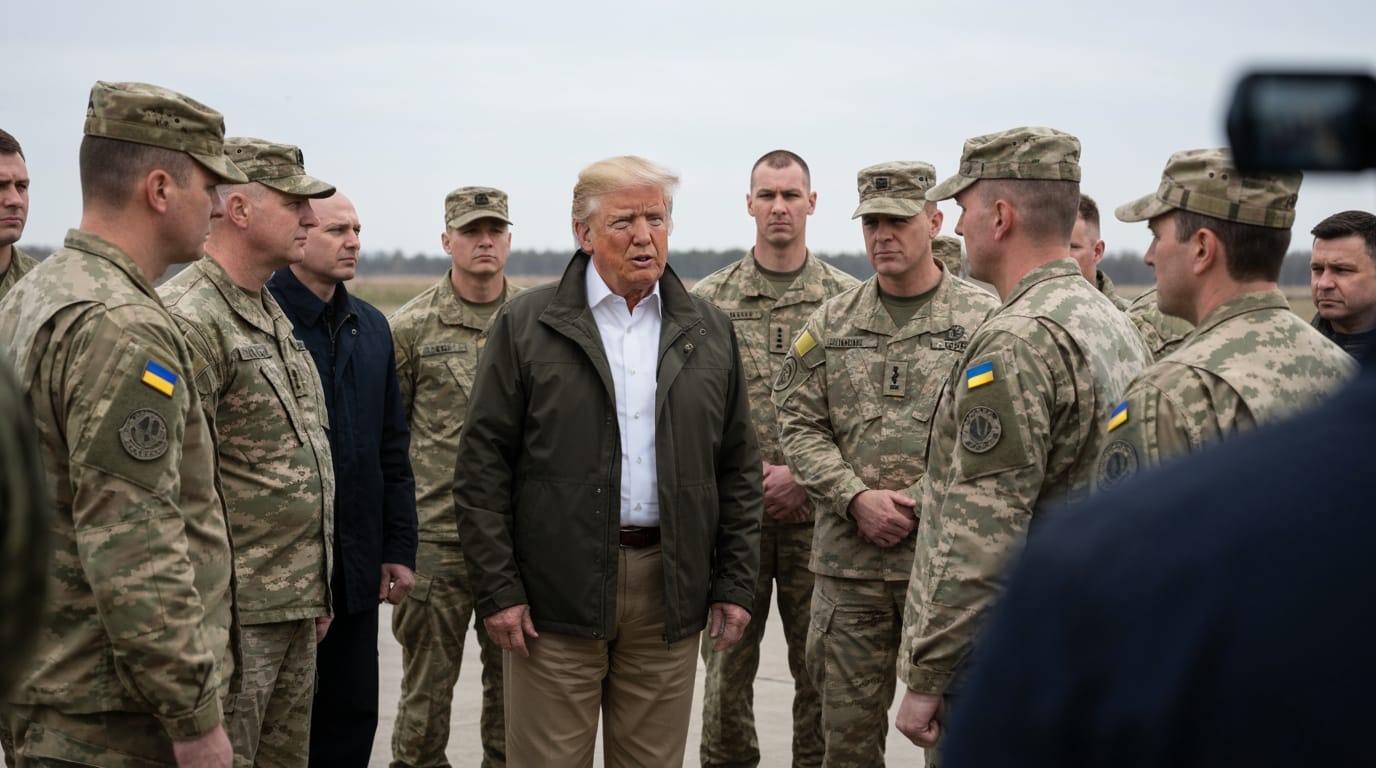
ANKARA, Turkey – In a move signaling a significant, albeit long-term, shift in Western military support for Kyiv, U.S. President Donald Trump announced Wednesday that the United States would grant Ukraine a license to manufacture Patriot interceptor missiles on its soil. The declaration, made during the NATO summit in Ankara alongside Ukrainian President Volodymyr Zelenskyy, aims to bolster Ukraine's air defense capabilities against persistent Russian ballistic missile attacks, though experts caution that establishing such complex production would be a formidable undertaking spanning years.
A Strategic Pivot from Ankara
President Trump's announcement represents a notable development in the ongoing efforts to equip Ukraine in its defense against Russia. Speaking at the NATO summit, Trump stated the U.S. would "give them the right to make Patriots" and "show them how to do it," describing the Patriot as a "defensive weapon." This initiative follows repeated appeals from Ukraine for additional Patriot interceptors, which are considered crucial for countering high-velocity Russian ballistic missiles. Trump acknowledged the United States' own limited supply of these advanced systems, noting, "We have Patriots, but we don't have that many. We need them for ourselves too," suggesting that licensed production in Ukraine would alleviate the reliance on direct U.S. deliveries. However, the President also indicated that the decision had not yet been formally communicated to the primary defense manufacturers, Lockheed Martin and RTX Corporation (formerly Raytheon). Ukrainian President Zelenskyy had previously advocated for such licensing, highlighting its potential to enhance Ukraine's defense capabilities and contribute to regional security. The pledge marks a symbolic shift in attitude, even if the practical implementation remains distant.
Ukraine's Critical Need for Advanced Air Defense
The urgency for enhanced air defense in Ukraine remains paramount as Russian forces continue their aerial assaults, frequently employing ballistic missiles that current Ukrainian air defenses struggle to intercept without the sophisticated capabilities of the Patriot system. Patriot systems have proven vital in thwarting Russia's attacks, yet Ukraine faces a persistent shortage of interceptors. Each PAC-3 missile, capable of shooting down ballistic missiles, costs approximately $5 million, contributing to the strain on both Ukrainian and donor nations' arsenals. The global supply of Patriot interceptors has been significantly depleted, partly due to their extensive use in Ukraine and other conflicts. This scarcity has forced Ukrainian operators to conserve missiles, sometimes leaving them unable to intercept all incoming ballistic threats. Despite efforts from the U.S., Germany, and other allies to provide Patriot batteries and components, the delivered systems fall short of the estimated 25 systems Ukraine seeks for comprehensive air defense coverage.
The Complexities of Domestic Production
While the prospect of local Patriot production offers a long-term solution, the path to establishing such a capability is fraught with significant technical, logistical, and security challenges. Analysts widely agree that the production of Patriot interceptors, particularly the advanced PAC-3 variant, is technically complex and would require years to establish. For instance, a single PAC-3 MSE interceptor requires about 24 months for production, with its rocket motor taking approximately 30 months. The process demands specialized technology, advanced equipment, and highly trained personnel.
A major hurdle lies in building a new supply chain for the numerous proprietary components, many of which are not available on the open market. Even if Ukraine obtains the necessary licenses, the complexities of integrating these components and ensuring quality control will be substantial. Security is another critical concern; any Patriot production facility within Ukraine would instantly become a high-priority target for Russian attacks. This vulnerability has led some experts to suggest that production might be more feasible in a neighboring European country, such as Poland. Despite these challenges, an adviser to Ukraine's defense minister, Serhiy Beskrestnov, expressed confidence in Ukraine's ability to establish production once licenses and technological insights are secured, though acknowledging that time is the primary obstacle.
Ukraine's Growing Defense Industrial Base
Despite the immediate challenges, Ukraine has demonstrated a remarkable capacity for expanding its domestic defense industry since the full-scale Russian invasion in 2022. The country has significantly increased its internal production of various weapons systems, reducing its dependence on external suppliers. By 2025, Ukraine's domestic production was projected to meet 40% of its defense needs, a substantial increase from 10% in 2022. The projected production capacity of Ukraine's defense industry for 2026 is estimated at $55 billion, a 55-fold increase since the invasion. This growth has been particularly evident in areas like drone production, where Ukrainian innovation has created a significant asymmetric advantage. The development of its own defense supply chains and the rapid adoption of innovations tailored to frontline needs underscore Ukraine's ambition to become more self-reliant. The potential for Patriot production aligns with this broader strategy of strengthening Ukraine's long-term security and integrating it into the Western defense industrial ecosystem, albeit recognizing the distinct complexity of Patriot manufacturing compared to other indigenous defense efforts.
Balancing Hope and Reality
President Trump's signal of support for licensed Patriot production in Ukraine introduces a new dimension to Kyiv's long-term defense strategy. While it offers the promise of greater self-sufficiency and reduced reliance on external aid, the immense technical complexities, extended timelines, and security risks associated with manufacturing such advanced systems mean it is not an immediate remedy for Ukraine's urgent air defense needs. The short-term deficit of interceptors continues to expose Ukrainian cities to Russian ballistic missile attacks, a window of vulnerability that Russia may seek to exploit. The announcement highlights a strategic intent to integrate Ukraine more deeply into the Western defense industrial base, yet the tangible impact on the current conflict remains years away, underscoring the ongoing tension between immediate battlefield requirements and long-term strategic investments.