Trump Claims Iran War Over, Tehran Cautious Amidst Skepticism
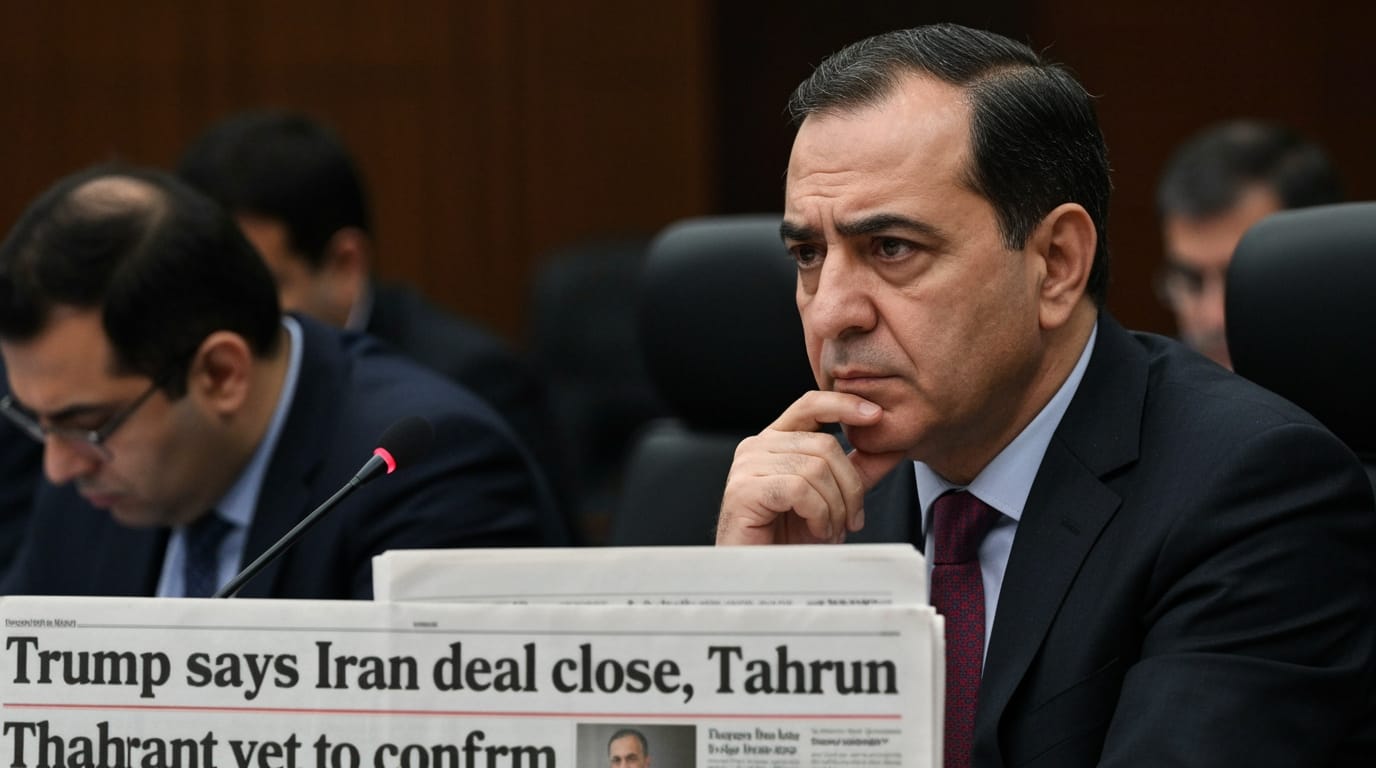
WASHINGTON / TEHRAN – President Donald Trump announced Thursday that the United States had achieved a "great settlement" in the ongoing conflict with Iran, signaling an imminent peace deal that he claimed would permanently prevent Tehran from acquiring nuclear weapons. However, Iranian officials quickly tempered expectations, stating that while a draft agreement was largely finalized, no "final conclusion" had been reached, underscoring the persistent diplomatic chasm between the two adversaries. The sudden declaration from the White House, coming amidst a backdrop of escalating military tensions and canceled strikes, has been met with significant international skepticism, reflecting a history of unpredictable pronouncements in U.S.-Iran relations.
The President's assertion, made from the White House, posited that an agreement could be signed within days, potentially in Europe, with Vice President JD Vance slated to attend. Trump also indicated that planned military strikes against Iran had been called off, citing significant progress in the high-level discussions. He confidently declared that Iran had agreed "never to have a nuclear weapon," suggesting that even Supreme Leader Mojtaba Khamenei had approved the terms. This optimistic outlook, however, contrasts sharply with the measured and cautious statements emanating from Tehran, highlighting the precarious nature of the proposed breakthrough.
Tehran's Guarded Response Signals Ongoing Hurdles
Hours after President Trump's announcement, Iranian Foreign Ministry spokesman Esmail Baqaei (also referred to as Esmaeil Baghaei) offered a more reserved assessment, confirming that discussions had indeed progressed and major sections of a potential memorandum of understanding were "largely finalized." However, Baqaei unequivocally stated that Iran had "not reached a final conclusion" on the agreement, emphasizing that a "final decision" remained pending approval by the Iranian government. He further accused the United States of repeatedly shifting its positions during the negotiations and reiterated that Tehran would not compromise on its established "red lines." This response underscores Iran's intent to maintain its negotiating leverage and avoid the perception of capitulation under U.S. military pressure. Iranian state media and officials have also sought to portray U.S. strikes as ineffective, asserting that Iran views the current phase not merely as negotiations for a deal but as an end to a "war."
Key Elements of the Emerging Framework
Reports from sources briefed on the talks, including Axios, indicate that the emerging memorandum of understanding encompasses several critical provisions. Central to the agreement is reportedly a 60-day extension of the existing ceasefire. It also aims to facilitate the reopening of the Strait of Hormuz, a vital global shipping lane, with a goal for pre-war shipping volumes to resume within 30 days, contingent on the U.S. lifting its current blockade. Economically, the deal reportedly includes the waiver of certain U.S. sanctions, enabling Iran to sell oil for the 60-day period, and the release of half of an estimated $24 billion in frozen Iranian assets.
Regarding Iran's contentious nuclear program, the agreement reportedly requires Iran to commit to never obtaining a nuclear weapon and to resolve disputes over its enriched uranium stockpile. Trump further claimed that Iran agreed to dilute uranium enriched to 60% on Iranian soil under the supervision of United Nations inspectors. However, the specifics of these nuclear commitments have been described as "conceptual" or not yet finalized, indicating that the most sensitive aspects of the deal still require detailed negotiation and formalization. Further discussions are planned to address the broader scope of Iran's nuclear activities.
A History of Broken Deals and Heightened Tensions
The current diplomatic flurry unfolds against a complex historical backdrop marked by the 2015 Joint Comprehensive Plan of Action (JCPOA), commonly known as the Iran nuclear deal. The JCPOA, negotiated by Iran and world powers including the U.S., limited Iran's nuclear program in exchange for sanctions relief. In 2018, the United States, under then-President Donald Trump, unilaterally withdrew from the agreement, reimposing sanctions under a "maximum pressure" campaign and arguing that the deal failed to adequately address Iran's missile program and regional influence. Following the U.S. withdrawal, Iran progressively scaled back its commitments, exceeding uranium enrichment limits and restricting international inspections. The original JCPOA officially expired in October 2025, with Iran announcing it would no longer be bound by its terms after the UN Security Council did not renew sanctions suspension.
This new round of negotiations, which reportedly began in 2025 and intensified in 2026, comes after a period of significant military engagement, including U.S. and Israeli strikes on Iranian targets. The heightened tensions have contributed to a sense of urgency, with some Iranian officials describing the military operations as an "annex to the negotiating table."
Regional allies, particularly Israel, are closely monitoring the developments. Israeli Prime Minister Benjamin Netanyahu's office, reportedly caught off guard by Trump's announcement, characterized the proposed accord as merely an "emerging MoU regarding entry into negotiations." Israel has outlined its own "red lines" for any final agreement, including the removal of enriched material, dismantling of enrichment infrastructure, limits on missile production, and an end to Iran's support for regional proxies. These conditions represent significant potential sticking points, as Iran has historically resisted such demands.
Uncertain Path Ahead for Regional Stability
The prospect of a new agreement, if indeed finalized, carries profound implications for regional stability, global energy markets, and international diplomacy. A resolution to the prolonged conflict could ease geopolitical tensions, potentially leading to a decrease in oil prices and fostering greater security in the Middle East. Conversely, a collapse of the current diplomatic efforts, particularly after such a high-profile announcement, could plunge the region into renewed instability and further escalate military confrontations.
As the international community awaits concrete confirmation from both Washington and Tehran, the prevailing sentiment remains one of cautious skepticism. President Trump's history of assertive claims in foreign policy, often preceding complex and drawn-out negotiations, contributes to this uncertainty. For now, the future of U.S.-Iran relations and the prospect of a lasting peace remain suspended between a presidential declaration of success and Tehran's insistence on a deliberative process. The coming days will be critical in determining whether this latest overture will culminate in a tangible agreement or merely add another chapter to the contentious narrative between the two nations.


