Trump Declares Iran Peace Deal 'Largely Negotiated' Amidst Escalating Tensions and Iranian Discrepancies
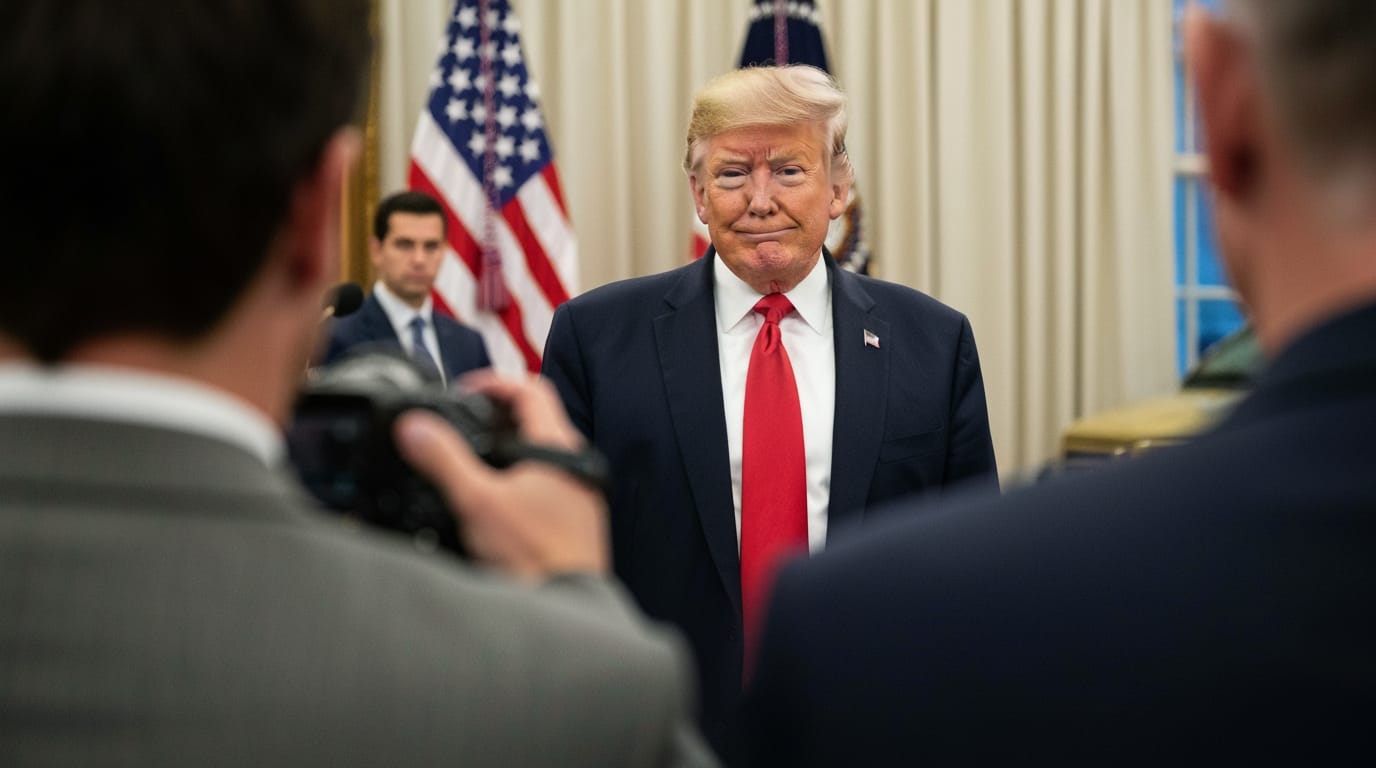
WASHINGTON D.C. – In a significant and rapidly unfolding diplomatic development, former President Donald Trump announced Saturday that a peace agreement with Iran had been "largely negotiated," signaling a potential de-escalation in a conflict that has gripped the Middle East since February. The declaration, made on his Truth Social platform, asserted that final details were nearing completion and would include the crucial reopening of the Strait of Hormuz. However, Tehran swiftly challenged key aspects of Trump's claims, highlighting a persistent chasm in perspectives that continues to complicate efforts toward a lasting peace.
The President's Bold Claim and Diplomatic Overtures
President Trump's statement on May 23, 2026, proclaimed an "Agreement has been largely negotiated, subject to finalization between the United States of America, the Islamic Republic of Iran, and the various other Countries." He indicated that the "final aspects and details" of this "Memorandum of Understanding pertaining to PEACE" were under discussion and would be announced shortly. A central point of his announcement was the anticipated reopening of the Strait of Hormuz, a vital global shipping lane that Iran had effectively closed after the US and Israel initiated attacks in February. This closure has had significant repercussions on global supply chains and energy markets.
Trump's announcement followed a series of intense diplomatic engagements. He revealed that he had consulted with a wide array of regional leaders, including those from Saudi Arabia, the United Arab Emirates, Qatar, Egypt, Jordan, Bahrain, and Turkey. Notably, he also held a separate, reportedly "very well" conversation with Israeli Prime Minister Benjamin Netanyahu. Mediation efforts, particularly those spearheaded by Pakistan, were acknowledged as having made "encouraging progress" in the days leading up to Trump's optimistic post. These discussions saw Pakistan's army chief, Field Marshal Asim Munir, travel to Tehran for meetings with Iranian leadership, delivering a revised proposal to the United States.
Tehran's Swift Rebuttal and Divergent Priorities
Despite the positive tone from the American side, Iran's response was marked by a immediate rejection of a key component of Trump's declaration. Iran's Fars news agency, closely associated with the powerful Islamic Revolutionary Guard Corps (IRGC), quickly reported that the Strait of Hormuz would remain under Tehran's control, directly contradicting Trump's assertion. The Iranian news outlet characterized Trump's claim of a near-final deal as "incomplete and inconsistent with reality."
Iranian officials, while confirming ongoing negotiations and acknowledging some progress, have consistently emphasized a different set of priorities for any initial agreement. Their focus remains on achieving a permanent cessation of hostilities "on all fronts including Lebanon," securing an end to the American blockade, and obtaining relief from sanctions. Crucially, Tehran has maintained that discussions regarding its nuclear program, a central point of contention for the United States, would not be part of these initial talks. Iran's Foreign Ministry spokesperson confirmed that a "Memorandum of Understanding, a kind of framework agreement composed of 14 clauses," was being finalized, implying a staged approach to broader issues.
A History of Escalation and Stalled Diplomacy
The current diplomatic flurry occurs against a backdrop of deeply entrenched hostilities and a recent escalation into open warfare. The 2026 Iran war commenced on February 28, 2026, with direct attacks by the United States and Israel on Iranian targets. This conflict followed years of heightened tensions and a "maximum pressure campaign" initiated by the Trump administration after its 2018 withdrawal from the Joint Comprehensive Plan of Action (JCPOA), commonly known as the Iran nuclear deal. The 2015 JCPOA aimed to restrict Iran's nuclear program in exchange for sanctions relief, but Trump's withdrawal and subsequent reimposition of sanctions led Iran to gradually exceed the deal's limitations.
A temporary two-week ceasefire was announced on April 7, 2026, aiming to pave the way for negotiations, but a comprehensive settlement has remained elusive. The current talks represent a continuation of these efforts, with Pakistan emerging as a pivotal mediator between Washington and Tehran. Throughout this period, both sides have engaged in a delicate balance of diplomatic overtures and military posturing, with the closure of the Strait of Hormuz serving as a potent symbol of Iran's leverage and the conflict's economic impact.
Key Sticking Points and the Path Forward
The core disagreements remain significant. The United States, under Trump, has consistently demanded that Iran never acquire nuclear weapons and has pushed for the dismantling of specific nuclear sites like Natanz, Fordow, and Isfahan, along with the satisfactory handling of enriched uranium stockpiles. Conversely, Iran seeks an end to the war, the lifting of all US sanctions, and guarantees against future military action, while insisting on its right to control the Strait of Hormuz. The current "Memorandum of Understanding" appears to be an attempt to separate the immediate cessation of hostilities and regional stability from the more complex and long-term issue of Iran's nuclear program, which Tehran prefers to defer.
The fragility of the ongoing negotiations is underscored by direct threats from both sides. Trump has publicly stated the odds of a deal were "50/50," warning that he would either accept a "good" deal or "blow them to kingdom come," hinting at a resumption of military strikes. Similarly, Iranian officials have cautioned that any renewed hostilities would be met with a "tough response." Reports indicate that the US military has been preparing for possible new strikes, adding a layer of urgency and apprehension to the diplomatic efforts.
The prospect of a "largely negotiated" peace deal between the United States and Iran presents a moment of cautious optimism amidst severe regional instability. While President Trump's announcement signals significant movement, the immediate contradiction from Tehran regarding the Strait of Hormuz underscores the deep distrust and divergent priorities that continue to define the relationship. The ongoing negotiations, mediated by countries like Pakistan, are attempting to craft an initial framework to end direct hostilities and address immediate grievances, potentially deferring the highly contentious nuclear issue. The stakes remain extraordinarily high, with the resolution of the 2026 Iran war bearing profound implications for global energy security, regional power dynamics, and the broader landscape of international diplomacy. The coming days are expected to reveal whether the current diplomatic momentum can bridge these profound differences or if the region will once again face renewed escalation.


