Trump Delivers July 4 Trade Ultimatum to European Union, Threatens Escalating Tariffs
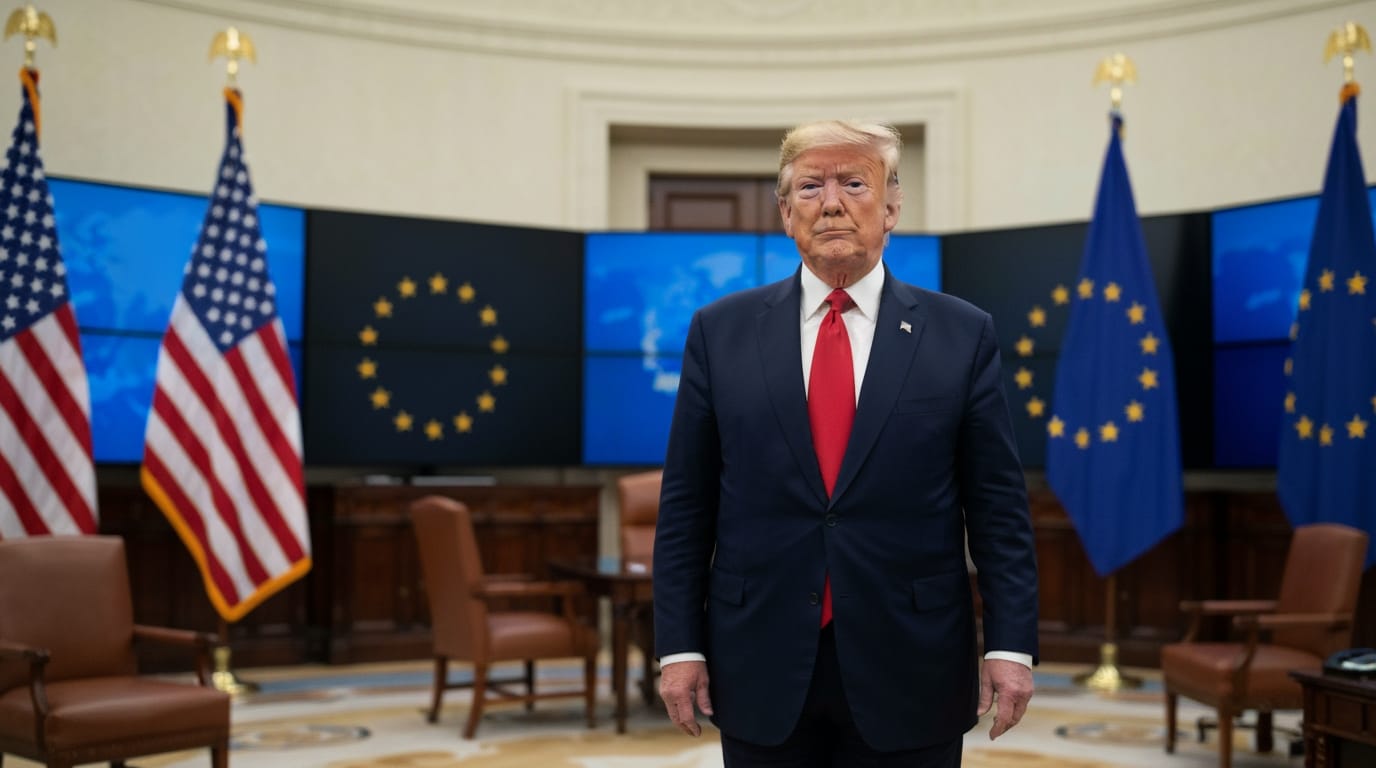
WASHINGTON – President Donald Trump has issued a definitive ultimatum to the European Union, demanding the bloc finalize a previously negotiated trade agreement by July 4, or face the imposition of significantly higher tariffs on its goods. The announcement, conveyed via social media following a discussion with European Commission President Ursula von der Leyen, marks a critical juncture in the often-strained transatlantic trade relationship.
The directive comes amidst ongoing complexities surrounding the proposed deal and a recent U.S. Supreme Court ruling that has constrained the administration's tariff-imposing authority. This fresh deadline extends, and perhaps softens, a previous threat by President Trump to levy a 25% tariff on European automotive imports, offering a narrow window for the EU to ratify the agreement and avert a further escalation of trade hostilities.
Deadline Looms Over Stalled Agreement
President Trump's declaration on Thursday explicitly stated that goods from the 27-member European bloc would face increased tariff rates if the trade framework, reportedly agreed upon last year at his Turnberry golf resort in Scotland, is not approved by the Independence Day deadline. The president conveyed his displeasure that the European Parliament had yet to finalize the arrangement, emphasizing a commitment from the EU to reduce its tariffs to zero as part of the understanding. Conversely, the original framework outlined a 15% tariff by the U.S. on most imported EU goods.
The path to ratification on the European side has been fraught with internal challenges. Negotiations among EU lawmakers and member governments concluded recently without a definitive agreement, highlighting the political hurdles within the bloc. The European Commission, responsible for conducting trade negotiations, has not yet pushed through the necessary enabling legislation to implement the deal. This legislative delay has evidently fueled the U.S. administration's impatience, leading to the latest presidential directive.
A History of Transatlantic Trade Turbulence
The recent ultimatum is the latest episode in a period marked by significant turbulence in U.S.-EU trade relations, largely since the advent of the "America First" trade policy. The Trump administration has consistently targeted what it perceives as unfair trade practices and a substantial goods trade deficit with the EU, particularly singling out Germany.
Previous flashpoints include the imposition of U.S. tariffs on steel and aluminum imports from the EU, which triggered retaliatory tariffs from Brussels. Threats of steep tariffs on European automobiles have been a recurring theme, often used as leverage to press for trade concessions.
Adding another layer of complexity to the current situation is a U.S. Supreme Court ruling in February 2026. The court determined that President Trump lacked the legal authority to declare an economic emergency as a basis for imposing certain initial tariffs aimed at compelling the EU to negotiate. This ruling has meant the administration has been levying a 10% tariff while exploring new methods to impose tariffs to offset what it views as trade imbalances.
EU's Deliberation Amidst Divisions
The European Union finds itself in a precarious position, balancing the desire for a stable trade relationship with the U.S. against internal political considerations and strategic autonomy. European Commission President Ursula von der Leyen has previously affirmed the EU's readiness for a trade deal while simultaneously emphasizing that "all options remain on the table," indicating preparations for a scenario where no satisfactory agreement is reached.
While some EU leaders, notably German Chancellor Friedrich Merz, have advocated for a swift and straightforward trade agreement, citing pressure from powerful carmakers and exporters, others, such as French President Emmanuel Macron, have expressed concerns about entering into an agreement that could be perceived as unequal or detrimental to Europe's long-term economic competitiveness. The EU had previously offered a "zero for zero" tariff deal on industrial goods, but the U.S. maintained a baseline tariff of 10% on most trading partners. In an effort to facilitate negotiations, the EU had also suspended tariffs on €21 billion worth of U.S. goods until mid-July.
Economic Stakes and Future Implications
The looming July 4 deadline carries significant economic implications for both sides of the Atlantic. A failure to reach an agreement and the subsequent imposition of higher U.S. tariffs would likely disrupt established supply chains, increase costs for consumers, and create further uncertainty for businesses engaged in transatlantic trade. The U.S. and EU represent the world's two largest economies and are each other's most significant trade and investment partners, underpinning a vast network of commerce totaling trillions of dollars annually.
The current diplomatic dance underscores the persistent challenges in aligning U.S. trade objectives, often centered on reducing trade deficits, with the EU's complex multilateral decision-making processes. As the deadline approaches, the global economic community will watch closely to see if the two major economic blocs can avert a renewed trade dispute or if the current tensions will escalate further, potentially reshaping the landscape of international trade. The outcome by early July will determine the immediate trajectory of this crucial economic partnership.


