Trump Deploys ICE Agents to Airports Amid Intensifying Budget Standoff
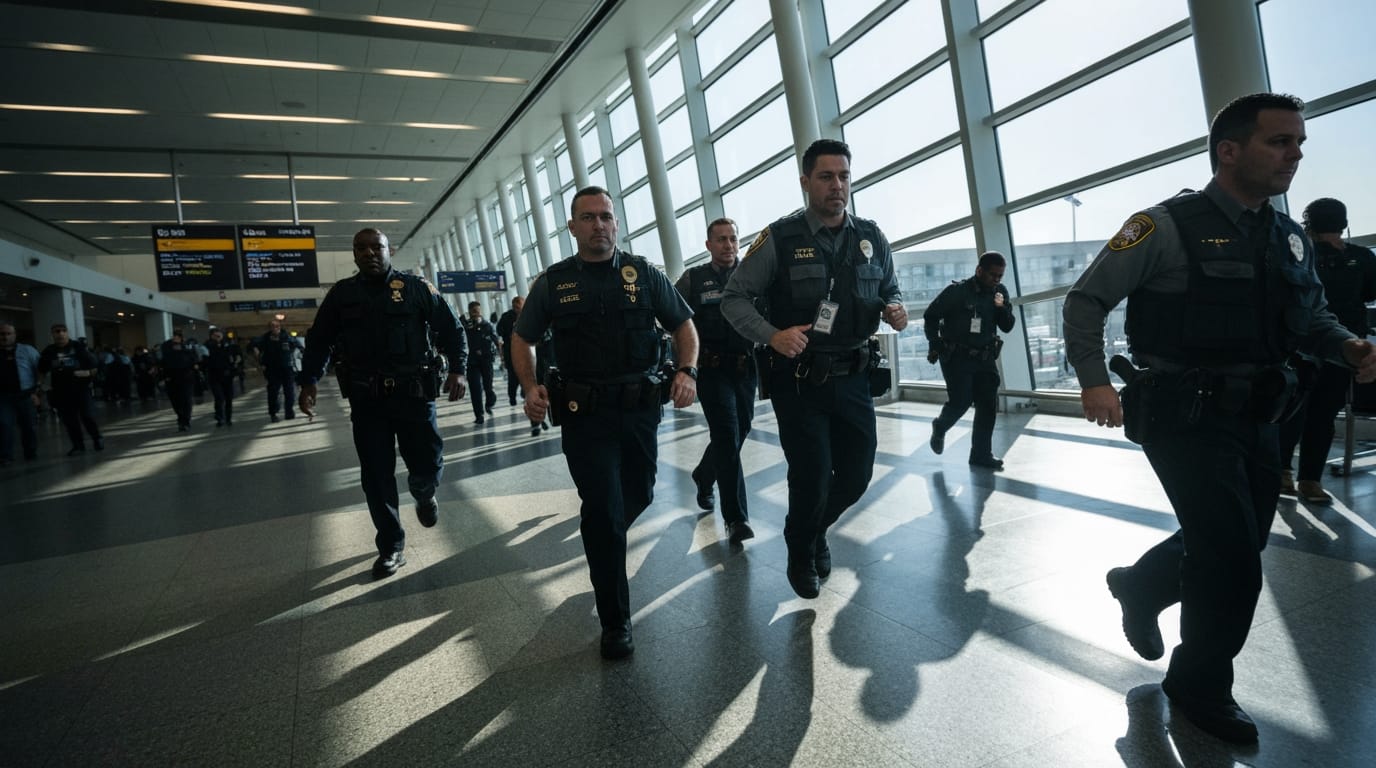
WASHINGTON D.C. — In an unprecedented move, President Donald Trump has ordered the immediate deployment of Immigration and Customs Enforcement (ICE) agents to U.S. airports, effective Monday, in an effort to mitigate mounting congestion at security checkpoints. The directive comes amidst a weeks-long federal budget standoff that has left Transportation Security Administration (TSA) personnel working without pay, leading to widespread absences and significant travel disruptions across the nation. The deployment signals a dramatic escalation in the political battle over government funding and immigration policy, raising questions about the roles of federal agencies and the implications for both national security and civil liberties.
Presidential Decree Spurs Rapid Deployment
President Trump announced the extraordinary measure via a social media post on Sunday morning, prompting federal officials to rapidly devise and implement a deployment plan. The president's senior border aide, Tom Homan, confirmed to CNN that ICE agents would be shifted from their customary duties to assist at airports, though he emphasized they would not undertake tasks for which they lacked training, such as operating X-ray machines. Instead, their role would focus on providing additional security, potentially including monitoring exits. This swift reallocation of personnel aims to address the growing operational challenges faced by airports struggling with depleted staffing.
The president's decision is deeply intertwined with his administration's broader immigration agenda. In earlier social media statements, Trump indicated that deploying ICE agents to airports would enable them to "arrest illegals as they come into the country," referencing a controversial "mass deportation drive" and singling out Minnesota in a related post. This suggests a dual objective behind the deployment: alleviating immediate security concerns and simultaneously advancing the administration's immigration enforcement priorities.
Budget Impasse Cripples Airport Operations
The roots of the airport security crisis lie in a protracted budget standoff that has seen funding for the Department of Homeland Security (DHS) lapse since February 14. DHS oversees the Transportation Security Administration, meaning thousands of TSA employees have been working without compensation for weeks. The financial strain on these essential workers has resulted in a significant increase in unscheduled absences and resignations. More than 300 TSA employees have resigned since the shutdown began, with some reports indicating that unscheduled absences have more than doubled.
The operational impact has been severe, with travelers experiencing wait times at security lines extending to multiple hours at various airports. Many affected TSA officers have resorted to taking second jobs, relying on donations, or utilizing gift cards and food pantries established at major airports to cope with the lack of pay. Transportation Secretary Sean Duffy expressed concern on Sunday, predicting that the situation would "get much worse" in the coming days, a development he believes might pressure Congress to reach a resolution.
Democratic Demands and Enforcement Controversies
Congressional Democrats have positioned their opposition to new DHS funding on the need for comprehensive reforms within ICE. This demand follows a period marked by heightened tensions surrounding the agency's enforcement practices. Earlier in the year, ICE agents were involved in incidents where two American protesters were fatally shot amidst President Trump's immigration crackdown. These events have fueled calls from Democrats for specific changes, including curtailed patrols, a ban on face masks for agents, and a requirement for ICE agents to obtain judicial warrants before entering private property. The standoff therefore reflects not only a disagreement over funding levels but also a fundamental dispute over the scope and methods of immigration enforcement.
The President's order to deploy ICE agents to airports further complicates these negotiations. While the administration frames it as a necessary step to maintain airport security, Democrats view it as a move to expand immigration enforcement under the guise of addressing a budget-induced crisis, particularly given Trump's statements about arresting undocumented immigrants at airports.
Deployment Logistics and Early Impact
The deployment of ICE agents commenced on Monday, with initial reports indicating agents were sent to at least 13 airports. Key transportation hubs such as Chicago O'Hare International Airport, Hartsfield-Jackson Atlanta International Airport, and New York City's LaGuardia and John F. Kennedy International Airports are among those receiving ICE personnel. Neither ICE nor DHS has provided an official list of deployed airports, adding to the uncertainty surrounding the scope of the operation.
The move to deploy ICE agents also comes on the heels of an unconventional offer from tech entrepreneur Elon Musk, who publicly offered to cover the salaries of TSA personnel affected by the shutdown. Musk, who posted his offer on X (formerly Twitter), highlighted the negative impact of the funding impasse on Americans at airports. While his offer garnered attention, the administration opted for the internal redeployment of ICE resources.
Conclusion: A Nation on Edge
The deployment of ICE agents to U.S. airports represents a significant development in the ongoing budget standoff and the broader debate over immigration policy. As thousands of TSA employees continue to work without pay, the operational challenges at airports are expected to intensify, placing immense pressure on both the White House and Congress to find a resolution. The integration of immigration enforcement personnel into airport security functions, even in an auxiliary capacity, underscores the administration's resolve in its immigration crackdown, while simultaneously igniting further criticism from those demanding reforms. The immediate future of air travel and federal government operations remains uncertain, with millions of travelers and dedicated public servants caught in the crossfire of a deepening political impasse.


