Trump Envoys Signal Commitment to Ukraine Peace, Spark Debate Over Terms
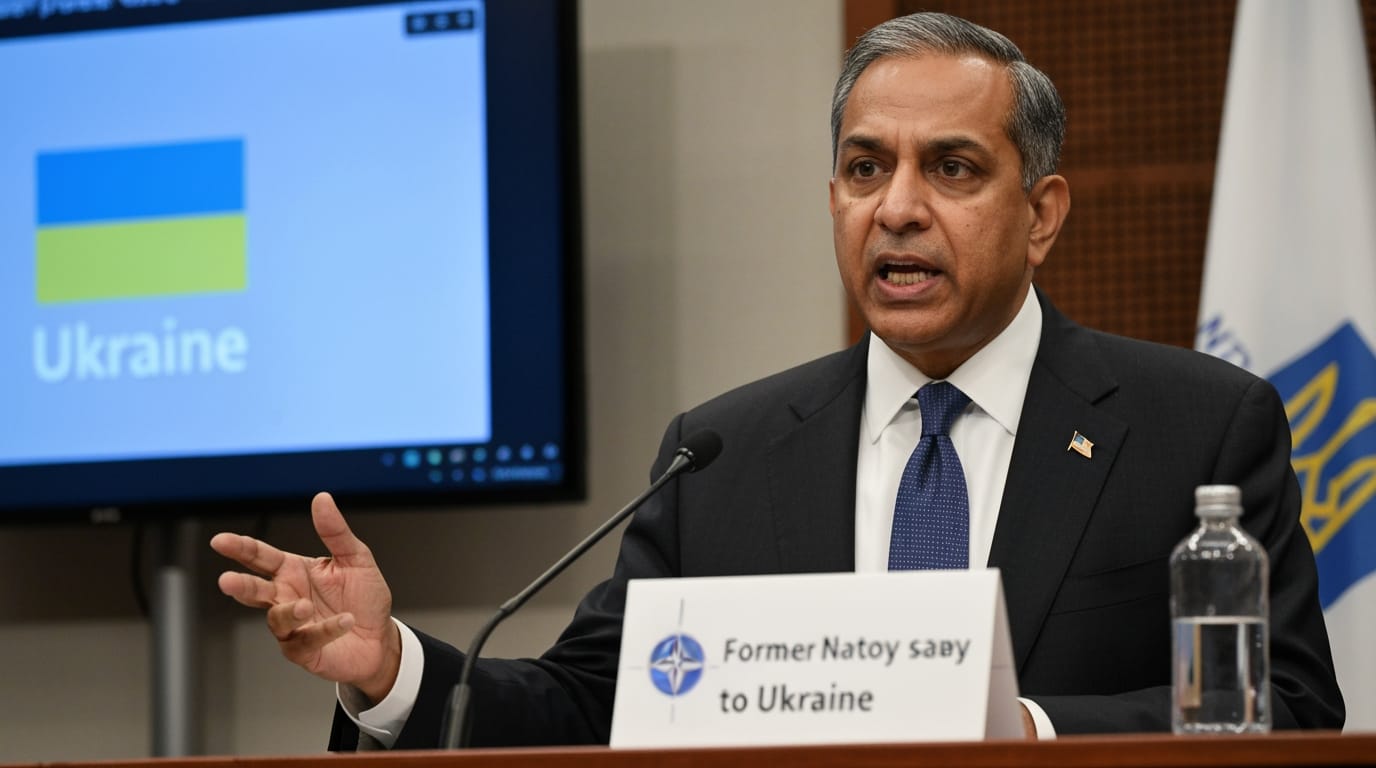
Recent statements from individuals closely associated with former U.S. President Donald Trump's past and potential future administrations indicate a persistent focus on achieving a resolution to the conflict in Ukraine, though the proposed pathways and their implications have ignited considerable discussion among international observers and allies. While some interpret these signals as a firm commitment to peace, others express concern over potential terms that could favor Russian interests or strain Western alliances.
The pronouncements underscore a declared mandate from the former president to secure peace, emphasizing a potential role as a mediator. However, the details emerging from various envoys suggest a multifaceted approach that prioritizes an end to hostilities, potentially leading to significant shifts in the geopolitical landscape surrounding the ongoing war.
A Mandate for Peace and Mediation
Steve Witkoff, described as U.S. President Donald Trump's personal envoy, recently articulated that Trump's "mandate is that he wants a peace in Ukraine," emphasizing a determination to "do everything on his behalf to attain that peace." Witkoff further noted that proposed agreements involve "security protocols... so that the people of Ukraine know that when this ends, it ends forever," indicating a desire for a durable resolution rather than a temporary truce.
Echoing this sentiment, Matthew Whitaker, identified as a prospective U.S. Ambassador to NATO, suggested that Trump would aim to "find leverage and find the conditions where he can bring both sides and mediate the resolution." Whitaker, describing Trump as a "peacemaker," clarified that the former president would not "set the conditions" for resolving the Russia-Ukraine war but rather facilitate a deal agreeable to both parties. These statements collectively portray a vision where a future Trump administration would actively seek to broker an end to the conflict, positioning the U.S. as a principal facilitator of negotiations.
Navigating Contentious Peace Proposals
Despite the stated commitment to peace, the exact nature of a Trump-brokered resolution remains a subject of intense scrutiny and apprehension. William Taylor, a former U.S. Ambassador to Ukraine, recently commented on a "new war-ending proposal" that Ukrainian leaders reportedly view as heavily favoring Moscow. This proposal, which allegedly calls for Ukraine to cede territory and reduce its military capabilities, has been a source of significant debate. Taylor critically characterized such plans, including a "28-point plan" sometimes linked to Trump circles, as not representing an official U.S. government position, suggesting they might be "freelancing" efforts. However, Taylor also acknowledged that President Trump has previously imposed "serious sanctions on the Russians" and is still considering providing advanced weaponry to Ukraine, indicating a more complex and at times contradictory stance towards Moscow.
Adding to the complexity, General Keith Kellogg, who served as Trump's envoy to Ukraine, has issued warnings about the potential risks to NATO unity. Kellogg cautioned against striking a bargain with Russia over "spheres of influence," stating that such a move could put the United States in a "dangerous position" and "ask to accept the fragmentation of NATO." His remarks highlight a deep concern within some foreign policy circles that an eagerness for a rapid peace deal might inadvertently undermine the foundational principles of collective security that underpin the transatlantic alliance.
Implications for Western Alliances and Ukrainian Sovereignty
The discussions surrounding a potential Trump-led peace initiative carry significant implications for the cohesion of Western alliances and the future of Ukraine's sovereignty. Trump's past rhetoric, marked by strong criticism of European allies for insufficient defense spending and an eagerness to forge closer ties with Russian President Vladimir Putin, has historically generated unease within NATO. While Matt Whitaker, as a nominee for NATO ambassador, sought to reassure senators of an "ironclad" U.S. commitment to the alliance, Trump's prior comments, such as suggesting Russia could "do whatever the hell it wants" to NATO members not meeting spending targets, continue to resonate.
The prospect of a U.S.-led peace deal, particularly one that might involve Ukrainian territorial concessions, raises critical questions about the principle of inviolable borders and international law. Such an outcome could be perceived as rewarding aggression, potentially emboldening other revisionist powers and undermining the rules-based international order that the U.S. and its allies have largely upheld. The tension between a desire for swift peace and the imperative to uphold core international norms presents a significant foreign policy challenge.
The Transactional Approach and Future Aid
A key characteristic of former President Trump's foreign policy has been its transactional nature, prioritizing American interests and deal-making. This approach suggests that future support for Ukraine, whether military or financial, could be re-evaluated through a lens of direct benefit to the United States. William Taylor noted that President Trump's administration has encouraged NATO member states to increase their defense spending, with some commitments reaching 5% of GDP. Taylor also observed that a scenario where European countries fund weaponry for Ukraine, even if sourced from U.S. manufacturers, could be seen as a "good deal" for the U.S., allowing Trump to claim he is not spending U.S. taxpayers' money.
This perspective indicates a potential shift in the burden-sharing dynamics within NATO and among Ukraine's supporters. While it could encourage greater European responsibility, it also introduces uncertainty for Ukraine regarding the consistency and scope of aid, particularly if a peace deal remains elusive or if the proposed terms are not universally accepted.
Conclusion
Statements from individuals in former President Trump's orbit confirm an ongoing focus on achieving peace in Ukraine, driven by a declared presidential mandate to mediate a resolution to the protracted conflict. These pronouncements emphasize an active U.S. role in brokering an end to hostilities, positioning Trump as a potential "peacemaker."
However, the specific outlines of such a peace, as well as the means to achieve it, remain deeply contested. Concerns persist among international observers and some former envoys regarding proposals that might entail significant concessions from Ukraine or risk the fragmentation of the NATO alliance. The transactional nature of Trump's foreign policy approach further suggests that any future engagement will be heavily influenced by perceived U.S. interests and a re-evaluation of burden-sharing among allies. Ultimately, while the desire for peace is clear, the path toward its realization under a potential future Trump administration is fraught with complexities and could significantly redefine global security arrangements.


