Trump Imposes Sweeping Tariffs, Shaking Global Economy
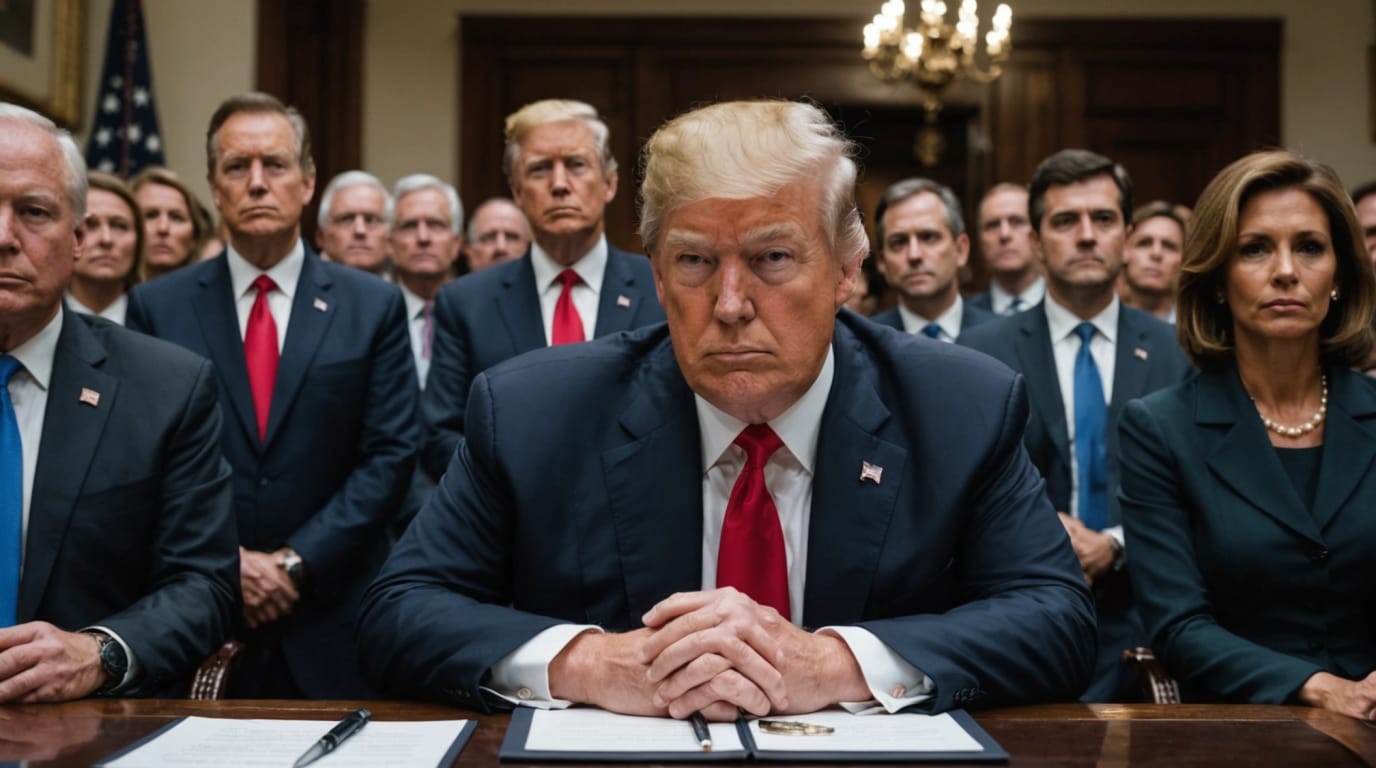
Washington D.C. - President Donald Trump has implemented a sweeping set of tariffs on goods imported into the United States from numerous countries, a move that has sent shockwaves through the global economy and drawn immediate criticism from world leaders and economists alike. The initial 10% baseline tariff went into effect on Saturday, April 5, impacting a wide range of goods, with higher "reciprocal" tariffs scheduled to take effect on Wednesday, April 9, for specific countries.
The tariffs, announced on Wednesday, April 2, in what the President dubbed a "Liberation Day" ceremony, are intended to address what the administration views as unfair trade practices and large trade deficits. Trump invoked the International Emergency Economic Powers Act (IEEPA), declaring a national emergency to justify the measures. The administration argues that these tariffs will protect American workers, bolster domestic manufacturing, and strengthen the nation's economic security.
Scope and Implementation
The initial 10% tariff applies to imports from most countries, excluding those with existing trade agreements, such as Canada and Mexico, where the USMCA is compliant. However, non-USMCA compliant goods from these countries are still subject to tariffs. Goods already subject to separate national security tariffs, including steel, aluminum, cars, trucks, and auto parts, are not covered by the new tariffs.
Starting April 9, higher, country-specific tariffs will be imposed on imports from approximately 57 countries. These tariffs are described as "reciprocal," based on the monetary levies those nations charge on U.S. imports, as well as non-monetary trade barriers. For example, China will face a 34% tariff, the European Union 20%, Vietnam 46%, and Japan 24%. Some nations, primarily in Asia and Africa, will face even higher rates, with Cambodia at 49% and Laos at 48%.
Economic Impact and Market Reaction
The announcement of the tariffs has already had a significant impact on global markets. Stock markets experienced a sharp decline, with U.S. markets recording their worst week since the coronavirus pandemic. The S&P 500 companies lost an estimated $5 trillion in stock market value. Prices of oil and commodities also fell sharply.
Economists warn that the tariffs could lead to higher prices for consumers, reduced economic growth, and increased unemployment. The Peterson Institute for International Economics (PIIE) noted that the tariffs are regressive, disproportionately affecting low-income countries from which the U.S. imports clothing and footwear. They also cautioned that retaliation from other countries could further harm U.S. investment, production, and growth.
Federal Reserve Chair Jerome Powell has stated that the tariffs will likely raise inflation and slow economic growth, and that the Fed will focus on keeping price increases temporary.
International Response
The tariffs have been met with widespread criticism and threats of retaliation from world leaders. European Commission President Ursula von der Leyen called the measures "a major blow to the world economy," warning of dire consequences for millions of people around the globe. German Chancellor Olaf Scholz described the tariffs as "an attack on a trade system that has created prosperity all round the world."
China has already announced that it will impose a 34% tariff on imports of all U.S. products starting April 10. The Chinese Commerce Ministry also said it would implement tighter restrictions on exports of rare earths, materials used in products such as computer chips and electric vehicle batteries.
Other countries, including Brazil, Australia, and Japan, have expressed strong concerns and are considering their options, including potential appeals to the World Trade Organization (WTO).
Exemptions and Exclusions
The Trump administration has released a list of more than 1,000 product categories exempted from the tariffs, including crude oil, petroleum products, pharmaceuticals, uranium, titanium, lumber, semiconductors, and copper. These product categories were valued at $645 billion in 2024 imports. However, the administration is investigating several of these sectors for additional national security tariffs.
Potential Winners and Losers
While the overall impact of the tariffs is expected to be negative, some countries and industries may benefit in the short term. For example, Brazil, which faces only the baseline 10% tariff, may see increased export opportunities as China and the European Union face higher levies.
However, experts caution that any potential gains are likely to be offset by the broader disruption to global trade and the increased uncertainty for businesses.
Long-Term Implications
The long-term implications of the tariffs are uncertain, but many experts fear that they could lead to a global trade war, with potentially devastating consequences for the world economy. Some economists have drawn comparisons to the Smoot-Hawley Tariff Act of 1930, which is widely believed to have exacerbated the Great Depression.
The tariffs could also accelerate the trend toward deglobalization, as countries seek to reduce their reliance on international trade and build more resilient domestic supply chains.
Conclusion
President Trump's decision to impose sweeping tariffs has created a climate of uncertainty and apprehension in the global economy. While the administration argues that these measures are necessary to protect American interests, they have been met with widespread criticism and threats of retaliation. The coming weeks and months will be crucial in determining whether the tariffs lead to a full-blown trade war or whether negotiations can lead to a resolution. The impact on consumers, businesses, and the global economy remains to be seen.


