Trump Intensifies Warnings on Europe's Political Trajectory, Citing "Very Bad Directions"
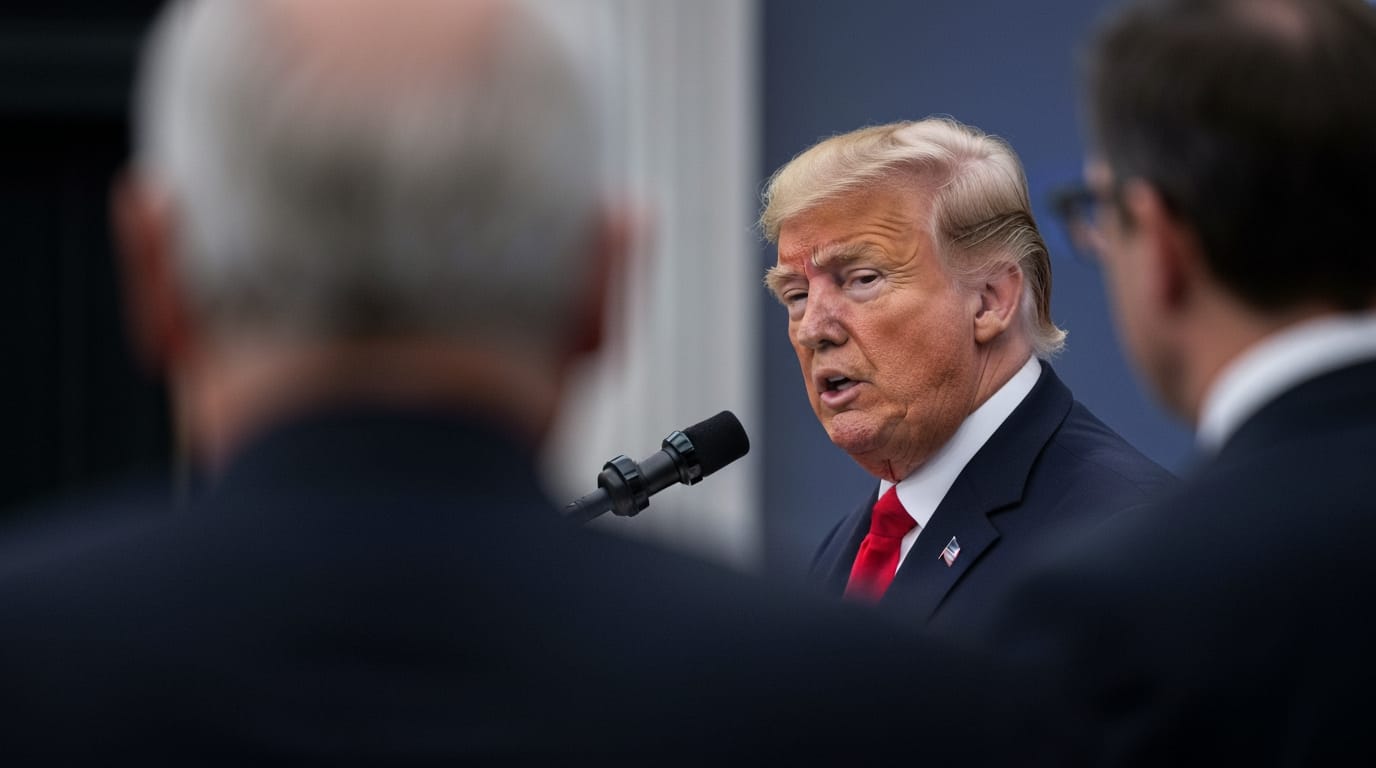
Washington D.C. — Former President Donald Trump has escalated his warnings regarding Europe's current political trajectory, asserting that the continent is heading in "very bad directions." These concerns were prominently featured in a newly released U.S. National Security Strategy (NSS) document, which critically assesses European policies on migration, regulation, and defense, sparking alarm and sharp rebuttals from across the Atlantic. The strategy, unveiled recently by the Trump administration, outlines a future U.S. foreign policy that prioritizes American interests and challenges long-standing transatlantic alliances, suggesting a fundamental reevaluation of the relationship between the United States and its European partners.
The White House strategy paper, accompanied by Trump's public remarks, paints a stark picture of Europe facing "civilizational erasure" due to what it identifies as detrimental migration policies, declining birthrates, and a perceived "loss of national identities and self-confidence." This rhetoric echoes themes frequently articulated by Trump, who stated, "We want to keep Europe Europe" and expressed strong disapproval of current trends he views as eroding the continent's traditional character. The strategy explicitly calls for "cultivating resistance to Europe's current trajectory within European nations," a move interpreted by many as an endorsement of far-right, anti-immigration political movements gaining traction across Europe.
"Civilizational Erasure" and Migration: A Core Concern
The National Security Strategy’s section titled "Promoting European Greatness" directly addresses migration, claiming it is transforming the continent and contributing to a potential "civilizational erasure." The document suggests that "certain NATO members will become majority non-European" within decades, linking demographic shifts to questions of strategic orientation and political stability. This perspective has been criticized by European officials, who view it as adopting a "racist conspiracy theory known as the 'Great Replacement Theory'." Such statements underscore a deep ideological rift between the current U.S. administration's viewpoint and many European governments on issues of identity and demographics.
Beyond demographic shifts, the NSS also takes aim at what it describes as "censorship of free speech and suppression of political opposition" within Europe. This was highlighted by Trump's recent criticism of a €120 million fine imposed by the European Union on Elon Musk's X social network for violating digital transparency rules. Trump labeled the fine as "nasty" and questioned the EU's regulatory actions, despite admitting he lacked full details of the case. This incident further illustrates the U.S. administration's skepticism toward the EU's regulatory frameworks, which it often portrays as overreaching and detrimental to innovation and economic freedom.
Redefining Security: Ukraine, NATO, and Defense Spending
A significant point of contention revolves around the conflict in Ukraine and the future of transatlantic security. The U.S. National Security Strategy frames an "expeditious cessation of hostilities" in Ukraine and the reestablishment of "strategic stability with Russia" as a core interest. This approach starkly contrasts with the European view, which largely regards Russia as an "existential threat" and prioritizes a "fair and durable peace" that does not involve Ukraine surrendering territory. European leaders have expressed deep frustration and concern that the U.S. position might force Kyiv into concessions.
Compounding these strategic divergences are long-standing demands for increased European defense spending within NATO. Trump has consistently pushed for European allies to contribute more to their own defense, advocating for a target of 5% of their gross domestic product (GDP) for military expenditures, a figure significantly higher than the current NATO target of 2%. The U.S. has reportedly set a 2027 deadline for Europe to assume the majority of conventional defense capabilities, with warnings that failure to meet this target could lead to reduced U.S. participation in some NATO defense coordination mechanisms. While some European nations have begun to increase spending, many are still far from meeting even the 2% threshold, let alone the 5% demanded by Trump. This pressure has spurred some European countries, notably Germany, to overhaul defense spending rules and invest heavily in their military industries.
European Backlash and the Push for Autonomy
The critical tone of the U.S. National Security Strategy and Trump's pronouncements have elicited strong reactions from European leaders, many of whom describe the document as hostile and an attempt to interfere in Europe's internal political affairs. European Council President Antonio Costa explicitly stated, "What we cannot accept is this threat of interference in Europe's political life. The United States cannot replace European citizens in deciding which are the right parties and the wrong parties." German Foreign Minister Johann Wadephul noted that while the U.S. remains an important ally, Germany "did not need outside advice."
The NSS's explicit support for "patriotic European parties" and its call to "cultivate resistance" within the continent's political landscape have been widely interpreted as an alignment with Europe's far-right, anti-establishment movements. This perceived endorsement has fueled concerns among mainstream European political leaders about the erosion of democratic norms and the potential for increased internal divisions.
These developments have served as a "wake-up call" for Europe, prompting a renewed focus on strategic autonomy and self-reliance. European leaders are now actively discussing ways to bolster their own security, reduce dependence on the U.S., and define a distinct European foreign policy, especially concerning relations with Russia and China. The consensus emerging in Europe is that the transatlantic relationship is undergoing a significant reorientation, necessitating a complete rethinking of its foundation and future.
Conclusion: A Transatlantic Crossroads
The increasing rhetoric from former President Trump and the U.S. National Security Strategy signaling a more transactional and ideologically driven foreign policy present a formidable challenge to the decades-old transatlantic alliance. Concerns over Europe's political direction, particularly regarding migration, national identity, defense spending, and the approach to the Ukraine conflict, have opened significant fissures. While Trump's administration views Europe as needing to correct its "very bad directions" and embrace a more nationalistic path, European leaders largely perceive this stance as an unwelcome interference and a catalyst for greater self-determination. The coming years are likely to witness a continued recalibration of the U.S.-Europe relationship, pushing Europe further towards strengthening its internal cohesion and external capabilities in an increasingly uncertain global landscape.


