Trump Orders Substantial Scale-Back of US-South Korea Military Drills, Citing Costs and Diplomacy
Washington D.C. – President Donald Trump announced Sunday that he has ordered the Pentagon to substantially reduce the scope of joint military exercises with South Korea, a decision that challenges long-standing defense protocols and alliance solidarity on the Korean Peninsula. The directive, communicated via his Truth Social platform, cited the considerable cost of the drills, his "very good relationship" with North Korean leader Kim Jong Un, and, controversially, South Korea's recent refusal to join a U.S. effort to denuclearize Iran. The order comes just ahead of the annual "Ulchi Freedom Shield" exercises, scheduled to commence this week.
A Presidential Decree: Cost, Diplomacy, and Unrelated Refusals
President Trump's directive, issued Sunday, swiftly followed North Korea's customary warnings against the planned exercises, which Pyongyang routinely labels as rehearsals for invasion. Trump stated that the exercises were not only "costly, with much of these costs paid for by the United States of America (as usual!)," but also "send a signal that is totally inappropriate and hostile" to North Korea. He maintained that North Korea "has been unthreatening and respectful" during his presidency, attributing this to his personal rapport with Kim Jong Un. Given the imminent start of the drills, Trump indicated that it was "too late to cancel," leading him to instruct Defense Secretary Pete Hegseth to "substantially reduce" them.
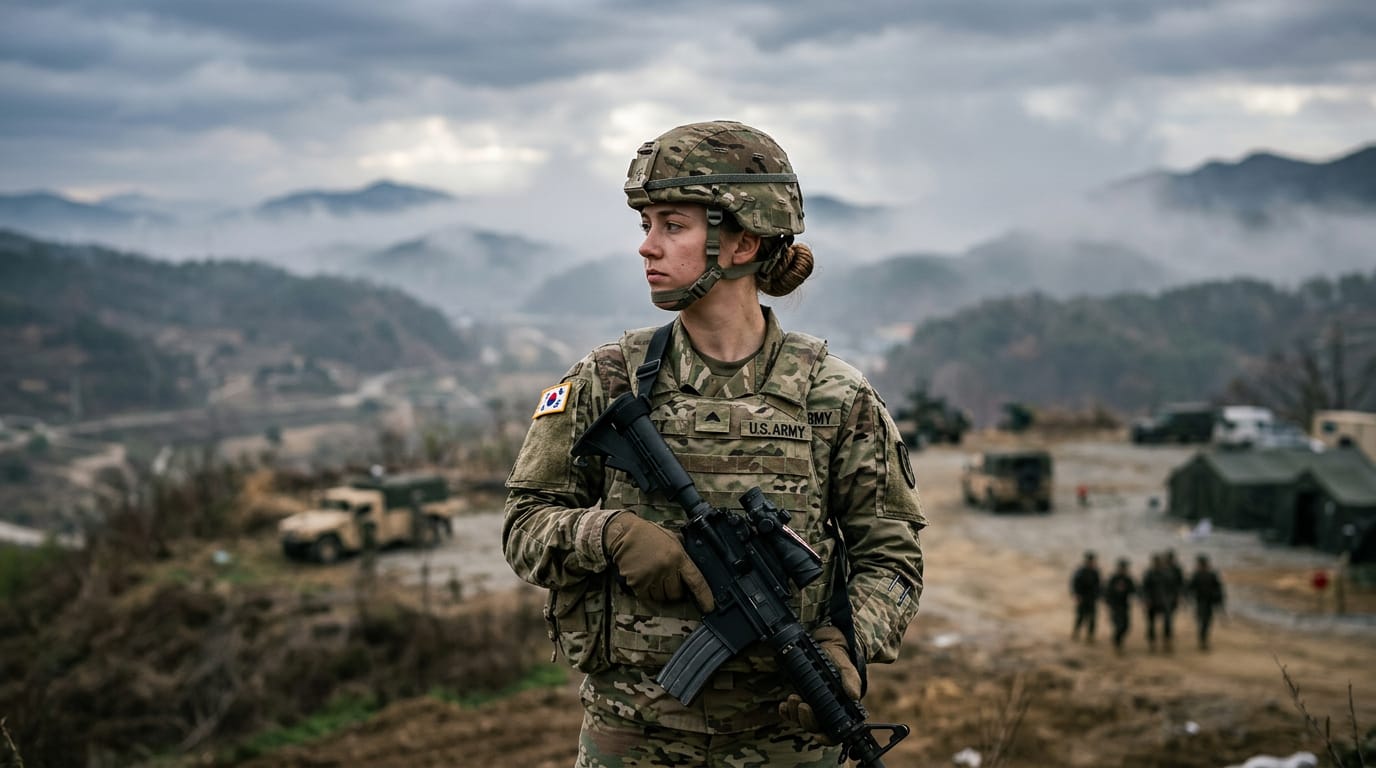
A notable inclusion in the President's public statement was his assertion that South Korea had recently declined a U.S. request to participate in efforts aimed at the denuclearization of Iran. While Trump described his decision to scale back military partnership with South Korea as "somewhat unrelated" to this refusal, its mention alongside the military exercise directive injected a new layer of complexity into the alliance dynamics. The exercises, slated to run for 11 days, were designed to involve approximately 18,000 South Korean soldiers in complex scenarios aimed at enhancing readiness against potential North Korean threats. These scenarios included live-fire exercises, joint precision targeting, maneuver drills, and the distribution of prepositioned military equipment.
Decades of Deterrence: The Foundation of the US-ROK Alliance
Joint military exercises between the United States and South Korea have been a cornerstone of their alliance for decades, serving as a critical deterrent against aggression from North Korea. These drills, which often involve tens of thousands of troops from both nations, are meticulously planned and executed to ensure interoperability and to maintain a high state of readiness in the event of conflict on the Korean Peninsula. Their primary purpose is to simulate defense against a North Korean invasion, encompassing a wide array of operations from command post exercises to field training. Historically, these exercises have been vital in demonstrating the unwavering commitment of the United States to the security of its ally and the stability of the region.
North Korea has consistently condemned these exercises, portraying them as provocative acts and rehearsals for an invasion of its territory. Such condemnations are often accompanied by threats of "unspecified stern steps" and have frequently served as a pretext for Pyongyang to escalate its own military provocations, including missile tests and advancements in its nuclear weapons program. Military analysts have long viewed the drills as essential for maintaining the combined defense capabilities of the U.S. and South Korea, arguing that scaling them back or canceling them could send a dangerous signal of weakened resolve to Pyongyang. The "Ulchi Freedom Shield" exercise, for instance, is an annual fixture that steel both nations' forces for defense against the nuclear-armed North.
Implications for Alliance Cohesion and Regional Stability
The President's order to reduce the joint drills carries significant implications for the US-South Korea alliance and the broader security architecture of Northeast Asia. On one hand, advocates of the scaled-back approach argue it could reduce tensions with North Korea, potentially paving the way for renewed diplomatic engagement. The sentiment that the exercises are "hostile" has long been expressed by Pyongyang, and President Trump's alignment with this perspective could be seen as an olive branch.
However, the decision also raises substantial concerns regarding the readiness of the combined forces and the perception of the alliance's strength. Reducing the scale of drills, even if not a full cancellation, can impact troop morale, logistical preparedness, and the ability of military units from different nations to operate seamlessly under combat conditions. South Korea's Ministry of National Defense, when initially questioned about Trump's announcement, indicated that the joint drills would "proceed as previously notified and scheduled," suggesting either a lack of immediate coordination or an effort to maintain a consistent stance. This apparent divergence highlights potential friction within the alliance. Some officials within the Trump administration have reportedly expressed frustration with Seoul on various issues, further complicating the dynamic. The broader impact on regional stability is also a key consideration, as China and Russia closely monitor changes in the US's security commitments in the Indo-Pacific.
A Pattern of Engagement and Disruption
This is not the first instance of President Trump intervening in the long-standing military exercise schedule with South Korea. During his first term, he made similar decisions to suspend or reduce joint exercises in an effort to facilitate denuclearization talks with North Korea and its leader, Kim Jong Un. These diplomatic overtures included unprecedented summits, such as the one in Singapore in June 2018. While these initial efforts led to a temporary de-escalation of rhetoric, they ultimately failed to achieve substantial progress on North Korea's denuclearization. The current order echoes these past actions, signaling a continued preference for a diplomatic track, despite past challenges. The willingness to challenge established military alliances remains a hallmark of his approach to foreign policy.
The decision to scale back the exercises again underscores the complex and often unpredictable nature of international relations on the Korean Peninsula. It places the immediate future of the US-South Korea alliance under renewed scrutiny, raising questions about military readiness, alliance cohesion, and the path forward for diplomacy with a still nuclear-armed North Korea. The coming days will likely reveal how significantly these changes will alter the strategic landscape and whether the intended diplomatic benefits outweigh the potential security risks inherent in altering decades of military preparedness.