Trump Proposes Record $1.5 Trillion Defense Budget, Deep Cuts to Domestic Spending
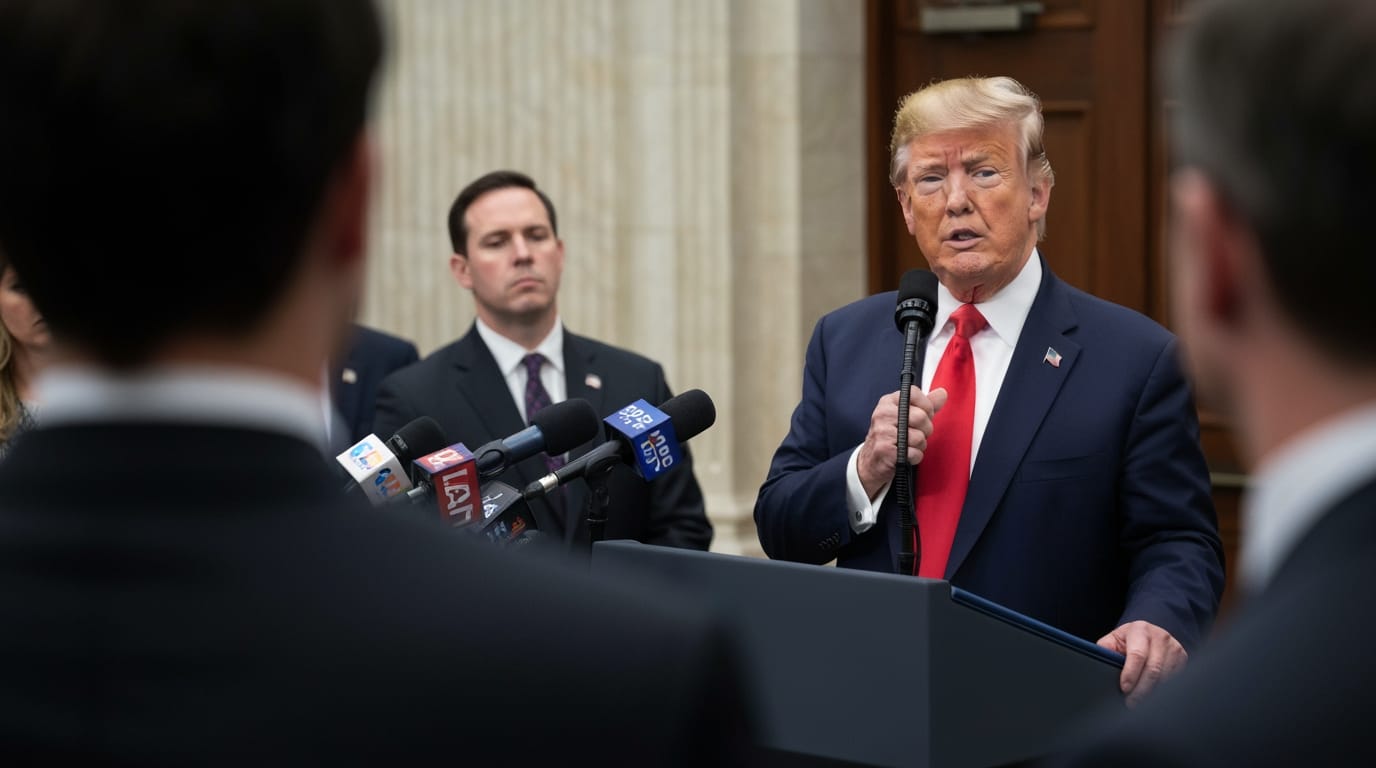
WASHINGTON D.C. – President Donald Trump on Friday unveiled a fiscal year 2027 budget proposal that calls for a historic $1.5 trillion in defense spending, signaling a significant shift in federal priorities toward military investment amidst ongoing international conflicts. This ambitious plan, described as the largest such request in decades, simultaneously targets a 10% reduction in non-defense domestic programs, amounting to approximately $73 billion in cuts, with the administration advocating for greater state and local responsibility for social services. The proposal sets the stage for what is expected to be a contentious budget battle in Congress, which ultimately holds the power of the purse.
A Bold Reorientation of Federal Spending
The President's 2027 budget proposal underscores a clear strategic pivot, prioritizing national security and military strength above all else. The $1.5 trillion defense allocation marks the highest defense budget request in U.S. history, with the administration explicitly stating its intent to rebuild and strengthen the nation's armed forces. This substantial increase comes as the U.S. remains embroiled in an ongoing war against Iran, a conflict that has evidently influenced the administration's financial blueprint for the coming fiscal year. The budget allocates $1.15 trillion for discretionary defense spending, which would require regular appropriations, and an additional $350 billion in mandatory resources. White House Budget Director Russell Vought articulated the administration's commitment, stating, "President Trump promised to reinvest in America's national security infrastructure, to make sure our nation is safe in a dangerous world."
Conversely, the proposed budget outlines a sweeping 10% decrease in discretionary non-defense spending. The administration justifies these cuts by advocating for a decentralization of responsibilities, suggesting that many social programs currently funded federally could be better managed at the state and local levels. President Trump previously indicated that federal resources were best directed towards military efforts given ongoing conflicts, suggesting that programs like childcare, Medicaid, and Medicare could be managed more effectively at the state level. This perspective frames domestic spending as an impediment to robust defense, creating a stark trade-off in federal funding priorities.
Targeted Cuts Across Domestic Programs
The proposed 10% reduction in domestic spending would impact a wide array of federal initiatives, touching areas from environmental protection to housing and health services. Among the specific cuts outlined in the budget are the cancellation of over $15 billion from the Biden-era bipartisan infrastructure law, specifically targeting funds for renewable energy projects and what the administration has labeled "woke" environmental justice programs. Grants related to climate change from the National Oceans and Atmospheric Administration (NOAA) are also slated for reduction.
Other significant proposed reductions include a 19% cut to the Department of Agriculture, which would eliminate certain university grants, and a 13% cut for the Department of Housing and Urban Development. The Department of Health and Human Services faces approximately a 12% decrease in funding, which encompasses cuts to programs such as low-income heating assistance. Community Services Block Grants, which support activities like financial and job counseling and aid in securing adequate housing for low-income communities, are also targeted for cuts, with the administration asserting that some grants have been "hijacked by radicals" to promote equity-building and green energy initiatives. Additionally, the budget seeks to cut $106 million from the Agency for Healthcare Research and Quality, citing concerns over its alleged promotion of "radical gender ideology onto children." These proposed cuts highlight a reevaluation of the federal government's role in social welfare and environmental initiatives.
Congressional Crossroads and Political Headwinds
Presidential budget proposals traditionally serve as a statement of an administration's values and priorities rather than a definitive spending plan, as Congress ultimately controls federal appropriations. Historically, Congress often deviates significantly from the President's initial budget requests. This year's proposal arrives amidst a complex political landscape, with the House and Senate currently grappling with outstanding current-year spending issues, including a stalemate over Department of Homeland Security (DHS) funding. Democrats have pressed for changes to the administration's immigration enforcement policies, which Republicans have resisted. In a related development, President Trump recently announced an executive order to ensure payment for DHS workers affected by a record-long partial government shutdown.
Despite the often-ceremonial nature of budget proposals, this document is intended to provide a roadmap for Congress as lawmakers begin constructing their own budgets and annual appropriations bills. The administration is counting on its Republican allies in Congress to champion the defense spending increases. Indeed, Republican chairmen of both the House and Senate Armed Services committees have already voiced support for the robust defense request, asserting that "America is facing the most dangerous global environment since World War II" and that the funding is crucial to maintaining U.S. military preeminence against growing threats from nations like China, Russia, and Iran. However, the deep cuts to domestic programs are expected to ignite intense debate and potential clashes with opposition lawmakers, making the path to congressional approval fraught with challenges. Past attempts by the Trump administration to significantly reduce non-defense spending have met with resistance, with Congress often keeping such spending relatively flat or even increasing funds for programs the administration sought to eliminate.
Implications for a Nation at War and at Home
The proposed budget signifies a profound recalibration of the nation's financial commitments, reflecting a worldview where national security in a volatile global environment takes precedence. The unprecedented defense allocation aims to project strength and capabilities on the international stage, particularly in light of the ongoing conflict with Iran. This emphasis on military might, however, comes at a direct cost to federal funding for domestic initiatives that underpin public services and support for vulnerable populations.
The implications of these proposed shifts are far-reaching. While increased defense spending could stimulate the defense industry and related sectors, the proposed cuts to areas like housing assistance, environmental protection, and health services could create significant challenges for states and local communities, potentially shifting financial burdens or leading to a reduction in crucial support systems. The budget proposal, released months before the November midterm elections, will undoubtedly shape the coming fiscal debate on Capitol Hill, serving as a critical indicator of the administration's priorities and a battleground for competing visions of the nation's future. The coming months will reveal the extent to which Congress embraces or reshapes the President's ambitious and controversial financial blueprint for the nation.


