Trump Signals Aggressive Stance on Greenland Acquisition, Drawing International Condemnation
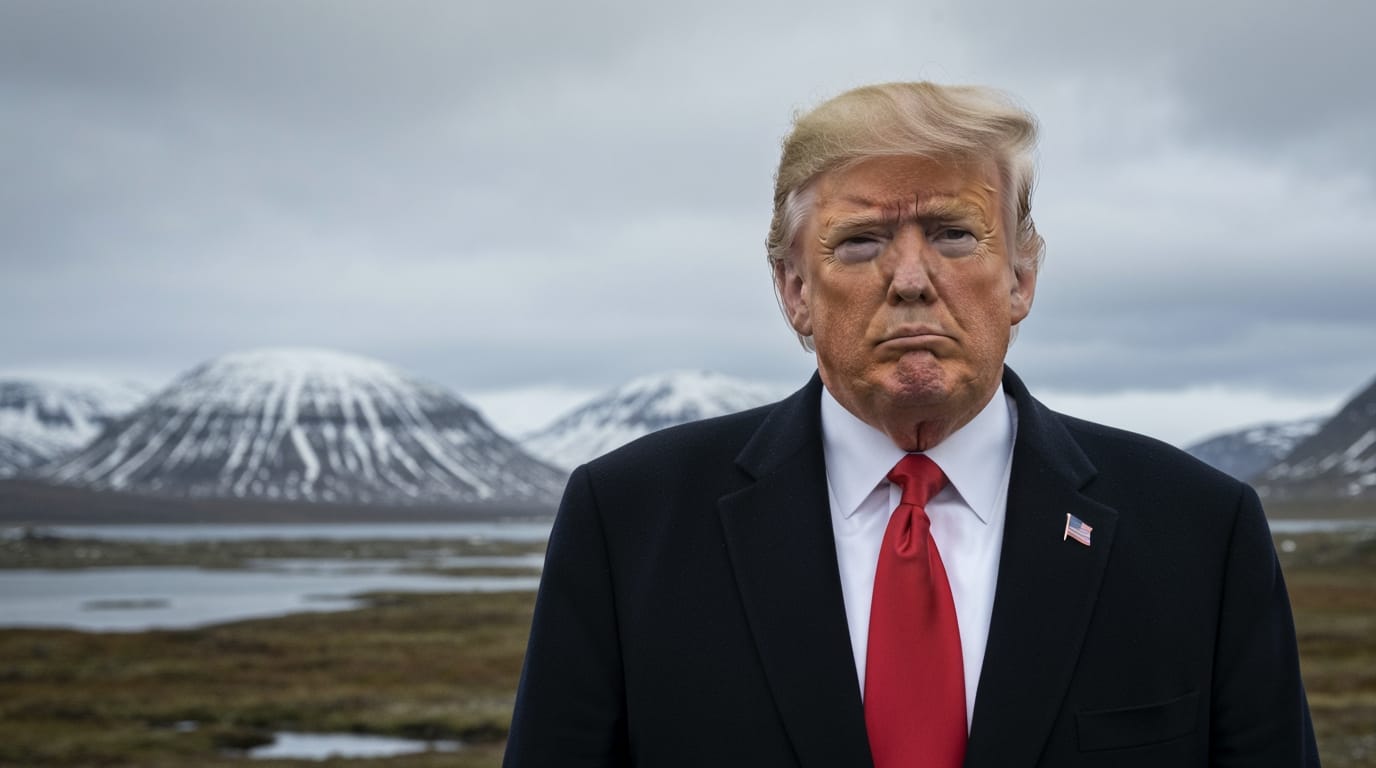
WASHINGTON – Former President Donald Trump has reignited and intensified his pursuit of Greenland, stating that the United States would acquire the vast Arctic territory either the "easy way or the hard way," comments that have provoked strong condemnations from Denmark, Greenland, and international allies. The remarks, made in January 2026, escalate a contentious discussion that first emerged during his prior presidency, pushing the issue of Greenland's sovereignty and strategic importance to the forefront of global diplomatic concerns. Trump's renewed assertions frame the potential acquisition as a critical national security imperative, citing concerns over Russian and Chinese influence in the Arctic region.
Escalating Rhetoric and Renewed Focus on Arctic Dominance
Donald Trump’s recent statements represent a significant hardening of his previous interest in Greenland, moving beyond the concept of a "real estate deal" to hinting at more forceful measures. Speaking at a White House meeting, Trump asserted that the U.S. "will be doing something with Greenland, either the nice way or the more difficult way," without elaborating on the nature of the "hard way" but implying military options were not off the table. This came after reports indicated the White House had been considering options to acquire Greenland, including "utilizing the U.S. military." His justification centered on preventing perceived adversaries from establishing a foothold, stating, "If we don't do it, Russia or China will take over Greenland. And we're not going to have Russia or China as a neighbor." This echoes his 2019 interest, which was then dismissed by many as an "absurd proposition" but which he now insists is an "absolute necessity" for American ownership and control. The former president also openly questioned Denmark's historical claim to the island, suggesting that a historical landing of a boat "500 years ago doesn't mean that they own the land."
Vehement Rejection from Copenhagen and Nuuk
The response from both Danish and Greenlandic authorities has been swift and unequivocal, firmly rejecting any notion of forced acquisition. Danish Prime Minister Mette Frederiksen called for Trump to "stop the threats" regarding Greenland, emphasizing that such rhetoric makes "absolutely no sense." She previously characterized the initial 2019 discussions of a sale as "absurd." Similarly, Greenlandic officials have adamantly reiterated that the territory is "not for sale" and "will not be annexed." Jens-Frederik Nielsen, Greenland's Prime Minister, stated that "Greenland belongs to its people" and affirmed their right to self-determination. The chair of Greenland's largest labor union, Jess Berthelsen, articulated the sentiment by stating, "We are not for sale and that we will not be annexed. We will determine our own future." European leaders have largely rallied behind Denmark and Greenland, with France's President Emmanuel Macron denouncing the "law of the strongest" and the European Council President Antonio Costa affirming that "Greenland belongs to its people" and has the "full solid support and solidarity of the European Union."
A History of American Ambition and Arctic Geopolitics
The United States' interest in Greenland is not a novel phenomenon, with historical records detailing multiple attempts to acquire the island dating back to the 19th century. Discussions about purchasing Greenland internally within the U.S. government occurred in 1867, 1910, 1946, and 1955. Notably, in 1946, President Harry S. Truman formally offered Denmark $100 million in gold for the island, citing its postwar security importance, an offer that Denmark rejected.
Greenland's strategic value stems from its geographical position at the intersection of North America, Europe, and the Arctic, making it crucial for military security and movement across the northern Atlantic. During World War II, the U.S. took responsibility for Greenland's defense, establishing a lasting military presence. The Pituffik Space Base (formerly Thule Air Base) in Greenland remains a critical U.S. military installation for missile detection and defense. The island's location is particularly vital for controlling the GIUK Gap (Greenland, Iceland, United Kingdom), a maritime choke point central to NATO naval strategy since World War II. Beyond military considerations, Greenland holds vast untapped natural resources, including rare earth elements, which are critical for technological and military applications, with China currently dominating the global supply chain. The melting Arctic ice is also opening new shipping routes, further enhancing Greenland's geopolitical significance.
International Law, Alliances, and Global Repercussions
Trump's latest remarks have raised significant concerns regarding international law and the integrity of alliances like NATO. Denmark, a NATO member, has a defense agreement with the U.S. that dates back to 1951, which grants the U.S. significant involvement in Greenland's defense. Danish Prime Minister Frederiksen warned that any military effort to seize Greenland would mean the end of the NATO alliance. American senators, including co-chairs of the Senate's bipartisan NATO Observer Group, have condemned Trump's rhetoric, asserting that the U.S. must respect Denmark's sovereignty and territorial integrity.
Greenland is a self-governing territory within the Kingdom of Denmark, having been granted Home Rule in 1979 and Self-Government in 2009, which affords it a large degree of autonomy. Greenlanders are recognized as a "People" under international law, possessing full rights to determine their own future, including a pathway to complete independence. The suggestion of military intervention by a major ally against a democratic, self-governing territory within a partner kingdom is seen as a severe challenge to established international norms and the principle of self-determination.
Conclusion
The renewed and more aggressive pursuit of Greenland by Donald Trump has created a diplomatic rift and underscored the intensifying geopolitical competition in the Arctic. While the United States views Greenland as a critical asset for national security, resource acquisition, and countering rival powers, Denmark and Greenland remain steadfast in their assertion of sovereignty and self-determination. The situation highlights the delicate balance between strategic interests, international law, and the foundational principles of alliances, leaving the future status of the world's largest island as a complex and unresolved international issue.