Trump Slams NATO Over Iran War Stance, Threatens Alliance's Future
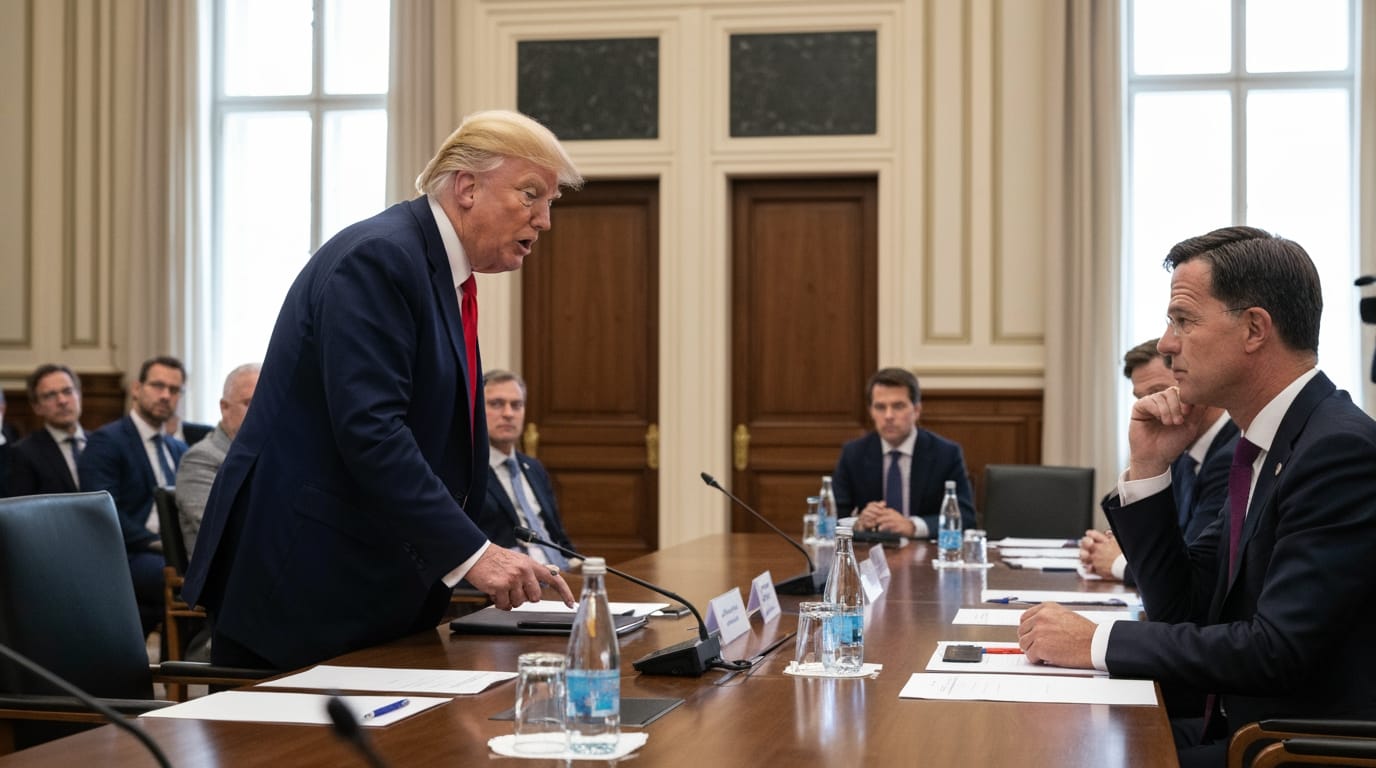
WASHINGTON, D.C. — In a high-stakes encounter at the White House, former President Donald Trump delivered a scathing critique of NATO allies, accusing them of failing to support the United States and Israel in the ongoing conflict with Iran. The sharp rebuke came during a Wednesday meeting with NATO Secretary General Mark Rutte, dramatically escalating tensions within the transatlantic alliance already strained by the war. Trump's renewed assertions that NATO "wasn't there when we needed them" and his explicit consideration of a U.S. withdrawal have cast a long shadow over the future of the nearly 77-year-old security pact, signaling a potential seismic shift in global defense cooperation.
A Fiery Summit: Trump's Indictment of Allied Support
The private White House meeting between Donald Trump and Mark Rutte on April 8, 2026, quickly emerged as a flashpoint, with Trump directly challenging the commitment of NATO member states to collective security. Trump voiced profound disappointment over what he perceived as inadequate European backing for the U.S.-Israeli military campaign against Iran, asserting that allies had been "tested and they failed" during the conflict. White House press secretary Karoline Leavitt amplified this sentiment, stating that NATO had "turned their backs on the American people" who largely fund their defense, and declared that the alliance was "tested and it failed" during the Iran war.
Trump's frustration reportedly stemmed from allies' reluctance to actively participate in the bombing campaign in Iran and their hesitance to assist in securing the vital Strait of Hormuz, which Iran had threatened to block. Some European nations, including Spain and France, were cited for reportedly restricting the use of their airspace or military facilities for U.S. operations in the region, further fueling Trump's anger. While a two-week ceasefire between the U.S. and Iran, including an agreement to reopen the Strait of Hormuz, had just been announced, the underlying grievances remained palpable. Hours after the meeting, Trump took to his Truth Social platform, echoing his long-held frustrations in an all-caps post: "NATO WASN'T THERE WHEN WE NEEDED THEM, AND THEY WON'T BE THERE IF WE NEED THEM AGAIN". He also cryptically mentioned "GREENLAND, THAT BIG, POORLY RUN, PIECE OF ICE!!!", a reference that appeared to tie into past disputes over U.S. strategic interests and perceived allied unhelpfulness. Reports indicate the Trump administration is now weighing punitive measures against certain NATO members deemed unhelpful, including potentially relocating U.S. troops from their territories to more supportive nations.
NATO's Delicate Balancing Act Amidst Conflict
NATO Secretary General Mark Rutte, a former Dutch prime minister known for his diplomatic acumen, characterized his discussion with Trump as "frank and open". He acknowledged that Trump was "clearly disappointed" with many NATO allies' response to the Iran conflict. Despite Trump's criticisms, Rutte has previously lauded the U.S.-Israeli strikes on Iran, stating they were "truly extraordinary" and effective in degrading Iran's nuclear and ballistic missile capabilities. He publicly praised President Trump's "decisive action" in that regard.
However, Rutte maintained a clear distinction regarding NATO's direct involvement. The alliance, as an organization, has intentionally avoided direct participation in the US-Israeli war against Iran, instead limiting its role to "enabling support" such as logistics and missile defense. Rutte emphatically stated there were "absolutely no plans whatever for NATO to get dragged into this or being part of it," emphasizing that any involvement from individual allies was merely to "enable what the Americans are doing together with Israel". This stance reflects the deep divisions among member states, with some Eastern European nations like the Baltic states, Poland, and the Czech Republic voicing strong support for the strikes, while others like Canada, France, Germany, and the United Kingdom expressed varying degrees of criticism or called for de-escalation. Spain and Turkey, notably, were unequivocally critical of the military action. Rutte pointed out to Trump that European countries had, in fact, provided assistance through logistics and other commitments.
A Familiar Refrain: Trump's Enduring NATO Skepticism
Donald Trump's recent criticisms of NATO are not an isolated event but rather a continuation of a long-standing skepticism towards the alliance that predates his first presidency. For decades, Trump has questioned NATO's purpose and efficacy, frequently labeling it "obsolete" and demanding that member states contribute a greater share to their own defense. His consistent message has been that the United States bears an unfair financial burden within the alliance.
During his first term, Trump repeatedly pressed allies to meet the agreed-upon target of spending 2% of their Gross Domestic Product (GDP) on defense, a goal that many members have incrementally moved towards in recent years. Even in text messages predating this meeting, Rutte had credited Trump with driving an increase in European defense spending, acknowledging that the U.S. president's persistent calls were bearing fruit. However, Trump's current critique extends beyond financial contributions, focusing now on perceived inaction and a lack of direct military solidarity during a conflict involving a key U.S. ally. He has repeatedly used the phrase "paper tiger" to describe NATO, questioning the very utility of the 32-member transatlantic alliance. This historical pattern suggests that while the immediate trigger for his latest outburst is the Iran war, the underlying sentiment reflects a fundamental doubt about the alliance's relevance and its equitable burden-sharing among members.
Implications for Transatlantic Security and Beyond
The recent exchange between Trump and Rutte underscores a critical juncture for NATO and the broader transatlantic security architecture. Trump's renewed threats to withdraw the U.S. from the alliance, or to at least significantly reduce its commitment, could have profound geopolitical consequences. While Congress passed a law in 2023 preventing a president from unilaterally pulling out of NATO without its approval, a U.S. administration could still significantly diminish its engagement by refusing to commit to the defense of other NATO nations under attack, thereby emboldening potential adversaries.
European governments are watching these developments with growing concern, particularly regarding the U.S.'s shift in foreign policy focus towards Iran and its perceived reduction in support for Ukraine. Many European members view the U.S.-Israeli campaign in Iran as a violation of international law and a strategically unsound approach, exacerbating internal tensions within the alliance. The prospect of troop reallocations, as reportedly considered by the Trump administration, could destabilize regional security arrangements and force European nations to rapidly reassess their defense postures. The dispute over the Strait of Hormuz highlights Europe's dependence on Middle Eastern oil supplies and the challenges of securing vital maritime routes without unified allied action. This episode not only exposes the fragility of transatlantic unity but also raises fundamental questions about NATO's collective defense principle and its ability to respond cohesively to global crises.
Conclusion: An Alliance at a Crossroads
The recent meeting between Donald Trump and Mark Rutte, characterized by Trump's sharp criticism of NATO's role in the Iran conflict, signifies a deepening crisis within the transatlantic alliance. While Secretary General Rutte has navigated a difficult line, praising U.S. actions against Iran while reiterating NATO's non-involvement, the underlying tensions persist. Trump's long-standing skepticism about NATO's burden-sharing and relevance has now converged with a specific military conflict, pushing the alliance to a precarious crossroads. The coming months will test the resilience of NATO's foundational principles and the willingness of its members to bridge widening ideological and strategic divides, ultimately shaping the future of global security cooperation.


