Trump Steps Back from Greenland Acquisition, Announces "Complex" NATO Arctic Deal
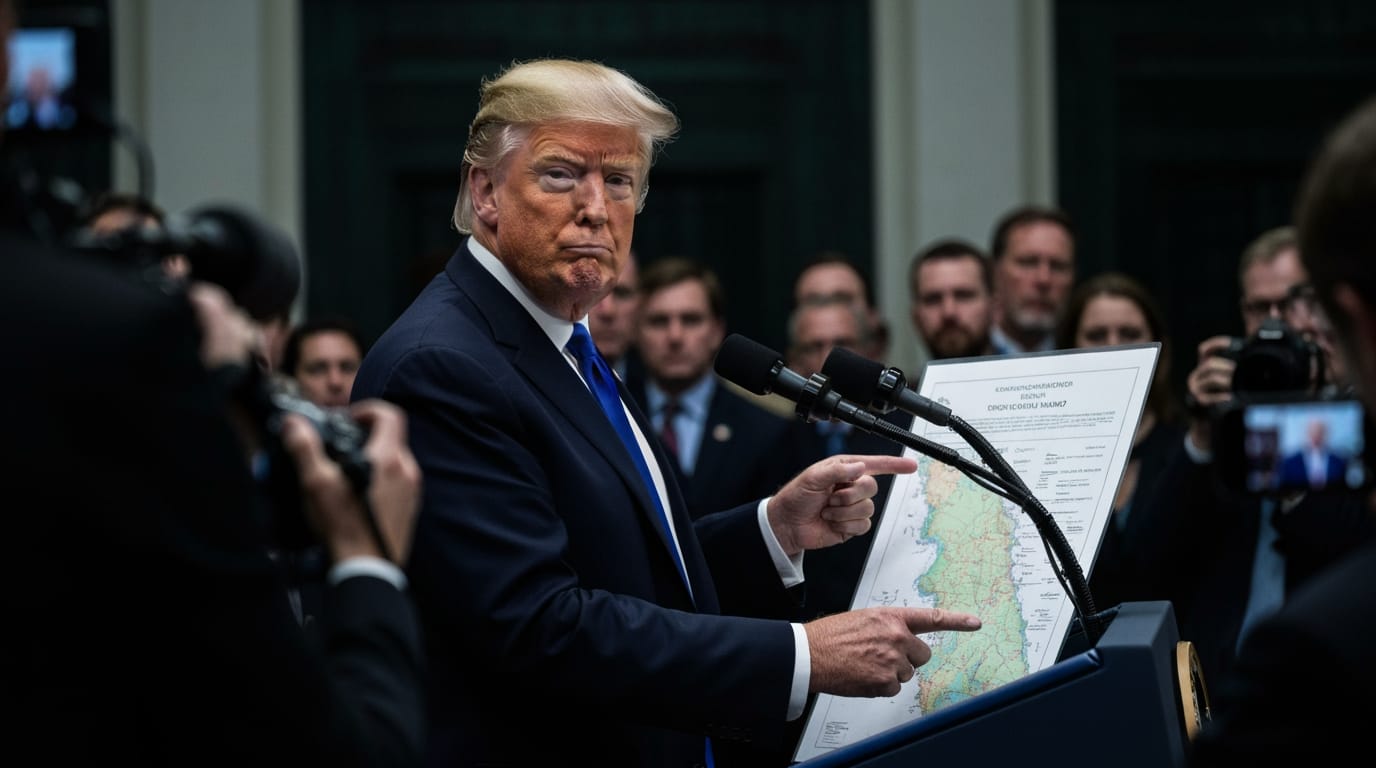
Davos, Switzerland – In a significant diplomatic shift, former U.S. President Donald Trump announced Wednesday the cancellation of impending tariffs on several European allies, citing a newly established "framework of a future deal" with NATO regarding Arctic security and the strategic island of Greenland. The unexpected declaration, made following discussions with NATO Secretary General Mark Rutte at the World Economic Forum in Davos, signals a potential de-escalation of a contentious geopolitical issue that had strained transatlantic relations. While specific details of the "complex" agreement remain largely unarticulated, the move suggests a pivot from outright acquisition to a cooperative security strategy in the increasingly critical Arctic region.
A Tariff Threat Averted, Alliances Reaffirmed
The announcement marks a notable retreat from Trump's earlier aggressive stance, which included threats of imposing 10% tariffs, potentially escalating to 25%, on eight NATO allies that had not supported his ambition to acquire Greenland. These tariffs, initially slated to take effect on February 1, had targeted countries including Denmark, Norway, Sweden, France, Germany, the United Kingdom, the Netherlands, and Finland. Trump confirmed the tariffs would not be implemented "based upon this understanding" reached with NATO. The reversal comes after months of diplomatic tension, with European leaders firmly rejecting any notion of selling the autonomous Danish territory.
Trump, who had previously asserted the U.S. "will get control of Greenland no matter what it takes" due to its strategic importance against perceived threats from Russia and China, softened his tone significantly. He explicitly stated he would not use force to acquire the island, a crucial concession after earlier remarks had fueled concerns about potential military action. "We probably won't get anything unless I decide to use excessive strength and force, where we would be frankly unstoppable. But I won't do that, okay?" Trump remarked, later adding, "I don't have to" and "I don't want to use force."
The "Framework" of a Deal: Security and Sovereignty
While the former president offered few specifics, referring to it as a "concept of a deal" that was "a little bit complex," the essence appears to revolve around Arctic security. A NATO spokesperson, Allison Hart, indicated that discussions among allies would prioritize "ensuring Arctic security through the collective efforts of allies, especially the seven Arctic allies." A key objective of this framework is to prevent Russia and China from establishing an economic or military foothold in Greenland.
Sources familiar with the discussions at a NATO meeting earlier the same day suggested a potential compromise wherein Denmark might grant the United States sovereignty over "small pockets of Greenlandic land where the United States could build military bases." This arrangement was reportedly championed by NATO Secretary General Mark Rutte and drew parallels to the United Kingdom's sovereign base areas in Cyprus. Such a solution would allow the U.S. to enhance its strategic presence in the Arctic without infringing upon Denmark's overarching sovereignty over Greenland, a point Denmark has consistently underscored as a "red line."
Greenland's Geopolitical Chessboard
Greenland, the world's largest island, holds immense strategic value, particularly as climate change opens new shipping lanes and access to vast mineral resources in the Arctic. The U.S. already maintains a significant military presence at Thule Air Base in northern Greenland, a crucial component of its missile defense system and Arctic operations. Trump's persistent pursuit of the island underscored Washington's growing anxieties about the expanding influence of Russia and China in the high North. Russia has re-established Cold War-era military bases and increased its activity in the Arctic, while China has declared itself a "near-Arctic state" and sought to invest heavily in Greenland's infrastructure and mineral extraction.
Denmark, a steadfast NATO ally, has found itself in an awkward position, balancing its alliance commitments with the integrity of its self-governing territory. Danish officials had consistently reiterated that Greenland is not for sale, but expressed willingness to discuss U.S. security concerns. The proposed framework appears to offer a path forward that respects both Danish sovereignty and U.S. strategic interests, potentially strengthening NATO's collective defense posture in a region of increasing geopolitical competition.
A Path Forward for Arctic Cooperation
The newly announced "framework" represents a crucial juncture for transatlantic cooperation in the Arctic. By moving away from a unilateral acquisition strategy and embracing a collaborative approach within the NATO alliance, the United States, Denmark, and other Arctic allies can collectively address the evolving security landscape of the region. While the intricacies of the "complex" deal will undoubtedly require extensive negotiations, the commitment to a shared security framework under the NATO umbrella suggests a renewed focus on diplomatic solutions and alliance solidarity in safeguarding the critical Arctic frontier. The specifics of how sovereign pockets of land for military bases would be implemented, and how these would align with Greenland's self-governance, will be key areas for future discussions.


