Trump Tariffs on China Take Effect, Escalating Trade War
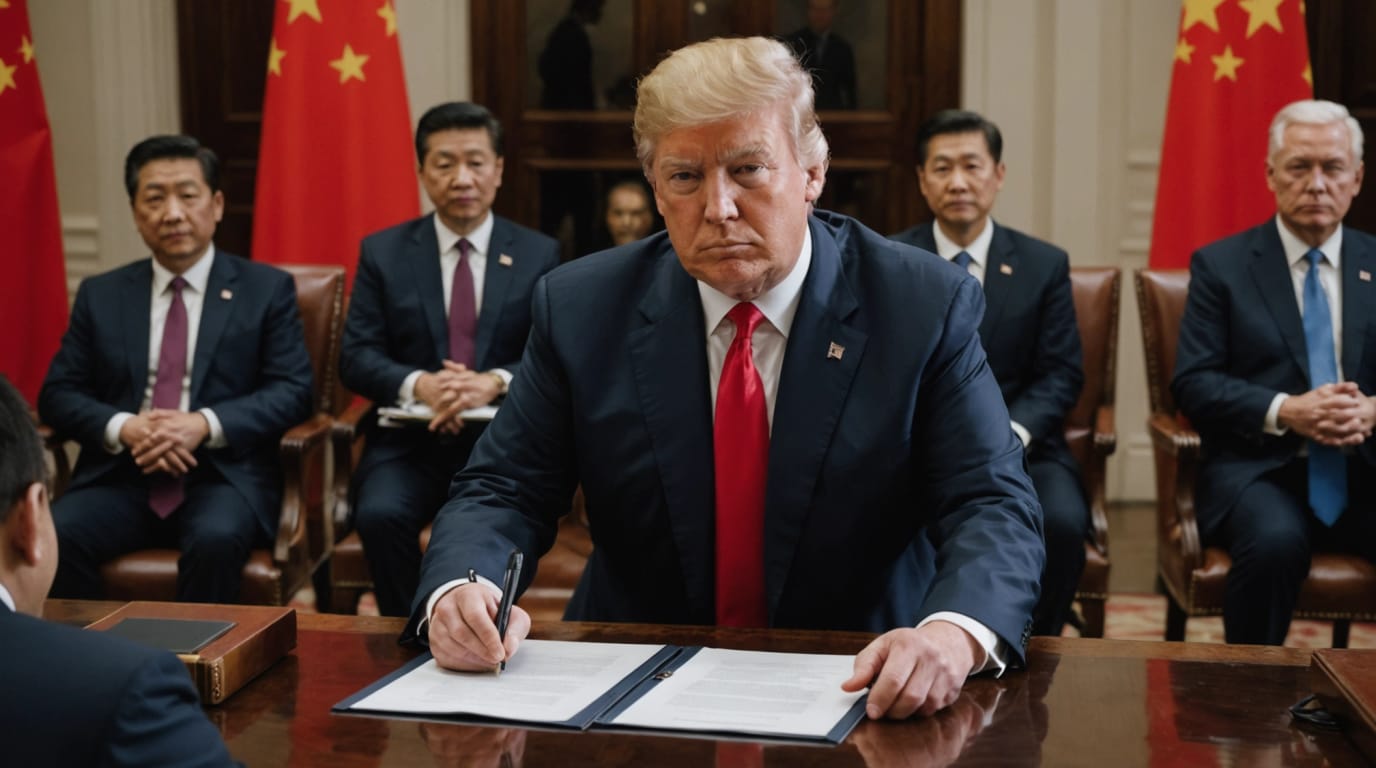
A new round of tariffs imposed by the Trump administration has gone into effect, significantly escalating trade tensions between the United States and China. The tariffs, including a staggering 104% levy on Chinese goods, began impacting trade flows early Wednesday, April 9, 2025, sending ripples through global markets. The move follows President Trump's vow to implement "reciprocal" tariffs on nations with which the U.S. has significant trade deficits, a policy he argues is necessary to protect American interests and jobs.
"Liberation Day" and a Trade Overhaul
President Trump has framed these tariffs as a key component of his "America First" trade policy, aimed at reshaping international trade relationships to benefit the U.S. He unveiled the initial framework for these tariffs on April 2, 2025, a day he dubbed "Liberation Day." This included a minimum 10% tariff on all U.S. imports, with elevated tariffs on 57 nations and limited exceptions. The general tariffs took effect on April 5, 2025, while the country-specific tariffs, ranging from 11% to 50%, began on April 9, 2025.
The tariffs are being implemented under the International Emergency Economic Powers Act (IEEPA), with the administration citing concerns over illegal immigration, drug trafficking (particularly fentanyl), and unfair trade practices as justification. The White House has stated that these measures are designed to hold countries accountable for their promises to halt illegal activities and support domestic manufacturing.
China's Retaliation and the 104% Tariff
The 104% tariff on Chinese goods is a direct response to China's retaliatory tariffs imposed on U.S. products. After the U.S. initially announced tariffs, China responded with its own levies, prompting President Trump to increase tariffs on Chinese goods by an additional 50%, resulting in the effective 104% rate.
China's Ministry of Commerce has stated that Beijing would "fight to the end" and take countermeasures against the U.S. if the tariffs are not withdrawn. The Chinese Foreign Ministry has accused the U.S. of "economic bullying" and "destabilizing" the world's economies. This tit-for-tat escalation has raised concerns about a full-blown trade war between the world's two largest economies.
Economic Implications and Market Reactions
The imposition of these tariffs is expected to have significant economic consequences for both the U.S. and China, as well as the global economy. The immediate impact has been felt in financial markets, with U.S. stocks experiencing a sharp decline following the tariff announcement. The S&P 500, for example, closed below 5,000 for the first time in almost a year, and S&P 500 companies have lost trillions in stock market value since the announcement.
Economists warn that the tariffs will likely lead to higher prices for consumers, as businesses pass on the increased costs of imported goods. The extent to which these costs are absorbed by producers or retailers versus passed on to consumers will vary depending on the product and market conditions. However, in most cases, a significant portion of the tariff cost is expected to be reflected in higher prices.
The tariffs are also expected to disrupt supply chains and impact various sectors of the economy. China is a major supplier of consumer goods, intermediate goods, and raw materials to the U.S., and the tariffs will make these imports more expensive. This could lead to businesses seeking alternative sources of supply, reshoring production to the U.S., or reducing their output.
Impact on Specific Industries
Several industries are particularly vulnerable to the impact of the tariffs. The ultra-fast fashion sector, which relies heavily on low-cost, high-frequency shipments from China, is expected to be significantly affected. The tariffs revoke the de minimis exemption for Chinese shipments, introducing new tariffs on small packages and bulk imports, raising operational costs and disrupting their business model.
The steel and aluminum industries are also facing significant changes. The U.S. has imposed a 25% tariff on all steel and aluminum imports, aiming to strengthen domestic production. These measures expand on previous tariffs and eliminate exemptions, which the administration argues were exploited by China and others with excess capacity.
Global Response and Trade Negotiations
The Trump administration's tariff policies have elicited mixed reactions from other countries. Some nations, like South Korea and Japan, have expressed a willingness to negotiate new trade deals with the U.S. However, others, like China, have vowed to retaliate and challenge the legality of the U.S. measures through the World Trade Organization (WTO).
The European Union is also facing increased tariffs, with a 20% levy on imported goods. The UK, while not included in the list of countries facing elevated tariffs, is subject to a baseline 10% tariff on imported goods.
The future of global trade relations remains uncertain as the U.S. pursues its "America First" trade agenda. The outcome of ongoing trade negotiations and the potential for further escalation of trade tensions will have a significant impact on the global economy.
Conclusion: An Uncertain Future for Trade
The implementation of these tariffs marks a significant turning point in international trade relations. While the Trump administration argues that these measures are necessary to protect American interests and address unfair trade practices, critics warn that they could lead to higher prices, disrupted supply chains, and a global economic slowdown.
The coming weeks and months will be crucial in determining the long-term impact of these tariffs. Whether the U.S. and China can reach a negotiated settlement or whether the trade war will continue to escalate remains to be seen. The global economy is watching closely as these events unfold, bracing for the potential consequences of a more protectionist world.


