Trump Threatens Tariffs, Trade Probe Amid Escalating EU Tech Fines
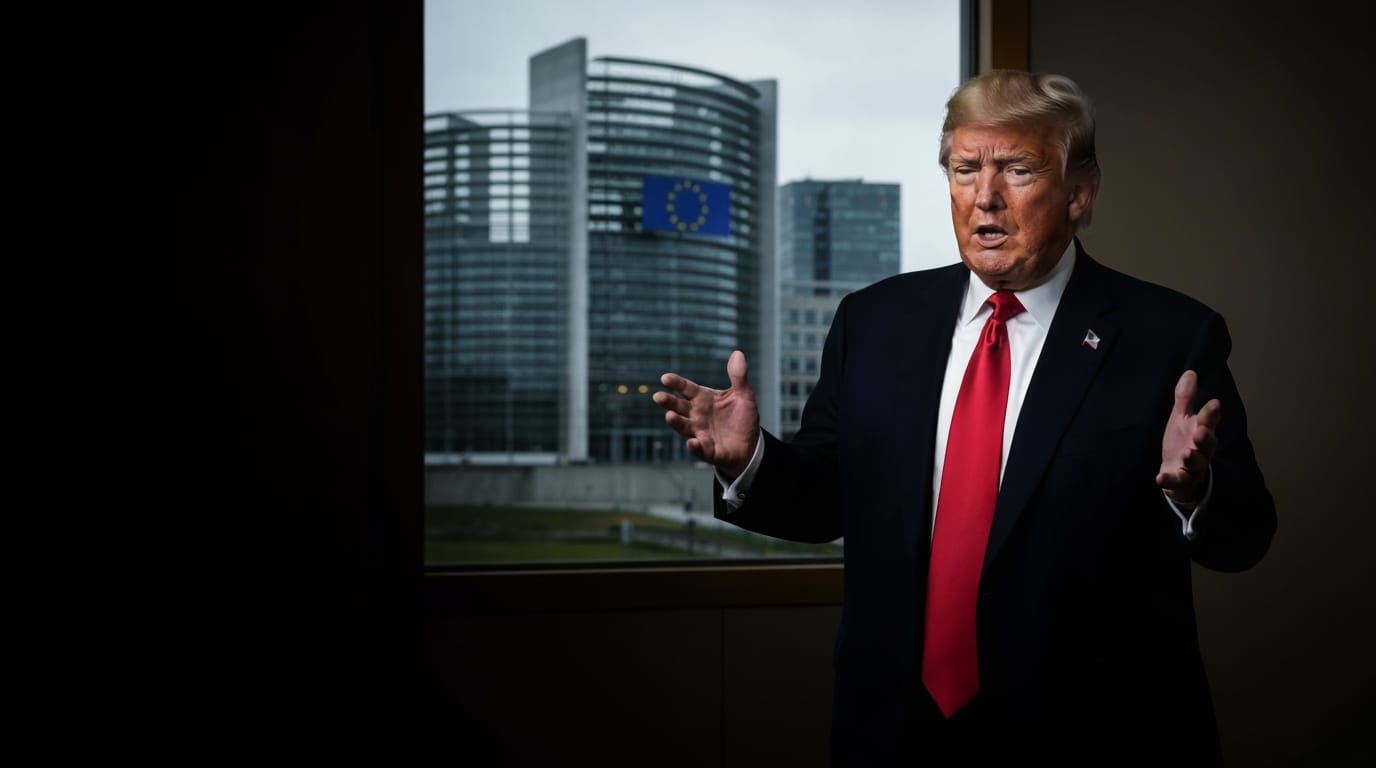
WASHINGTON D.C. – The transatlantic economic landscape faces renewed instability after former President Donald Trump on Friday, July 24, 2026, issued a swift and forceful threat of new tariffs against the European Union. The move, delivered via social media, comes in direct response to the EU's imposition of significant antitrust fines totaling €890 million (approximately $1 billion) on American tech giant Google just one day prior. This latest escalation in trade tensions signals a deepening rift between Washington and Brussels over the regulation and taxation of multinational technology corporations, potentially triggering a broader trade conflict with far-reaching economic and geopolitical implications.
A Swift Retaliation: The White House Responds to EU's Latest Tech Crackdown
President Trump's declaration marked an immediate and aggressive response to the European Commission's decision to fine Google for what it deemed breaches of the Digital Markets Act (DMA). In a series of posts, the former president condemned the EU's actions as "illegal and highly unethical conduct," accusing the bloc of "ROBBING" American companies and, by extension, American taxpayers. He unequivocally stated that the United States would not serve as a "PIGGYBANK" for Europe and vowed that the penalties against U.S. firms would be "entirely reversed." Central to his threat was the announcement of an immediate Section 301 investigation into the EU's trade practices, a legal mechanism that could pave the way for the imposition of substantial retaliatory tariffs on European goods and services. This investigation mechanism allows the U.S. government to probe foreign practices deemed unreasonable or discriminatory and that burden American commerce, potentially leading to punitive trade measures.
Europe's Digital Crusade: Google's Latest Fines Under the DMA
The European Union's recent penalties against Google represent the latest chapter in its ambitious and often contentious drive to rein in the power of dominant technology companies. The fines, announced on Thursday, July 23, 2026, were levied under the stringent Digital Markets Act, a landmark piece of legislation that became enforceable in 2024. The Commission identified two primary violations: €460 million for Google's practice of illegally favoring its own services, such as Google Flights and Google Hotels, over those of rivals in its search results, and an additional €430 million for restricting app developers from guiding users to alternative purchasing options outside the Google Play store.
EU regulators underscored that these measures were essential to fostering fair competition and enabling other companies to innovate and thrive in the digital marketplace. The DMA specifically targets large online platforms designated as "gatekeepers," imposing a set of "dos and don'ts" to ensure a fairer and more contestable digital environment. These latest fines against Google are not isolated incidents; the EU has a long history of pursuing antitrust cases against the tech giant, accumulating fines exceeding €8 billion prior to these recent DMA penalties. Other prominent American tech firms, including Apple and Meta, have also faced substantial fines under the DMA in 2025, signaling Europe's unwavering commitment to its regulatory agenda.
A Pattern of Accusation: US Concerns Over EU's Targeting of American Tech
President Trump's strong reaction is rooted in a long-standing perception within the US government that the EU disproportionately targets successful American technology companies. Beyond Google, Trump specifically referenced previous penalties against Apple, Meta, and Amazon, describing the pattern as an "illegal and highly discriminatory practice." This perspective views Europe's regulatory efforts, including antitrust fines and proposed digital services taxes, as thinly veiled attempts to disadvantage leading American firms and bolster domestic European competitors.
The U.S. Trade Representative (USTR) Jamieson Greer echoed these concerns, stating that the EU's recent actions "create massive uncertainty for U.S. exports of goods and services to Europe" and "undermine efforts" for constructive dialogue aimed at resolving transatlantic trade issues. This sentiment reflects a fundamental philosophical divergence between the U.S.'s generally more laissez-faire approach to tech regulation and the EU's proactive "precautionary principle," which prioritizes consumer protection and market fairness through strict rules.
Echoes of Past Disputes and the Threat of an Economic Fallout
The re-emergence of tariff threats harkens back to previous periods of heightened trade friction between the U.S. and EU during the Trump administration, which included disputes over steel and aluminum, as well as aircraft subsidies. These historical tensions underscore a consistent theme of economic nationalism and a willingness to leverage tariffs as a tool of foreign policy. The current escalation introduces a new front, directly linking trade policy to digital regulation.
Should the Section 301 investigation proceed and result in punitive tariffs, the economic consequences could be significant for both economies. European exports, spanning a wide range of industries from automotive to luxury goods, could face increased costs entering the American market, potentially harming European businesses and consumers. Conversely, retaliatory measures from the EU could impact American industries. Beyond direct economic hits, such a trade war risks further eroding transatlantic relations, a partnership traditionally seen as a cornerstone of global economic stability and democratic values. The tech companies themselves are caught in the crossfire, navigating a complex and often contradictory regulatory landscape that could necessitate significant operational changes, potentially impacting their global services and innovation strategies.
Conclusion: A Looming Showdown in Global Tech Governance
The latest volley between the United States and the European Union represents more than just a trade dispute; it signifies a looming international showdown over the future of global tech governance. The EU's unwavering commitment to regulating powerful digital platforms through mechanisms like the Digital Markets Act clashes directly with the U.S. administration's stance, which views such actions as protectionist and harmful to American innovation.
As President Trump initiates a formal trade probe and promises substantial tariffs, the stakes are exceptionally high. The outcome of this confrontation will not only dictate the immediate economic relationship between two of the world's largest trading blocs but also set precedents for how nations assert sovereignty and manage the immense power of multinational technology corporations in an increasingly digitized world. The coming months will likely reveal whether dialogue can prevail over protectionism, or if the digital realm will become the next major battleground in an escalating global trade war.


