Trump Vows "Very Hard" Strikes Against Iran Amid Renewed Escalation
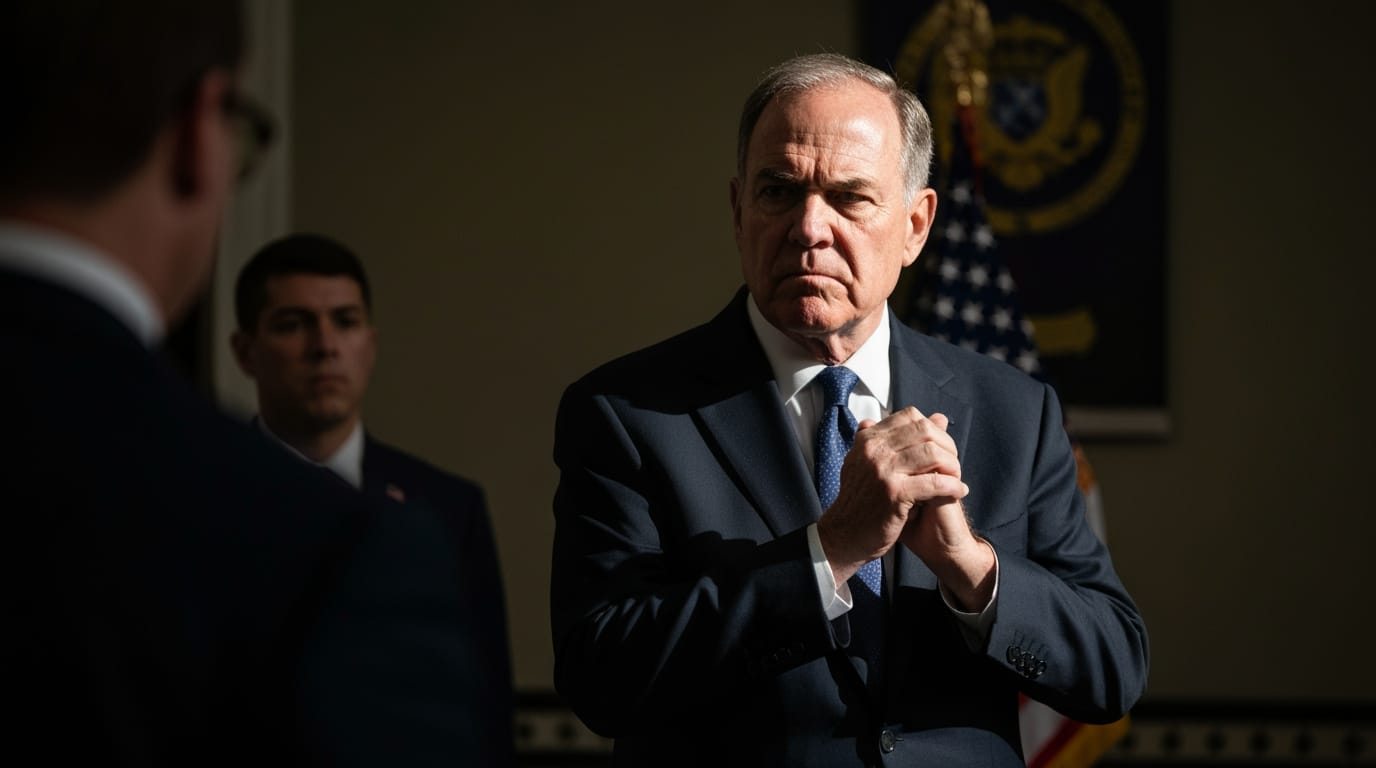
Washington, D.C. – In a significant escalation of tensions, former President Donald Trump has reiterated threats to strike Iran "very hard," following recent missile attacks on U.S. assets in the region and a drone strike targeting a U.S.-owned vessel. The renewed saber-rattling comes as the delicate balance of a recent ceasefire appears to have shattered, thrusting the Middle East back into a precarious state of heightened military confrontation. Trump's latest warnings underscore a recurring pattern of assertive rhetoric that has characterized U.S.-Iran relations during his public career, consistently raising alarms about the potential for wider conflict.
Renewed Hostilities Stoke Fears of Widening Conflict
The latest surge in tensions unfolded in late July 2026, following a series of provocative actions in the Middle East. U.S. officials reported that Iran had launched ballistic missiles toward a U.S. base in Jordan, although Jordanian air defenses successfully intercepted them. Concurrently, a U.S.-owned liquefied natural gas (LNG) vessel operating at Egypt's Damietta Port was struck by a drone, an incident also attributed to Iranian-backed forces. These events prompted a swift response, with the United States, joined by Saudi Arabia, conducting joint strikes against Iranian-backed militias in Iraq, targeting logistics and weapons sites.
Responding to these developments, Trump, speaking from the Oval Office, declared that the U.S. would "hit them very hard," asserting that it was "our turn to hit them." He further stated on Fox News that Iran was "going to get a beating" and indicated that the U.S. would strike "hard" in retaliation for the attacks. The immediate market reaction to this renewed escalation was pronounced, with global oil prices surging by more than 7 percent and the Dow Jones Industrial Average experiencing a significant drop, reflecting deep concerns over regional stability and potential disruptions to energy supplies. The attacks on critical infrastructure, including an Egyptian port, have highlighted the acute vulnerability of energy facilities across the Middle East.
A Consistent Arc of Confrontational Rhetoric
Trump's latest threats are not isolated incidents but rather part of a sustained campaign of assertive rhetoric and military posturing that has defined his approach to Iran. During his first administration (2017-2021), tensions with Tehran significantly escalated. A pivotal moment occurred in May 2018, when the U.S. withdrew from the Joint Comprehensive Plan of Action (JCPOA), commonly known as the Iran nuclear deal, initiating a "maximum pressure campaign" that imposed over 1,500 sanctions on Iran's economy.
This period saw several near-miss confrontations. In June 2019, Iran shot down a U.S. RQ-4A Global Hawk drone, claiming it had violated Iranian airspace. Trump initially ordered retaliatory military strikes but cancelled them at the last minute, citing concerns over potential casualties. Instead, the U.S. carried out cyberattacks and imposed new sanctions. Tensions peaked further in January 2020 with the U.S. assassination of Iranian General Qasem Soleimani, leading to Iranian missile attacks on U.S. bases in Iraq and heightened fears of an all-out war.
More recently, in April 2026, Trump threatened to "wipe out a whole civilization" and inflict widespread destruction on Iran's energy grid and transportation links if Tehran failed to reopen the strategic Strait of Hormuz. By June 2026, amidst ongoing strikes between both sides, he publicly threatened to hit Iran "VERY HARD TONIGHT" and indicated a desire to "assume total control" of Iran's vital oil and gas industries, including the key Kharg Island terminal, which handles approximately 90% of Iran's oil exports. These repeated declarations have consistently underscored a willingness to employ severe military or economic measures.
International Alarm and the Plight of Regional Stability
The persistent threats and military actions have generated significant international concern and fueled widespread instability across the Middle East. The United Nations has repeatedly called for de-escalation and diplomatic solutions, with Secretary-General António Guterres expressing alarm over Trump's threats, particularly those targeting civilian infrastructure. International humanitarian law strictly prohibits direct attacks on civilians and civilian objects, a point reiterated by UN officials and human rights organizations like Amnesty International, which warned that threats to destroy civilian infrastructure could constitute war crimes or even potential genocide.
The involvement of Saudi Arabia in the latest strikes against Iranian-backed forces suggests a potential broadening of the conflict, drawing in regional powers and further complicating the already volatile landscape. The war has already taken a considerable toll, with estimates of its cost well over $100 billion by July 2026, and public disapproval of the war among Americans reaching significant levels. The possibility of attacks on vital resources, such as desalination plants in the Gulf, which millions rely on for drinking water, has also emerged as a grave humanitarian concern, highlighting the catastrophic potential of expanding hostilities.
The Elusive Path to De-escalation
Despite recurring calls for diplomacy, the path to a stable resolution remains elusive. Periods of negotiation and tentative ceasefires have frequently been undermined by renewed hostilities, creating a cyclical pattern of escalation and de-escalation. Iranian officials have consistently rejected negotiations under duress, particularly while U.S. sanctions remain in place, and have intensified their rhetoric in response to threats.
The current situation indicates a collapse of a recent operational pause, leading to a resurgence of tit-for-tat strikes that complicate any diplomatic outreach. The ongoing conflict has also been intertwined with domestic politics, with the war proving increasingly unpopular and impacting political standing. The international community continues to urge both sides to pursue peaceful negotiations and respect international law, underscoring that conflicts ultimately end when dialogue is chosen over destruction.
The repeated "very hard" threats against Iran reflect a deep-seated and persistent antagonism that has long characterized the relationship between the U.S. and Iran. With each fresh wave of hostilities, the regional and global implications grow, reinforcing the urgent need for a sustained diplomatic effort to avert further catastrophe and establish a more enduring peace.


