Trump's Asia Policy: Will Allies Tilt Towards China?
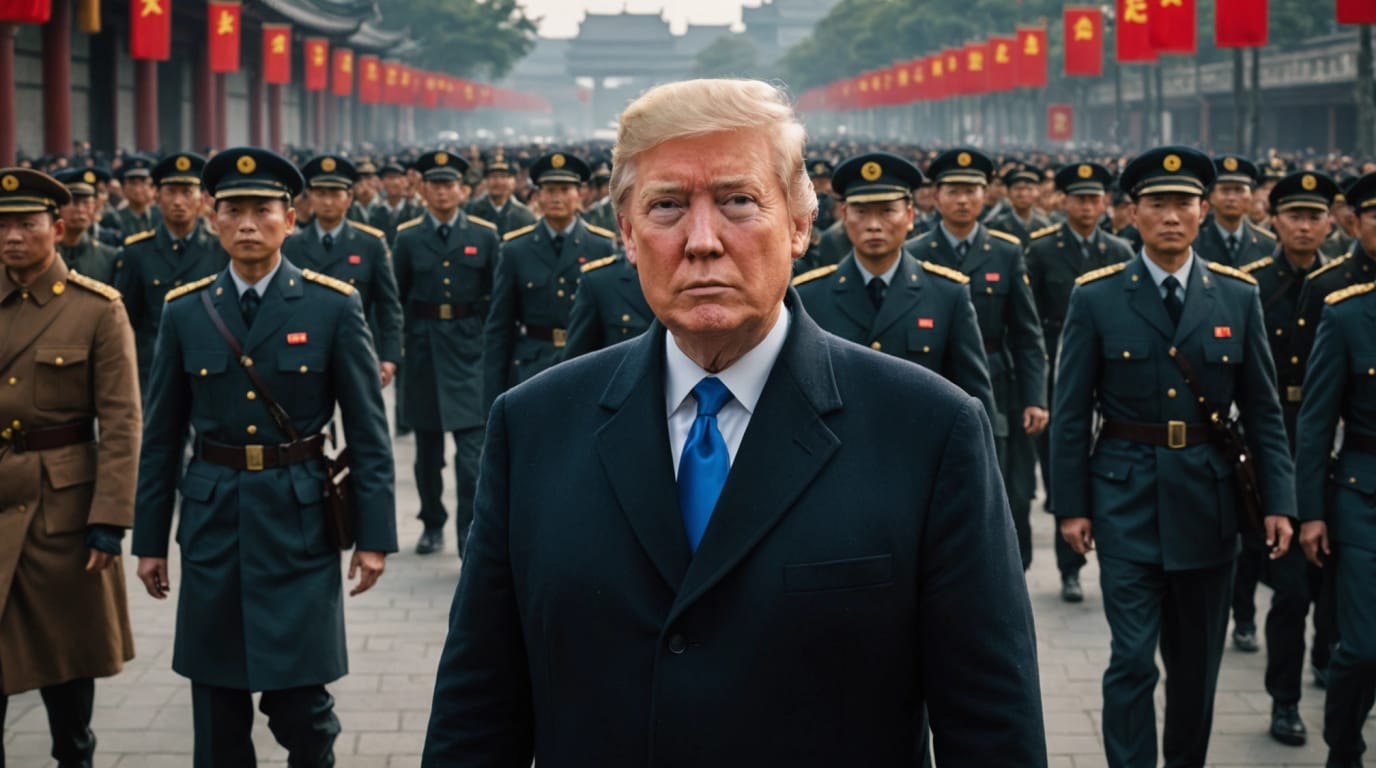
Donald Trump's return to the White House has injected a fresh wave of uncertainty into the geopolitical landscape of Asia, leaving U.S. allies in the region to reassess their strategic alignments. Trump's "America First" approach, characterized by trade protectionism, a transactional view of alliances, and a focus on bilateral deals, is forcing Asian nations to navigate a complex web of competing interests, potentially pushing some closer to China.
A Region Caught in the Middle
Southeast Asian nations, in particular, find themselves in a precarious position. Historically, these countries have sought to balance their relationships between the U.S. and China, leveraging the economic benefits of Chinese trade and investment while relying on the U.S. for security guarantees and the maintenance of a rules-based international order. However, Trump's policies are complicating this balancing act. His administration views relations with Southeast Asia largely through the lens of great-power competition with China, potentially reducing engagement with regional multilateral institutions like ASEAN in favor of direct bilateral relationships with strategically significant partners such as the Philippines and Vietnam.
This approach risks alienating some ASEAN members who value the organization's centrality in regional affairs. Moreover, Trump's emphasis on tariffs and reshoring supply chains poses challenges for trade-dependent Southeast Asian economies, many of which rely on global supply chains for future growth. The potential for economic disruption and increased geopolitical competition is fueling anxieties about regional instability, particularly concerning military tensions over Taiwan and the South China Sea.
China's Expanding Influence
China is strategically positioned to capitalize on any perceived reduction in U.S. engagement. By deepening bilateral relationships and promoting multilateral initiatives, particularly through investment deals and expanded cooperation within frameworks like BRICS, China can expand its influence. China's economic footprint in Southeast Asia is already substantial. In 2022, ASEAN's trade in goods with China more than doubled, reaching $722 billion and accounting for nearly one-fifth of ASEAN's global trade. China's investment flows into ASEAN also saw a significant rise, reaching $15.4 billion in 2022.
This growing economic interdependence provides China with considerable leverage in the region. While Southeast Asian nations generally prefer not to choose sides, the perception of declining U.S. economic influence, coupled with China's proactive engagement, could tilt the balance in Beijing's favor.
The Security Dilemma
The security landscape in Asia is further complicated by Trump's approach to alliances. His demands for increased defense spending and burden-sharing have raised concerns among some allies about the reliability of U.S. security commitments. This uncertainty could prompt some nations to hedge their bets by strengthening ties with China, even if they remain wary of Beijing's long-term intentions.
The South China Sea remains a major flashpoint. China's construction of military outposts on artificial islands and its assertive territorial claims have heightened tensions with several ASEAN members, particularly the Philippines and Vietnam. While these countries have traditionally looked to the U.S. to counter China's assertiveness, a perceived weakening of U.S. resolve could embolden Beijing and further destabilize the region.
Differing Perspectives and Strategic Choices
It is important to note that Asian nations are not monolithic in their views of the U.S. and China. Some countries, like the Philippines and Singapore, maintain strong security and economic ties with the U.S. and are likely to resist any significant shift towards China. Others, like Laos, Cambodia, and Myanmar, are more closely aligned with Beijing due to geographical proximity, historical ties, and relatively weaker U.S. engagement.
India, for example, sees the US-China rivalry as an opportunity to strengthen its strategic position and economic ties with the US, acting as a counterbalance to China in the region. Conversely, Pakistan leverages its long-standing alliance with China, benefiting from increased economic and military support, including projects like the China-Pakistan Economic Corridor (CPEC).
Ultimately, each nation will make its own strategic calculations based on its unique circumstances and national interests. However, Trump's policies are undoubtedly reshaping the strategic environment, creating both challenges and opportunities for Asian nations.
Implications for the Future
Trump's foreign policy could have far-reaching implications for the balance of power in Asia. A decline in U.S. credibility and influence could embolden China to pursue its regional ambitions more assertively, potentially leading to increased tensions and instability. While most Southeast Asian nations prefer to avoid choosing sides, a perceived lack of U.S. engagement and reliability could gradually push them closer to China's orbit.
The future of U.S.-Asia relations hinges on Washington's ability to reassure its allies of its commitment to the region's security and prosperity. This requires a consistent and coherent strategy that balances competition with China with cooperation on shared interests, such as trade, climate change, and regional stability. Failure to do so could accelerate the shift in the regional balance of power, with potentially significant consequences for the United States and its allies.


