Trump's Auto Tariff Threat Rattles Japan, Sparks Trade Anxieties
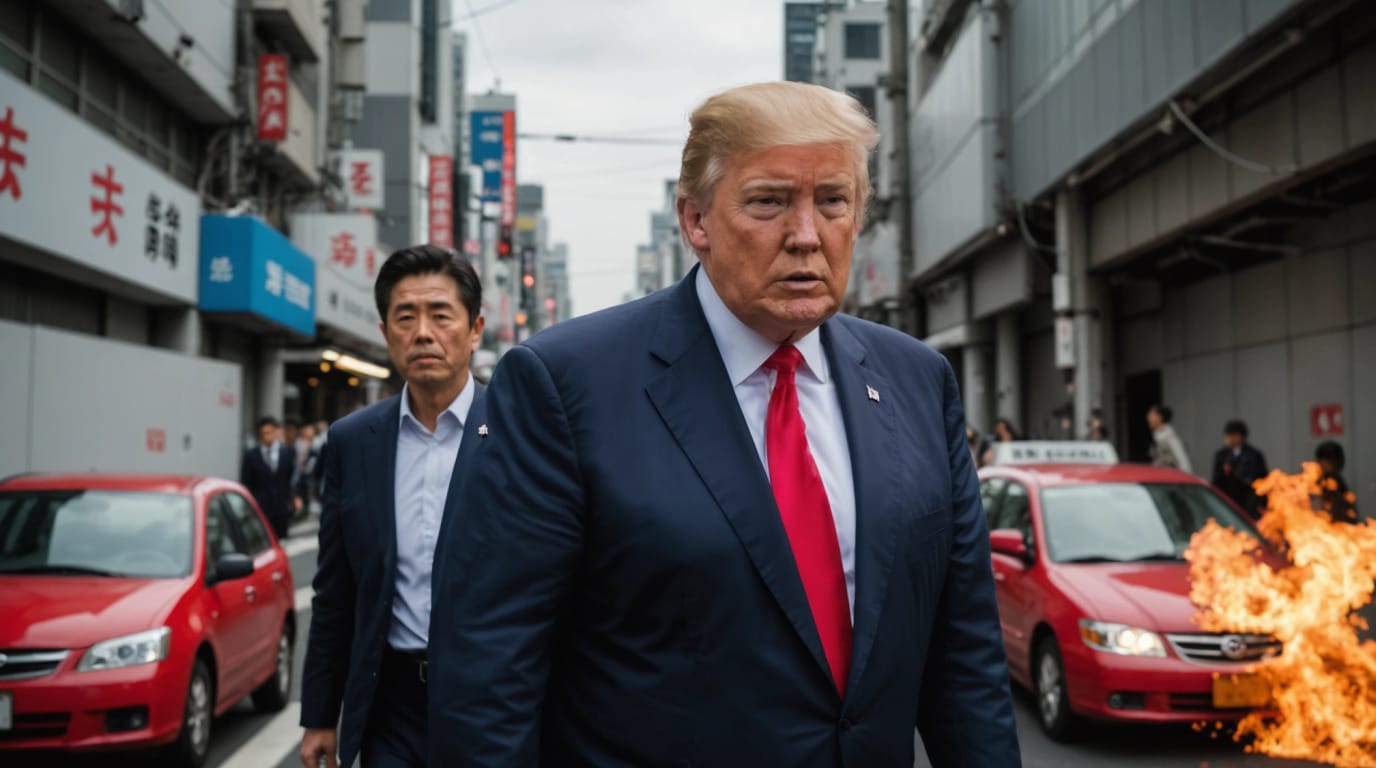
The Japanese government is reeling after U.S. President Donald Trump announced a 25% tariff on all vehicles imported into the United States, set to take effect on April 23. The move has triggered dismay in Tokyo, with Prime Minister Shigeru Ishiba urgently appealing to Washington for an exemption for Japanese automakers, on top of the existing 2.5% duty. The potential economic fallout has raised concerns about the future of trade relations between the two nations and the broader global economy.
Economic Impact Looms Large
The Japanese auto industry is a cornerstone of the nation's economy. Almost one-third of Japan's exports are autos or related sectors, accounting for 8% of overall employment. Martin Schulz, chief policy economist for Fujitsu's Global Market Intelligence Unit, estimates the tariffs could shrink the Japanese economy by 0.2%. The tariffs could impose an additional cost on Japan's big six car firms amounting to some $11.4 billion.
The impact extends beyond Japan's borders. Takaki Nakanishi, CEO of the Tokyo-based Nakanishi Research Institute, notes that the tariffs will affect the entire global auto sector. While Japan may not be at a disadvantage compared to other exporting nations, the biggest burden will likely fall on U.S. consumers and the U.S. economy.
Japan Considers Its Options
Prime Minister Ishiba stated that Japan is considering "all possible options" in response to the tariffs. However, he did not directly address whether the new tariffs would violate a 2019 trade agreement where Japan lowered tariffs on American pork and beef products to avoid higher duties on autos exported to the United States.
Trade Minister Yoji Muto, after returning from Washington empty-handed earlier this month, expressed regret that Japan was not exempted from the tariffs. The government is now examining the potential impact on industries and employment, with possible financial support measures in the works.
Supply Chains and Investment Under Threat
Analysts point out that Japanese companies have heavily invested in production facilities in Mexico and Canada, relying on the understanding that cross-border trade with the U.S. would remain unimpeded. The new tariffs disrupt these established supply chains, adding complexity and costs to the manufacturing process.
Japan is the number one country in investment in the United States. The tariffs could discourage further investment and potentially lead to a contraction of domestic production and employment, hollowing out the economy.
Political and Diplomatic Fallout
The announcement has strained relations between Tokyo and Washington, two close economic and strategic allies. Japan has repeatedly attempted to persuade the Trump administration to grant an exemption from the tariffs, so far without success.
Some observers believe that Japanese negotiators are struggling to make their case directly to President Trump, as these decisions are being made in the White House and are issues close to Trump's heart.
Uncertainty for Consumers
The tariffs are expected to increase prices for U.S. consumers. When prices go up by more than a quarter because of these tariffs, the question becomes who will swallow those added costs. It is expected to see a combination of higher prices for U.S. consumers and lower demand. However, it is more complex than that because Japanese companies offer models that are not easy to replace, such as electric vehicles.
Conclusion: Awaiting the Impact
As the April 23 effective date approaches, the Japanese government is left to grapple with the potential consequences of the U.S. auto tariffs. The economic impact on Japan, the disruption to global supply chains, and the strain on diplomatic relations all contribute to a sense of uncertainty. While Japan explores its options and hopes for a last-minute exemption, the world watches to see how this trade dispute will unfold and what it means for the future of international commerce.


