Trump's Board of Peace Convenes Inaugural Session Amid High Hopes and Deep Skepticism for Gaza's Future
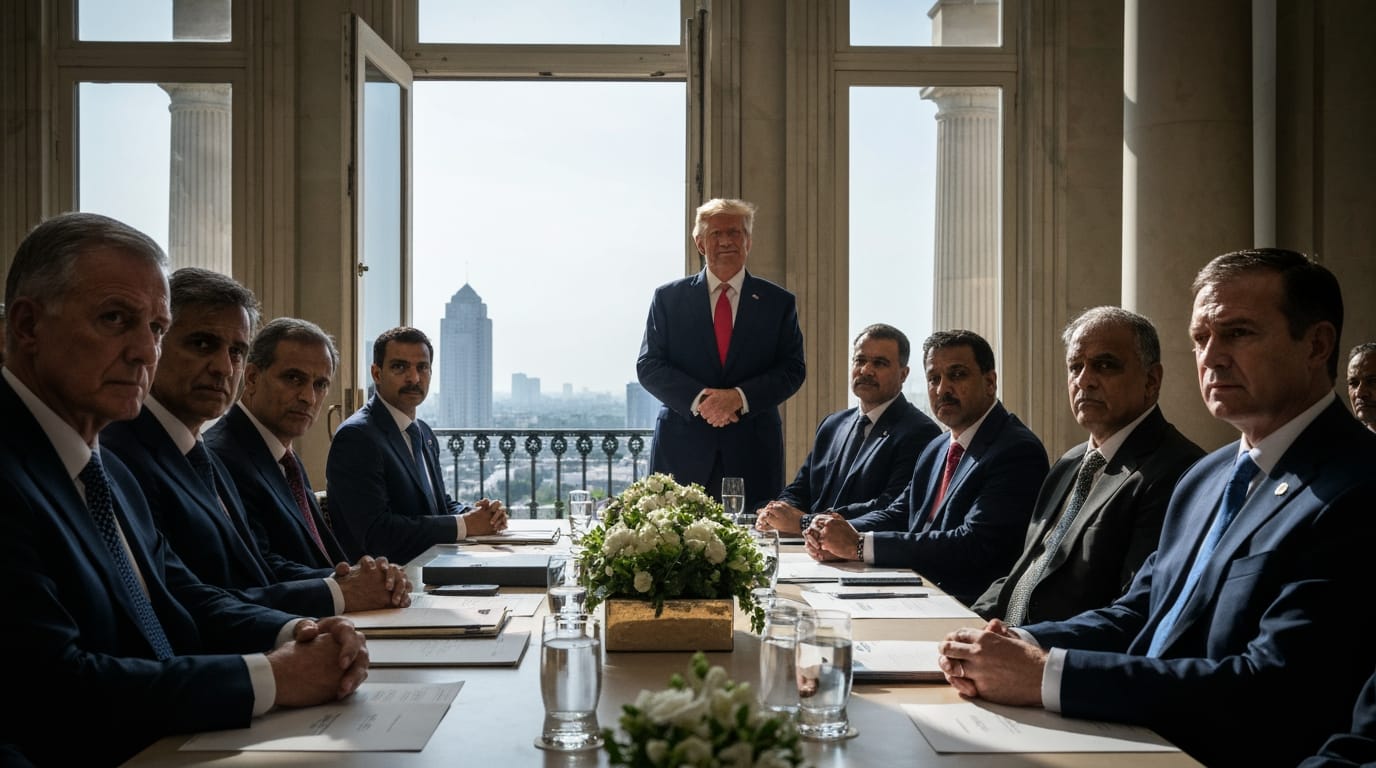
WASHINGTON D.C. – A new chapter in international diplomacy aimed at resolving the protracted crisis in Gaza began today as President Donald Trump's "Board of Peace" held its inaugural meeting in Washington. The high-stakes gathering, hosted at the recently rebranded Donald J. Trump U.S. Institute of Peace, brings together representatives from dozens of nations to discuss the delicate path forward for the war-battered enclave, focusing on reconstruction, humanitarian aid, and security. The initiative, born from a broader peace plan, faces both enthusiastic support from its proponents and considerable international apprehension regarding its scope, structure, and potential impact.
A New Diplomatic Stage for Gaza's Future
The primary objective of today's meeting is to receive a status report on the ongoing implementation of President Trump's peace plan for the Gaza Strip. Discussions are centered on advancing the monumental task of rebuilding Gaza, establishing an International Stabilization Force (ISF), and ensuring the flow of crucial humanitarian assistance to its beleaguered population. The assembly takes place against the backdrop of a fragile ceasefire, brokered in October 2025, which has seen repeated violations and continued loss of life despite a general cessation of heavy fighting.
President Trump has articulated grand ambitions for the Board of Peace, envisioning it as "the most consequential international body in history" with "unlimited potential" to foster peace not only in Gaza but "all over the world." This inaugural session is expected to solidify commitments for billions in reconstruction funds and thousands of personnel for the proposed stabilization force. The urgency of the situation in Gaza is underscored by the estimated 71,000 Palestinian casualties and widespread destruction following two years of conflict, necessitating massive recovery efforts.
The Architecture of Peace: Formation and Mandate
The Board of Peace is a key component of President Trump's "Comprehensive Plan to End the Gaza Conflict," a 20-point roadmap initially unveiled in September 2025. The initiative gained formal international recognition with the endorsement of United Nations Security Council Resolution 2803 in November 2025. This resolution welcomed the Board as a transitional and temporary administration tasked with overseeing Gaza's redevelopment until the Palestinian Authority undergoes necessary reforms. The Board's charter was officially signed in January 2026 on the sidelines of the World Economic Forum in Davos, Switzerland, marking its formal establishment.
Integral to the plan is the formation of a National Committee for the Administration of Gaza (NCAG), designed to manage local governance under the guidance of a technocratic team. Dr. Ali Sha'ath has been appointed to lead this committee, which is envisioned to restore public services, rebuild civil institutions, and stabilize daily life in Gaza. The Board of Peace, chaired by President Trump, is slated to provide strategic oversight, mobilize resources, and ensure accountability for the implementation of the comprehensive plan.
Global Participation and Apprehension
While President Trump reportedly extended invitations to 60 heads of state, approximately two dozen countries have formally agreed to join the Board of Peace. The membership list is notably diverse, including nations with significant ties to the Middle East such as Saudi Arabia, Egypt, Qatar, Bahrain, Jordan, Kuwait, Morocco, Turkey, and the United Arab Emirates. However, it also features countries like Argentina, Hungary, Belarus, Pakistan, and Indonesia, some of which are geographically distant from the conflict and have been described as being "in Trump's good graces."
The composition of the Board and its underlying principles have drawn considerable criticism. Israeli Prime Minister Benjamin Netanyahu chose not to attend the inaugural meeting in person, instead sending Foreign Minister Gideon Saar to represent Israel. Notably absent are direct Palestinian representatives, raising concerns about the Board's legitimacy and inclusivity. Several European nations, including France, Germany, and the United Kingdom, have declined full membership, with some opting to attend as "observers" or expressing anxieties that the Board could undermine the established role of the United Nations in international diplomacy. This concern is amplified by reports that the Trump administration has withdrawn from 66 international organizations, including 31 UN bodies, in January 2026.
Further adding to the controversy is the Board's tiered membership structure, which reportedly offers permanent seats to nations willing to contribute $1 billion towards its activities after an initial three-year term. Critics have labeled this a "pay-to-play" model, suggesting it prioritizes financial commitment over diplomatic efficacy or broader international consensus.
Ambitious Pledges Amidst Significant Challenges
A key announcement expected from today's meeting is the commitment of over $5 billion in pledges from member nations for humanitarian aid and reconstruction efforts in Gaza. This figure, while substantial, represents only a fraction of the estimated $70 billion required for the comprehensive rebuilding of the devastated territory. Nations like the United Arab Emirates and Kuwait are expected to be major contributors to this initial fund.
In terms of security, the Board aims to secure pledges for thousands of personnel to form the International Stabilization Force (ISF). Indonesia has emerged as a significant early contributor, committing 2,000 troops for potential deployment to the ISF, though their arrival is not expected before April. The ISF's mandate, authorized by the UN until the end of 2027, includes securing border areas, ensuring Gaza's demilitarization, and protecting civilians. However, a central and unresolved challenge remains the demilitarization of Hamas. While Hamas has reportedly expressed willingness to cede governance to a transitional committee and disarm under certain conditions, Israeli officials and President Trump have indicated that military action remains an option should these conditions not be met.
Beyond immediate reconstruction, plans for Gaza's future include ambitious development projects. Jared Kushner, a top Trump aide, has presented proposals for building new residential communities, high-tech manufacturing sites, and even a tourism resort along Gaza's Mediterranean coast, envisioning "180 towers" for a revitalized region. However, specific funding and timelines for these projects remain unannounced.
High Stakes and Unanswered Questions
The inaugural meeting of the Board of Peace signifies a bold and controversial attempt to reshape the future of Gaza and, potentially, the landscape of international diplomacy. President Trump's initiative, framed as an alternative to what he perceives as the United Nations' inefficiencies, seeks to inject new momentum into peace efforts following a devastating conflict. The substantial financial pledges and commitments of stabilization forces underscore the scale of the international community's investment in Gaza's recovery.
However, the path forward is fraught with obstacles. The exclusion of Palestinian representatives, the "pay-to-play" membership model, and the skepticism from key global actors cast a long shadow over the Board's long-term effectiveness and legitimacy. The formidable challenge of disarming Hamas while securing lasting peace, combined with the immense humanitarian and reconstruction needs, will test the resolve and unity of this new international body. The world watches closely to see if this ambitious new board can indeed deliver on its promise of stability for Gaza or if it will become another footnote in the region's long history of unresolved conflict.


