Trump's New Tariffs Exclude Russia and Belarus: A Strategic Decision?
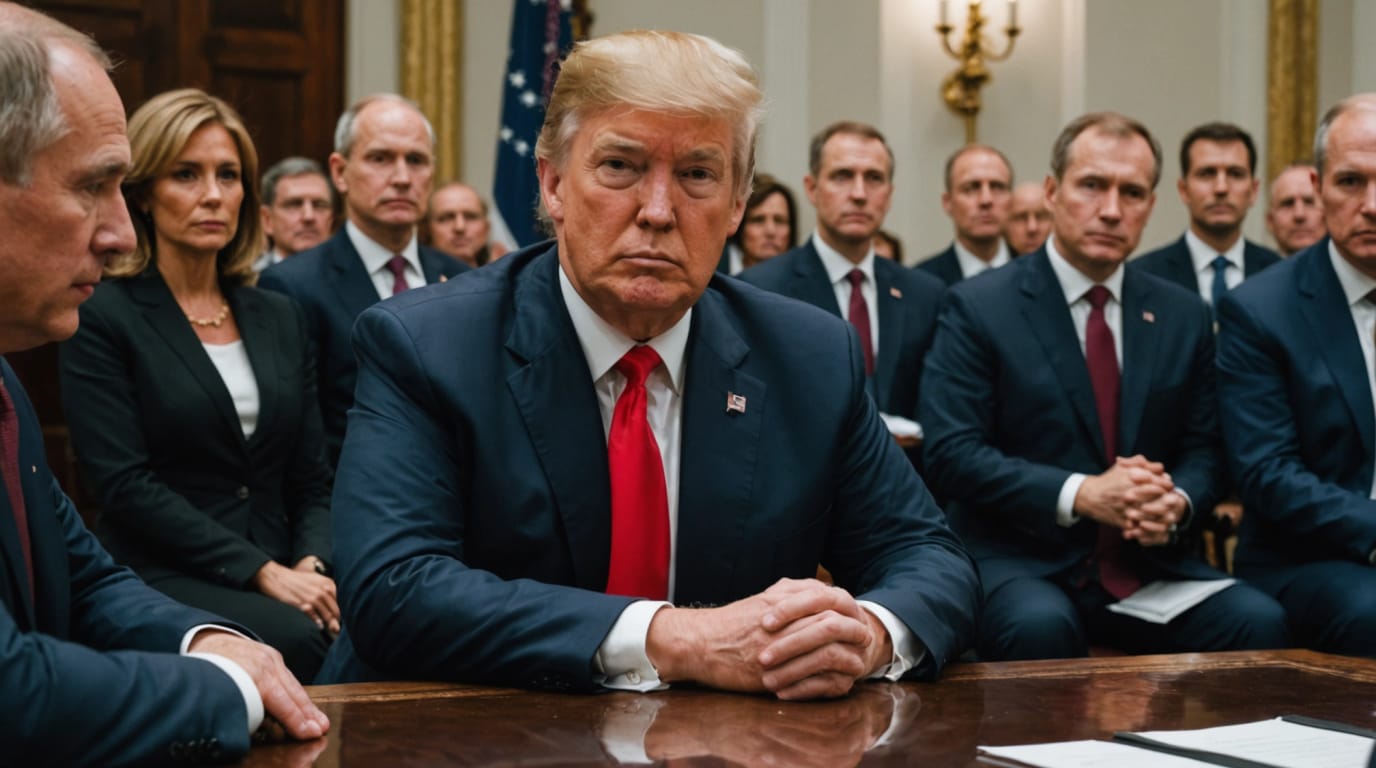
President Donald Trump's recent announcement of sweeping, "reciprocal" tariffs on imports has sent shockwaves through the global economy. While many countries, including key U.S. allies, are facing new levies, the exclusion of Russia and Belarus from the list has raised eyebrows and sparked debate about the underlying motivations.
The "Liberation Day" Tariffs
On April 2, 2025, Trump unveiled the new tariffs, proclaiming it a "Liberation Day" for the American economy. The measures include a baseline 10% tariff on all imports to the U.S., with higher rates for countries with significant trade surpluses or perceived barriers to American exports. China faces a 34% tariff, the European Union 20%, and Japan 24%. Even countries like the United Kingdom, Australia, and Ukraine will be subject to the baseline 10% tariff. Trump framed the tariffs as a way to reverse decades of economic exploitation and revitalize American manufacturing.
Sanctions as a Shield
Notably absent from the list are Russia, Belarus, Cuba, and North Korea. According to White House spokesperson Karoline Leavitt, these countries were excluded because existing U.S. sanctions already "preclude any meaningful trade." The U.S. and other nations have imposed heavy sanctions on Russia since its full-scale invasion of Ukraine in 2022. These sanctions have significantly reduced trade between the two countries, from $36 billion in 2021 to approximately $3.5 billion in 2024.
A Matter of Trade Volume?
However, some analysts question whether existing sanctions are the sole reason for the exclusion. Despite the decline in trade, Russia still exports goods such as fertilizer and aluminum to the U.S., resulting in a trade deficit. Moreover, countries with smaller trade volumes, such as Mauritius and Brunei, are included in the tariff list. This discrepancy has led to speculation that other factors may be at play.
Strategic Considerations and Potential Negotiations
Some observers suggest that the exclusion of Russia is a strategic move by the Trump administration. Alexander Baunov, a senior fellow at the Carnegie Russia Eurasia Center, posited that the tariffs could be a tool for forcing Russia to the peace at a later date. By holding back on tariffs now, the U.S. could use them as leverage in future negotiations with Moscow. Trump himself has hinted at the possibility of easing some sanctions on Russia as part of an effort to broker a ceasefire and a peace deal in Ukraine. At the same time, he has threatened Moscow with secondary tariffs on Russian oil exports if negotiations stall.
International Reactions and Economic Implications
The announcement of the new tariffs has been met with strong reactions from around the world. Australian Prime Minister Anthony Albanese called the tariffs "totally unwarranted," while Italian Prime Minister Giorgia Meloni, despite her ties to Trump, deemed them "wrong." The European Union has vowed to retaliate, raising the specter of a global trade war. Concerns have also been raised about the potential impact on American consumers and businesses. The S&P index dropped 1.5% in after-hours trading following the announcement, and businesses fear that the tariffs could lead to higher prices and a broader economic slowdown.
Conclusion: A Complex Calculation
The exclusion of Russia and Belarus from Trump's sweeping tariffs is a complex issue with multiple potential explanations. While existing sanctions may limit trade, strategic considerations and the possibility of future negotiations could also be factors. The move has sparked debate and uncertainty in the international community, raising questions about the future of global trade relations and the potential for escalating tensions. As the world awaits further developments, the implications of Trump's "Liberation Day" tariffs remain to be seen.


