Trump's Tough Talk Meets Congressional Gridlock
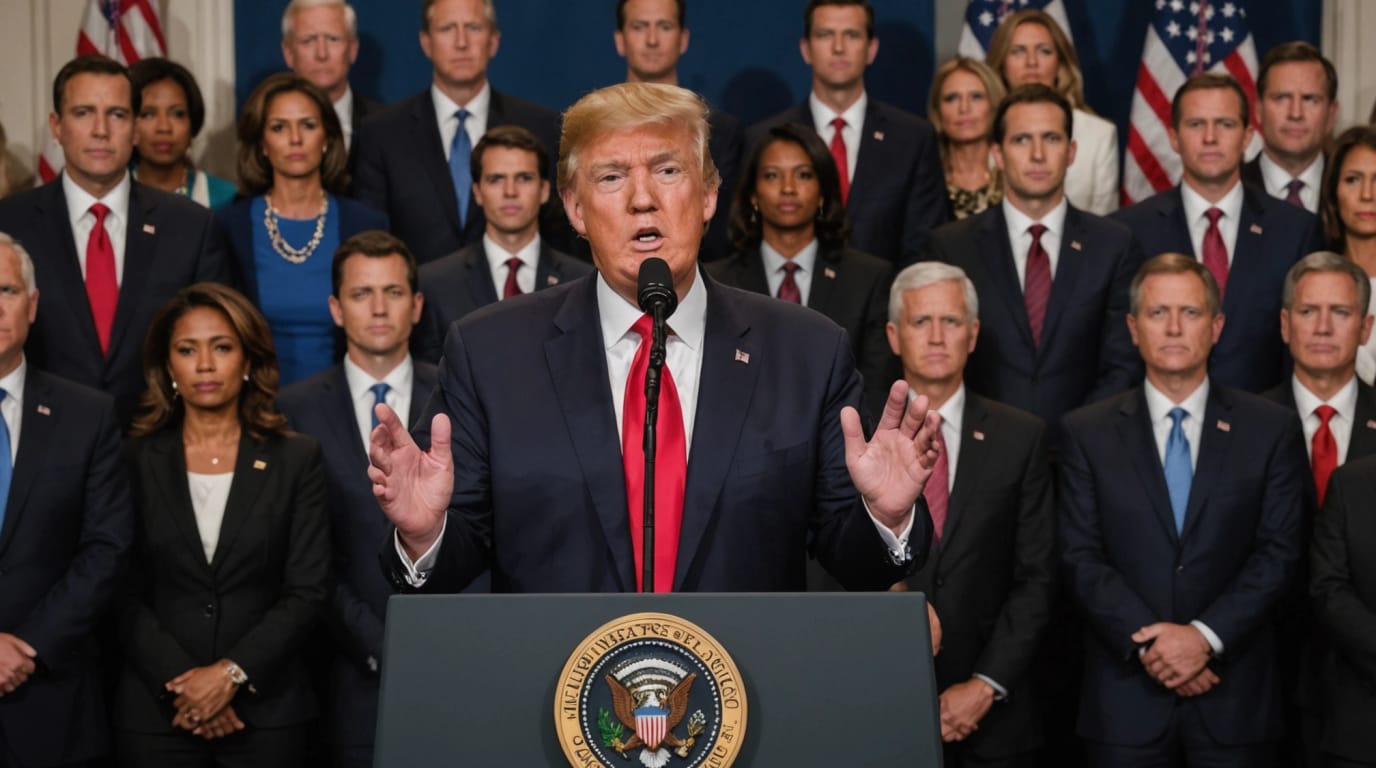
President Donald Trump delivered a forceful address to Congress Tuesday night, outlining his vision for a second term marked by "swift and unrelenting action" on the economy, immigration, and foreign policy. However, the speech underscored the deep partisan divisions that continue to plague Washington, with Democrats largely registering their dissent through silence, protests, and even one member's ejection from the House chamber. The President's address, while met with enthusiasm by Republicans, highlighted the challenges he faces in navigating a Congress beset by ideological clashes and partisan gridlock.
A Partisan Address
Traditionally, a president's address to Congress, even one short of a formal State of the Union, serves as an opportunity to call for national unity. Trump, however, adopted a different approach. His speech was markedly partisan, filled with boasts about his election victory and criticisms of Democrats for their perceived lack of recognition of his achievements. He began by calling his predecessor, Joe Biden, the worst president in history and derided Democrats for not applauding him. This set a tone of division from the outset, a stark contrast to the unifying rhetoric often employed in such addresses.
Trump also leaned heavily into cultural issues, touching on his opposition to affirmative action, diversity programs, and transgender rights. These remarks drew enthusiastic applause from Republicans but were met with silence or protest from Democrats. The President even inflated the scale of his victory in November, despite the relatively narrow margin. The overall tenor of the speech resembled a campaign rally more than a formal address to Congress.
Democratic Rebuttal and Protest
The deep divisions were further highlighted by the Democratic response to Trump's address. Representative Al Green of Texas was ejected from the House chamber after he stood up and shouted that the president did not have a mandate. Representative Nancy Mace, a Republican, responded by yelling at Green to sit down.
Michigan Democratic Senator Elissa Slotkin delivered the Democratic response to Trump's speech from Wyandotte, Michigan. She promised to keep her remarks shorter than Trump's, whose address lasted nearly 100 minutes, setting a record for a joint address to Congress.
Policy and Priorities
Beyond the partisan clashes, Trump's address offered insights into his policy priorities for his second term. He emphasized his commitment to reorienting the nation's economy, immigration policies, and foreign policy. He also touched on social issues, such as renaming the Gulf of Mexico and a mountain in Alaska, making English the official language of the country, ending government diversity programs, and preventing transgender girls and women from participating in female sports teams.
However, Trump's focus on these issues drew criticism from some quarters. Some observers noted that he spent more time discussing these social issues than addressing pressing economic concerns, such as inflation. For example, he attributed high egg prices to the Biden administration but offered few concrete solutions to address the problem.
Musk's Influence and Government Restructuring
A significant development in Trump's second term has been his partnership with Elon Musk, who is spearheading the Department of Government Efficiency (DOGE). This collaboration has led to unprecedented changes within the federal government, including the dismantling of longstanding programs, the shuttering of agencies, and the temporary freezing of federal funding to states and nonprofits.
These changes have sparked widespread public outcry and raised concerns about the role of Congress in creating laws and overseeing government operations. Critics argue that Musk's influence is eroding democracy, with Senator Chuck Schumer stating that "Whatever DOGE is doing, it is certainly not — not — what democracy looks like or has ever looked like in the grand history of this country."
Challenges Ahead
Trump's address to Congress made it clear that his second term will be marked by both ambitious policy goals and significant political challenges. The deep partisan divisions in Congress, coupled with the controversial changes being implemented by the Department of Government Efficiency, suggest a turbulent period ahead.
While Trump remains confident in his ability to deliver on his promises, he faces a Congress where cooperation across the aisle appears increasingly difficult. The coming months will test his ability to navigate these challenges and achieve his policy objectives in a deeply divided nation. The Social Security Administration is preparing to lay off at least 7,000 people from its workforce of 60,000, according to a person familiar with the agency's plans who is not authorized to speak publicly. It's not clear how the layoffs would impact the benefits of the 72.5 million Social Security beneficiaries.


