Trump's Trade Offensive: Tariffs Hit China, EU Responds with Caution
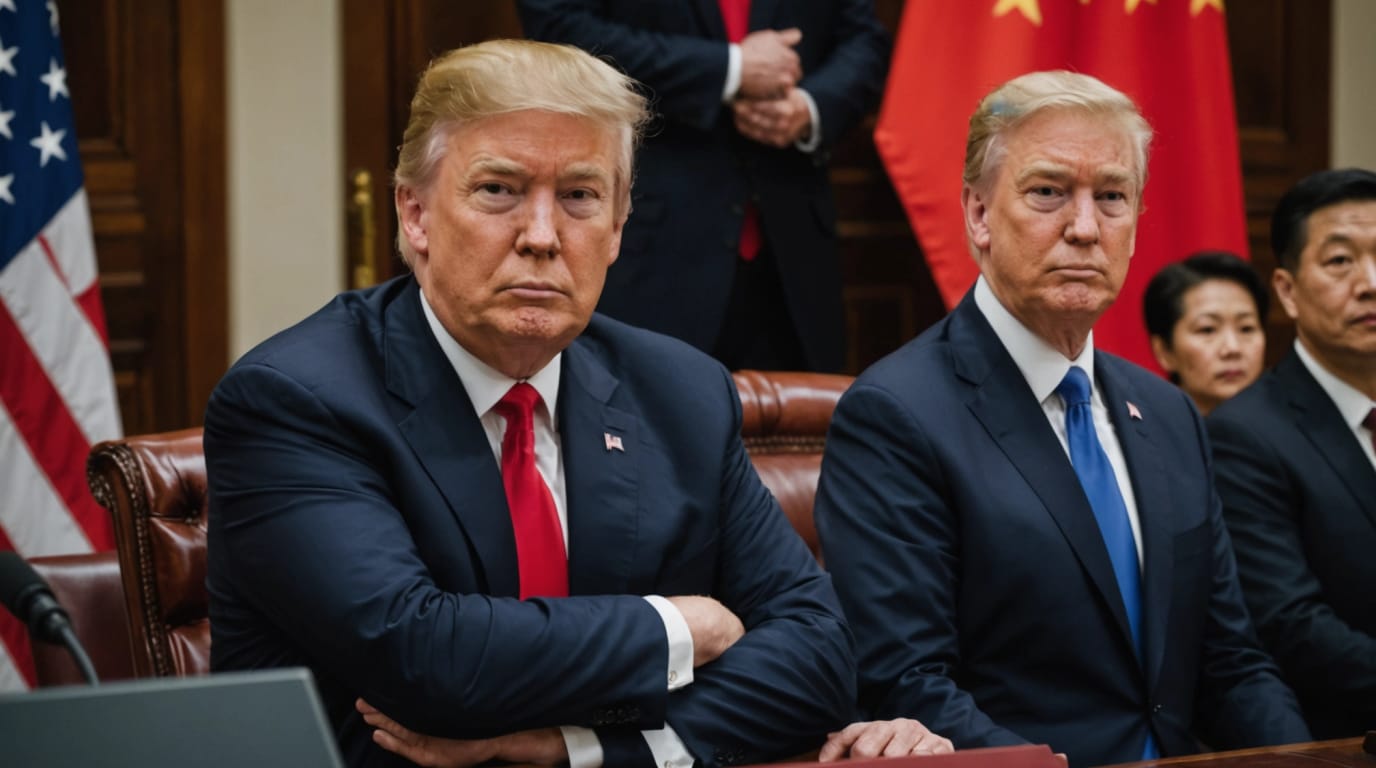
Washington D.C. - President Donald Trump's administration is maintaining pressure on international trade partners, particularly China, through a series of escalating tariffs. While the European Union expresses concerns about the potential economic fallout and explores avenues for de-escalation, China has vowed to protect its interests and retaliate against what it views as bullying tactics. The situation unfolds against a backdrop of global market volatility and rising fears of a potential recession.
Trump's Tariff Measures Take Effect
President Trump's "reciprocal" tariffs on goods from numerous countries, including a substantial 104% duty on Chinese products, went into effect Wednesday. These tariffs, which the President argues are necessary to address trade imbalances and unfair practices, have been met with strong opposition from affected nations and warnings from economists. The tariffs are aimed at countries that the U.S. President believes are "ripping off" the United States. The list includes close allies like the European Union, which now faces a 20% tariff on many products, along with industry-specific duties.
China's Response and Trade Talks with the EU
China has condemned the U.S. tariff measures, asserting that it will not succumb to pressure. A spokesperson for China's Foreign Ministry, Lin Jian, stated that China firmly opposes the U.S.'s abuse of tariffs and will defend its legitimate rights and interests. In response to the U.S. actions, China has increased tariffs on U.S. imports to 84% from a previous 34%.
Amidst the escalating trade tensions with the U.S., China is actively seeking to strengthen economic ties with the European Union. China's Commerce Minister Wang Wentao and European trade and economic security commissioner Maros Sefcovic held a video call Tuesday to discuss strengthening trade and investment cooperation. The two parties are looking to restart talks on trade relief and immediately carry out negotiations on electric vehicle price commitments. China has expressed its readiness to deepen trade, investment, and industrial cooperation with the EU.
EU's Balancing Act: Concerns and Countermeasures
The European Union finds itself in a precarious position, facing the direct impact of U.S. tariffs and the potential for a surge of discounted Chinese imports diverted from the U.S. market. The direct impact of Trump's tariffs on EU shipments to the US will affect 70 per cent of its exports, worth some €370 billion (US$405 billion), when all of them are deployed.
The EU has implemented its own countermeasures, imposing 25% tariffs on a range of U.S. imports. The bloc also faces U.S. tariffs of 20% on most products and higher duties on autos and steel. Despite the retaliatory measures, there's a sense of unease within the EU regarding the potential for a full-blown trade war and its consequences for the European economy.
Economic Implications and Market Volatility
The global trade tensions have sent shockwaves through financial markets. Trillions of dollars have been wiped off combined stock market valuations in recent sessions. Oil prices have plummeted, and investors have been selling off U.S. Treasury bonds and the dollar, traditional safe-haven assets. JPMorgan Chase CEO Jamie Dimon has warned that Trump's tariffs could lead to a recession and defaults by borrowers.
The European Central Bank (ECB) is closely monitoring the situation and stands ready to ensure the sound financing of the euro zone economy and financial stability, according to French ECB policymaker Francois Villeroy de Galhau. China's top leaders are also reportedly planning to meet to discuss measures to boost the economy and stabilize capital markets.
Future Outlook: Uncertainty and Potential Negotiations
The future of the global trade landscape remains uncertain. While President Trump has expressed openness to negotiating trade deals with individual countries, his administration has also signaled that the tariffs may remain in place for an extended period. The U.S. President has already spoken with leaders of Japan and South Korea, and a delegation from Vietnam is scheduled to meet with U.S. officials.
The coming weeks and months will be crucial in determining whether the U.S., China, and the EU can find a path toward resolving their trade disputes and averting a potential global recession. The stakes are high, and the world's economy hangs in the balance.


