Trump's Unlikely Play: Can He Win Over the MAGA Base with the "Beautiful Game"?
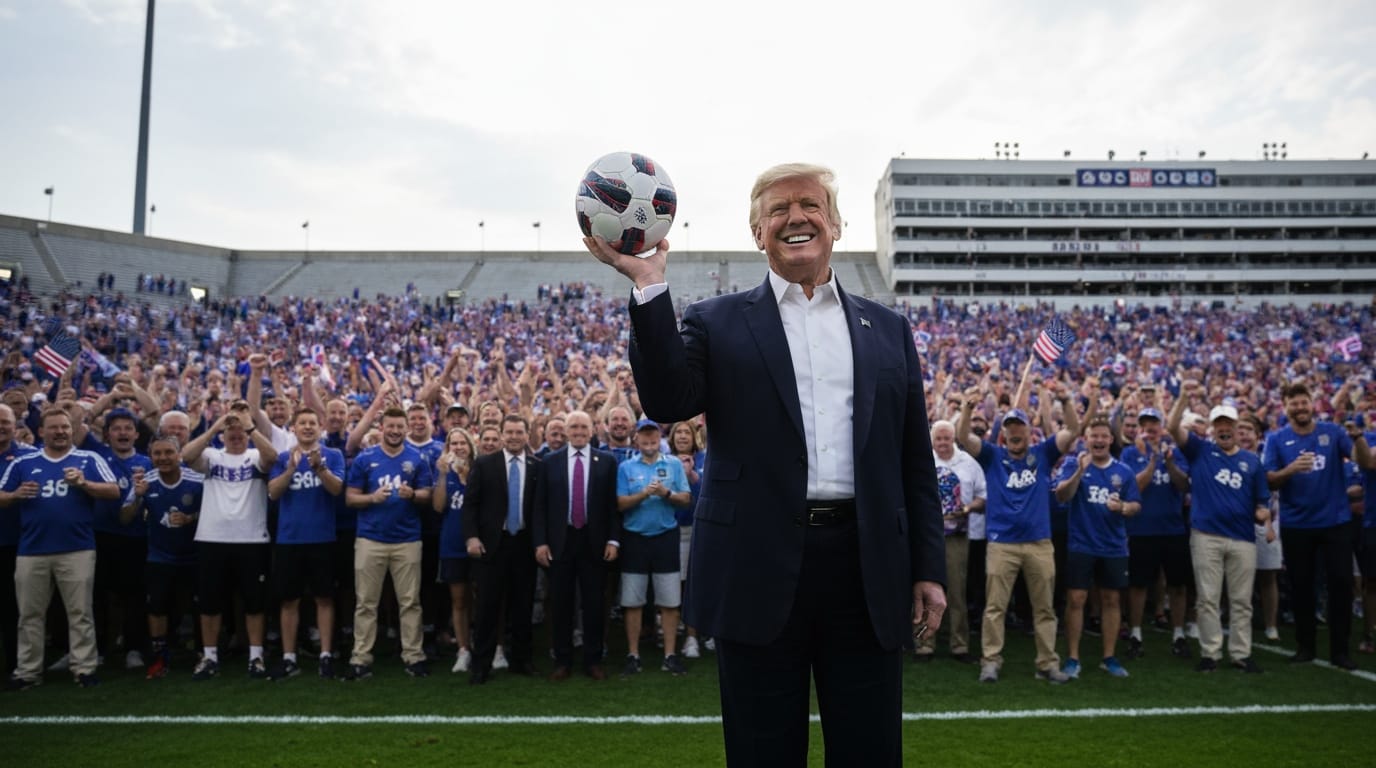
In a surprising turn for a political figure traditionally associated with American football and NASCAR, former President Donald Trump has been making notable forays into the rapidly expanding world of soccer, particularly as the United States prepares to co-host the 2026 FIFA World Cup. This pivot, or perhaps an expansion of his political playbook, raises questions about its potential to resonate with his staunch "Make America Great Again" (MAGA) supporters, a demographic not historically aligned with the global sport. With the World Cup approaching, Trump's engagement with soccer highlights a strategic maneuver to connect with a burgeoning American fanbase, albeit one that presents both opportunities and cultural challenges.
The Shifting American Sports Landscape
Soccer's popularity in the United States has experienced a significant surge over the past decade, transforming its standing in the national sports consciousness. Once considered a niche sport, it now ranks as the fourth most popular team sport, surpassing hockey since 2006. More than four million Americans played soccer by 1984, a dramatic increase from 100,000 in 1967. This growth is sustained by increasing numbers of youth participants and evolving viewership trends. The 2015 FIFA Women's World Cup final, for instance, attracted a record 26.7 million viewers, a figure exceeding the finals of both the 2014 World Series and the 2015 NBA Finals. The 2010 Men's World Cup final also drew 26.5 million viewers, underscoring soccer's substantial reach.
Major League Soccer (MLS) has been a significant driver of this expansion, growing from 10 teams in 1996 to 30 teams by 2025. The league consistently attracts higher per-game attendance than the NBA and NHL since 2011, boasting the third-highest average attendance among U.S. sports leagues after the NFL and MLB. This momentum is further amplified by a young, diverse, and digitally savvy fanbase, with over half of self-identified soccer fans under 45, compared to 46% for the NFL and 43% for MLB. The National Women's Soccer League (NWSL) has also seen its audience grow, expanding its fanbase to 39.3 million, up from 30.8 million in 2023. International competitions such as Copa América and the CONCACAF Gold Cup continue to draw increased U.S. viewership, signaling a growing appetite for the sport. This demographic shift presents a compelling target for political figures looking to broaden their appeal.
The Traditional MAGA Sports Profile
In contrast to soccer's diverse and younger fanbase, the traditional MAGA demographic often gravitates towards sports like American football, NASCAR, and golf. Research suggests that intense sports fans, particularly those with conservative leanings, often support attitudes reflecting conservative ideology, including strong support for the U.S. military and individual responsibility for financial success. While Republicans and Democrats are equally likely to follow sports closely, conservative sports fans are notably more likely to express opposition to the mixing of sports and politics. This sentiment often stems from a desire for sports to remain a non-partisan escape, rather than a platform for political expression.
For many in the MAGA base, sports like the NFL and Major League Baseball are woven into the fabric of American culture and national identity. Their connection to these sports is deeply rooted in tradition and often associated with patriotism, sometimes leading to friction when athletes engage in social or political protests. This established cultural preference poses a unique challenge for any attempt to introduce or emphasize a sport like soccer, which, despite its growing U.S. presence, still carries an international perception for some segments of the American population.
Trump's Recent Forays into Soccer Diplomacy
Despite the perceived cultural gap, Donald Trump has visibly engaged with soccer, particularly in the lead-up to the 2026 FIFA World Cup, to be co-hosted by the United States, Canada, and Mexico. His involvement highlights a calculated effort to leverage the global stage of major sporting events for political capital.
In December 2024, Trump notably received the "FIFA Peace Prize" from FIFA President Gianni Infantino during the World Cup draw. This event, viewed by some as an attempt to placate the former president ahead of the significant tournament, saw Trump expressing that it was "truly one of the great honors of my life." His administration also opened a FIFA office in Trump Tower in July 2025, further solidifying the connection.
More recently, in March 2026, Trump hosted Major League Soccer champions Inter Miami CF, including global superstar Lionel Messi, at the White House to celebrate their 2025 MLS Cup title. While framed as an honor for the team, the event had distinct political undertones. During the ceremony, Trump delivered a speech that veered into geopolitical issues, discussing ongoing conflicts and U.S. foreign policy, with the soccer players, including Messi, standing behind him. This use of a sports event as a backdrop for political messaging mirrors previous instances where Trump utilized sports figures and events to project his agenda and personality.
Trump has also been vocal about the upcoming 2026 World Cup, declaring in May 2025 that he would "save soccer" in the United States and promising that the country would host "the best tournament the world has ever seen." He emphasized that every part of the U.S. government would work to ensure the event's success and safety, particularly for international travelers.
However, his engagement has not been without controversy. In March 2026, Trump issued mixed signals regarding the Iranian national soccer team's participation in the World Cup, citing "their own life and safety" as a concern amid escalating tensions following U.S. and Israeli airstrikes on Iran. Despite earlier assurances to Infantino that Iran would be welcome, Trump's social media posts suggested otherwise, leading to strong pushback from the Iranian team, which asserted that "no one can exclude" them from the World Cup, and that the event's governing body is FIFA, not any individual country. This diplomatic friction underscored the inherent challenges of intertwining high-stakes international sports with complex geopolitical realities.
The 2026 World Cup as a Political Arena
The 2026 FIFA World Cup, set to be the largest in history with 48 teams competing across 16 cities in the U.S., Canada, and Mexico, represents an unprecedented global spectacle. With 104 matches, 78 of which will be held in the U.S., the tournament offers a massive platform for host nations and their leaders to showcase national identity and influence. Indeed, political figures often view such mega-events as opportunities to project economic and political success and to foster a sense of national unity.
For Trump, the World Cup presents a unique opportunity to connect with a broad segment of the American population and a global audience. His involvement can be seen as an attempt to tap into soccer's rising popularity, particularly among younger and more diverse demographics that may not typically align with his political base. However, this strategy carries inherent risks. The "America First" posture, which characterized his previous presidency, can clash with the spirit of global camaraderie that defines the World Cup. His mixed reception at the 2025 FIFA Club World Cup final, where cheers were met with boos when he appeared on the jumbotron, illustrates the potential for division.
The challenge for Trump lies in authentically embracing a sport that, for some of his traditional supporters, might still be seen as less "American" than other popular pastimes. While his pronouncements to "save soccer" aim to frame his involvement positively, the genuine impact on his core base, and whether it broadens his appeal, remains to be seen. The political implications of this monumental sporting event are undeniable, offering a stage for both national celebration and potential controversy.
A Game of Political Strategy
Donald Trump's increasing engagement with soccer reflects a calculated political strategy to align himself with a sport of growing influence in the United States. Whether this is a genuine shift in interest or a pragmatic attempt to broaden his appeal to new demographics, particularly with the 2026 World Cup on the horizon, is a matter of ongoing observation. The sport's rapid growth among younger and more diverse audiences presents a compelling opportunity for any political figure seeking to expand their base.
However, the inherent differences between the established preferences of the MAGA crowd and soccer's evolving fanbase, coupled with the potential for political statements to overshadow the sport's unifying appeal, create a complex dynamic. Trump's past actions, from receiving the "FIFA Peace Prize" to the politically charged White House visit with Inter Miami, indicate a willingness to integrate sports into his political narrative. The upcoming World Cup will serve as a crucial test of this strategy, revealing whether his efforts will successfully "score" with both his loyal base and the wider, increasingly soccer-savvy American public, or if the intersection of politics and the "beautiful game" will continue to be a source of tension.