TSMC's $100 Billion U.S. Investment Hailed as "Historic Moment" for U.S.-Taiwan Ties
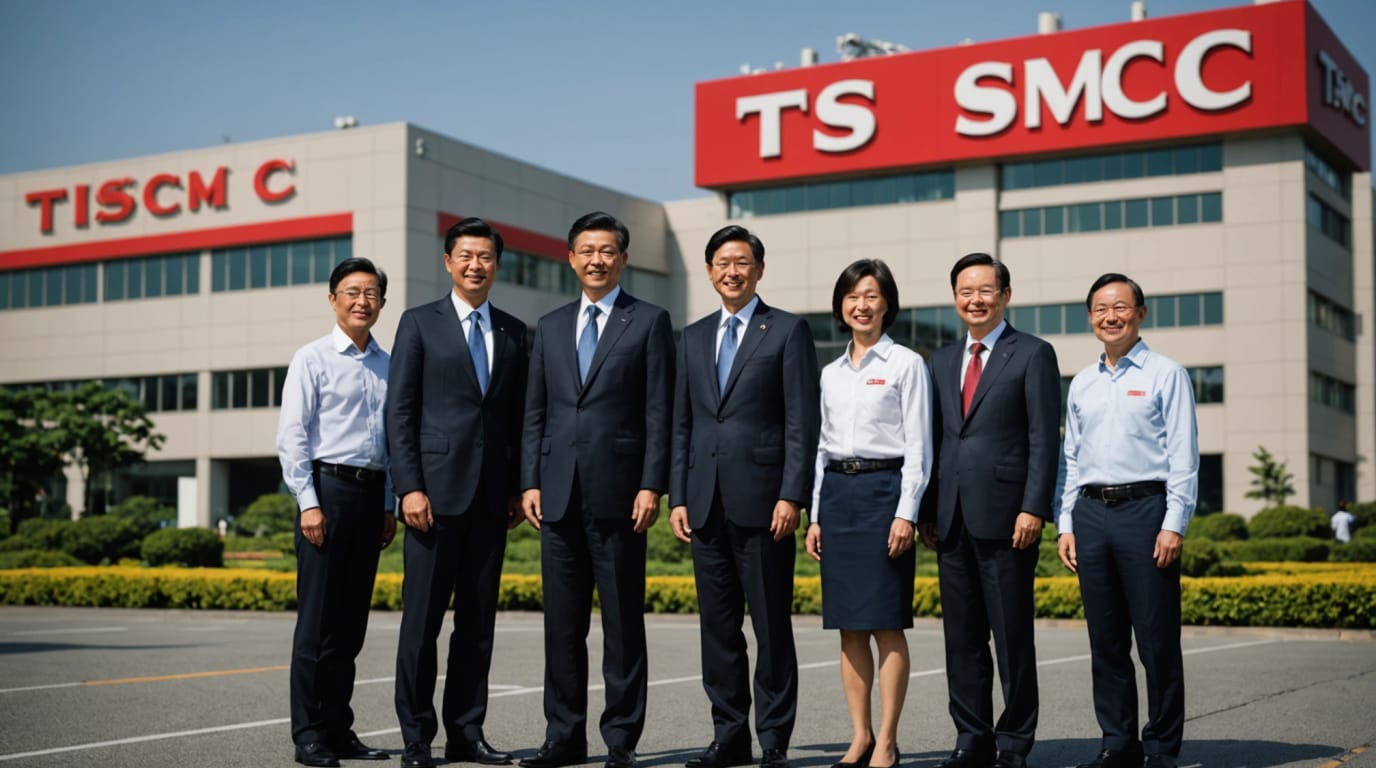
Taiwanese chipmaking giant TSMC's plan to invest $100 billion in the United States is being lauded as a "historic moment" for relations between the U.S. and Taiwan, solidifying economic ties amid geopolitical tensions. The investment, announced this week, comes as the U.S. seeks to bolster its domestic semiconductor manufacturing capabilities and reduce reliance on overseas production.
A Boost for U.S. Semiconductor Industry
TSMC's investment will significantly expand its advanced semiconductor manufacturing operations in Arizona. The funds will be allocated to building three new fabrication plants, two advanced packaging facilities, and a major research and development center. TSMC anticipates the investment will support 40,000 construction jobs over the next four years and generate more than $200 billion in indirect economic output in Arizona and across the U.S. over the next decade.
The U.S. has been actively encouraging companies to invest in domestic chip production through initiatives like the CHIPS Act, which provides substantial financial incentives. TSMC's expanded presence in the U.S. aligns with this strategy, aiming to revitalize the American semiconductor industry and ensure a more secure supply chain for critical technologies.
Strengthening U.S.-Taiwan Relations
Taiwan President Lai Ching-te hailed TSMC's investment as a "historic moment" for U.S.-Taiwan relations. The move is expected to stabilize and potentially strengthen ties between the two countries. The investment demonstrates Taiwan's commitment to contributing to the U.S. economy and solidifies its role as a key partner in the technology sector.
The U.S. has a longstanding commitment to Taiwan under the 1979 Taiwan Relations Act, which predates the island's emergence as a major technology power. The U.S. maintains a vital interest in Taiwan's future and in maintaining peace and stability in the Taiwan Strait, regardless of the success of TSMC's investment.
Addressing Concerns and Maintaining Balance
While the investment is largely seen as positive, some in Taiwan have expressed concerns that the U.S. is attempting to "hollow out" the island's semiconductor industry. These concerns are fueled by fears that the U.S., once it establishes sufficient domestic manufacturing capacity, may reduce its support for Taiwan.
TSMC Chairman C.C. Wei addressed these concerns, stating that the company's expansion in the U.S. is driven by strong customer demand and will not affect its investments in Taiwan. TSMC plans to build 11 new production lines in Taiwan this year to meet demand, indicating its continued commitment to its home base. Wei emphasized that TSMC's production capacity is currently insufficient to meet global demand, necessitating expansion in multiple locations.
Navigating Geopolitical Pressures
TSMC's decision to expand its U.S. operations comes amid increasing geopolitical tensions, particularly between the U.S. and China. The concentration of chip manufacturing in Taiwan has long been seen as a "silicon shield," protecting it from potential aggression from China and incentivizing the U.S. to defend the island.
Former U.S. President Donald Trump had previously criticized Taiwan, accusing it of taking away American semiconductor business and demanding that manufacturing return to the U.S. He also threatened to impose tariffs on overseas-made chips, potentially impacting TSMC's competitiveness. TSMC's investment in the U.S. can be seen as a strategic move to mitigate these pressures, secure its access to the U.S. market, and demonstrate Taiwan's indispensable role in the global technology landscape.
A Mutually Beneficial Partnership
TSMC's $100 billion investment in the U.S. represents a significant step in strengthening economic and strategic ties between the U.S. and Taiwan. The move will boost the U.S. semiconductor industry, create jobs, and enhance its technological competitiveness. At the same time, it reinforces Taiwan's position as a key player in the global semiconductor market and demonstrates its commitment to a mutually beneficial partnership with the U.S. While concerns remain about the potential impact on Taiwan's domestic industry, TSMC's leadership has emphasized its continued investment and expansion plans within Taiwan, ensuring a balanced approach to its global operations. The investment is expected to have a lasting impact on the U.S.-Taiwan relationship, fostering closer cooperation and solidifying their shared interests in the face of evolving geopolitical challenges.


